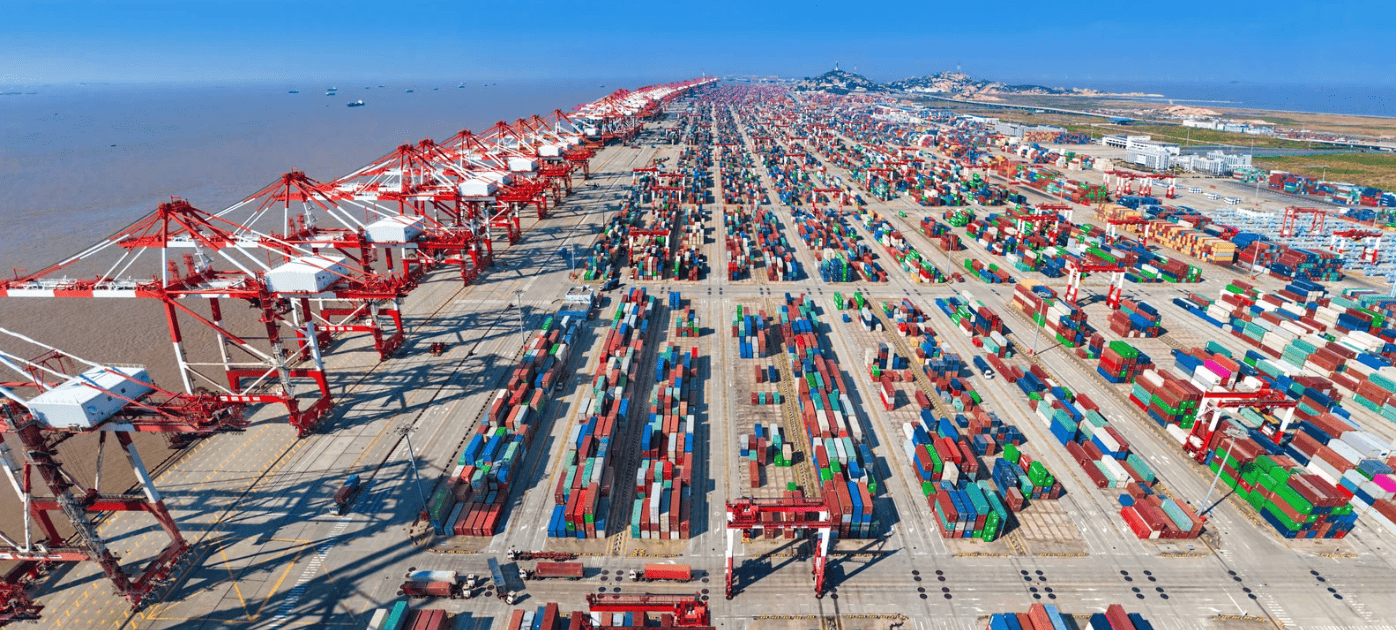
In the modern world, where global trade faces challenges from protectionism and geopolitical tensions – particularly amid the 47th U.S. President's declared focus on comprehensive trade restrictions – China is actively advancing initiatives to strengthen economic integration into global logistics flows.
One such initiative is the establishment of the «Maritime Silk Road» as part of the large-scale «Belt and Road Initiative» program, which revives ancient trade routes connecting Asia, Europe, and Africa. The land-based component of this initiative was completed in 2023.
The island province of Hainan, located in the South China Sea, has been chosen as the key starting point for this route. Thanks to its strategic location, natural resources, and ambitious reforms, Hainan is gradually transforming into a global hub for trade, investment, and innovation–relying on a major logistics project: the The Hainan Free Trade Port (hereinafter referred to as the HFTP), which officially commenced operations on December 18, 2025.
Historical Context and Strategic Positioning
The idea of developing the Maritime Silk Road has roots in ancient trade routes that connected China with countries in Southeast Asia, India, and Africa as far back as the Han Dynasty (2nd century BCE). Today, Hainan – as China’s largest special economic zone with an area exceeding 35,000 km² (comparable to the size of Belgium) – is reviving this role. The island lies at the intersection of maritime routes through which 60-70% of China’s imports and exports pass, making it a critical node for logistics in the ASEAN region, India, and Africa.
This positioning turns Hainan not merely into a logistics hub, but into a strategic instrument for controlled economic openness amid the global fragmentation of trade. It promotes diversification of trade routes, reduces dependence on traditional corridors, and counters Western protectionism.
The island serves as a bridge for trade with Southeast Asia and the Guangdong – Hong Kong – Macao Greater Bay Area, with a focus on priority sectors: tourism, modern services, and high-tech industries. Hainan represents China’s response to global trade fragmentation. While parts of the world are closing off, China is building a controlled yet flexible model of openness.
Hainan Free Trade Port – the Modern Foundation of the Maritime Silk Road
On June 1, 2020, the Central Committee of the Communist Party of China and the State Council released the master plan for constructing the Hainan Free Trade Port. The primary goal is to transform the island into a high-level free trade port with global influence by the mid-21st century, with prospects for further development.
The official launch of the FTP took place on December 18, 2025, coinciding with the completion of island-wide customs operations. This marked the transition from a free trade zone model to a fully integrated system, emphasizing freer entry of foreign goods, expansion of «zero-tariff» coverage, and improvement of the business environment.
The central element is a special customs supervision regime based on the «two-line» model:
-
Hainan – the world (first line): for external trade operations, primarily under a porto franco regime (covering approximately three-quarters of all tariff lines imported into China);
-
Hainan – mainland China (second line): for quasi-transit and domestic trade operations, subject to standard import rules. However, if goods are processed on the island with at least 30% value added (e.g., through processing or assembly), they can enter the mainland duty-free. This stimulates local production and supply chains.
This model turns the island into a hybrid of a unified special customs supervision zone and a free economic zone. At the same time, due to its status and operations, the FTP is positioned as a laboratory for testing market liberalization, data freedom, and tax competition under Party oversight–aimed at countering sanctions and enhancing the resilience of supply chains.
Advantages for Trade and International Cooperation
The proposed operational models make Hainan attractive to global players in the following areas:
-
Investment and market access;
-
Financial flows;
-
Mobility and digital trade;
-
Logistics.
Foreign investment can enter sectors outside the “negative list” under a regime comparable to that of domestic enterprises. The corporate income tax rate has been reduced to 15% in priority industries (tourism, high-tech, services), with plans to extend this to all sectors by 2035. Simplified cross-border capital flows through special accounts and foreign exchange regulations allow trade operations to bypass exclusive settlement in dollars or euros.
Visa-free entry for citizens of 86 countries, along with pilot schemes for secure international data flows, positions the island as a hub for digital trade. In turn, two major seaports (Haikou for general cargo and Yangpu for deep-water containers) and airports (Haikou Meilan and Sanya Phoenix) provide rapid connectivity to the mainland (e.g., the Haikou–Guangzhou flight takes one hour).
These initiatives strengthen trade cooperation with ASEAN and the Indo-Pacific region, offering an alternative to traditional hubs such as Singapore or Dubai. Hainan becomes a «safety valve» for circumventing sanctions and a pilot for high-standard agreements such as the Comprehensive and Progressive Agreement for Trans-Pacific Partnership (CPTPP).
Domestic Production Instead of Importing Finished Goods
The further development of Hainan is based on an economic doctrine of increasing domestic high-tech manufacturing as an alternative to dependence on imported finished products. Such production is impossible without a significant increase in the energy intensity of the region’s infrastructure.
To secure future processing capacities, the China National Nuclear Corporation (CNNC) signed an agreement with the Hainan provincial government to develop clean energy. The Changjiang nuclear power plant generates 9–10 billion kWh of electricity annually, covering 25% of the island’s needs. CNNC technologies, including intelligent inspection systems, not only ensure the reliability of customs operations–reinforcing Hainan’s role in the Maritime Silk Road–but also lay the foundation for energy supply to meet the island’s future industrial requirements.
Hainan, as the starting point of the Maritime Silk Road, symbolizes China’s ambitions to build an open economy. Through the FTP, the island not only revives historical trade routes but also creates a model for future globalization: a balance between openness, control, and resilience. By 2035, the current model is expected to achieve economic and infrastructural maturity with free flows of capital, people, and data; by mid-century, it will exert global influence on world logistics and trade routes.
For Ukraine and other countries, this opens opportunities for trade cooperation in high-tech, tourism, and green energy sectors. Ukraine, in particular, should closely examine Hainan’s experience and the specifics of the “two-line” system, as it could be useful for establishing and developing specialized economic zones in our country–with priority on energy self-sufficiency and the formation of production clusters to create high-value-added products.
The Maritime Silk Road is no longer solely a Chinese project. It is part of a broader restructuring of the global economy. The world is moving toward multipolarity. Logistics routes are diversifying. Countries are seeking a balance between openness and security. In this context, Hainan demonstrates a new model of development through synergy: controlled liberalization + technological autonomy + energy resilience.
Geographically, Ukraine is a natural bridge between Asia and Europe. After the restoration of Black Sea port infrastructure (Odesa, Chornomorsk, Pivdennyi), Ukraine could become the western terminus of a new maritime corridor: Hainan – Indian Ocean – Suez Canal – Black Sea – EU. Under certain conditions, post-victory Ukraine could integrate into this architecture not as a periphery, but as an active European node in the new maritime corridor.
Yuriy Gavrylechko,
Philosophy doctor in Public Administration,
Associate Professor of the Department of Business, Administration and Law,
ZVO «University of Future Transformation»