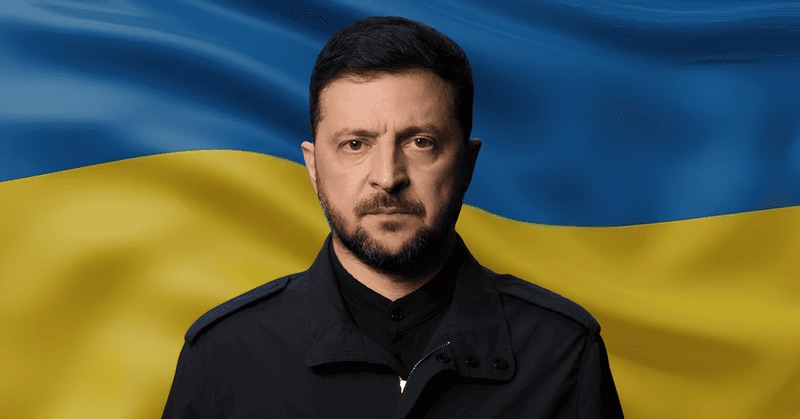
World Geostrategic Insights interview with Ruslan Bortnik on the challenges in resolving the Russia-Ukraine conflict diplomatically, and prospects for political leadership and reform in Ukraine’s postwar era.
Ruslan Bortnik is a political scientist and analyst, expert on geopolitics, democratization, and Ukrainian domestic politics. Currently, he is the Director of the Ukrainian Institute of Politics. Previously he served as an official advisor to the Verkhovna Rada (the Ukrainian parliament) from 2003 to 2014, contributing to the drafting of over 250 bills. Ruslan also held prominent roles on various public councils in Ukraine, including those of the Ministry of Foreign Affairs (MOFA) and the Ministry of Defense (MOD).
Q1.WGI – U.S.-mediated efforts to end the war between Russia and Ukraine seem to be making progress, but the question of Donetsk’s status remains the main obstacle. How likely is Putin to accept a compromise over Donbas without a full withdrawal of troops, and what events could make a diplomatic resolution impossible?
A1.Ruslan Bortnik – Yes, the territorial issue currently appears to be one of the most acute in the negotiation process, but this issue is largely artificial, contrived, and serves as a technical barrier to achieving stable peace. Let me remind you that at the beginning of the war, Russia’s goal was regime change in Ukraine as a way to pressure the U.S. and the West into a new division of spheres of influence in Eastern Europe. And Russia has not abandoned these goals yet. The objective to occupy the entire Donetsk region of Ukraine did not exist initially; it emerged only after the annexation on September 30, 2022. Therefore, Moscow’s demand to withdraw Ukrainian armed forces from Donetsk should be viewed as a political technology intended to test the limits and depth of Ukraine’s and the West’s concessions, to create conditions for a domestic political crisis in Ukraine and among Western allies, to create a precedent in international relations, and to form a mobilization-oriented, victorious message for the Russian public.
At the same time, I want to remind you that Moscow included not only Donetsk and Luhansk, but also Kherson and Zaporizhzhia regions in its Constitution. The fact that Moscow is not currently demanding withdrawal of Ukrainian troops from Zaporizhzhia and Kherson is another sign of the temporary and tactical nature of Russian demands; and that even a resolution on Donbas will not be final for a settlement.
Russia’s existential demands clearly go beyond Donbas and extend to the war’s original goals, which Russia currently cannot achieve militarily. On one hand, this creates a massive threat to any stable peace deal, but on the other, it opens space for a diplomatic solution that does not require withdrawal of Ukrainian troops from Donetsk. Russia originally framed the war as a response to a security crisis on its western borders and the inability to resolve it through negotiations with Ukraine and the West. Thus, Moscow is now raising issues such as Ukraine’s neutral status, voting rights for Ukrainian citizens residing in occupied territories or even in Russia, and other measures aimed at institutionalizing Russian political influence on Ukraine’s future system. In practice, resolving security issues and creating a comprehensive security guarantee architecture for Ukraine, Europe, and Russia could remove the Russian demand for troop withdrawal from Donetsk from the table. But these are very complex and politically toxic decisions.
Q2.WGI – Ukrainian society is deeply weary of the war but remains divided over territorial concessions. How far can Zelensky’s government go in making concessions without risking internal destabilization or mass protests?
A2.Ruslan Bortnik – Sociological surveys clearly show that deep war fatigue has not displaced the willingness to defend Ukrainian territory. Although the number of Ukrainians willing to compromise with Russia and accept concessions rose to 40% in 2026 (from 8% in 2022), the majority supports freezing the conflict and halting hostilities along the front line.
The enormous human suffering caused by the lack of electricity and heat this winter—due to Russian bombardments of energy infrastructure—and the lack of clear prospects for victory or peace are pushing more Ukrainians toward accepting potential territorial losses quietly. However, Ukrainians are not ready to formally renounce those territories under international law. In other words, they are willing to ignore the occupation de facto, but not formally give up the land de jure.
This is a politically toxic issue, because most of society doesn’t want to accept it, and any leader who does will lose substantial public support. That is the main dilemma surrounding territorial control.
This means Zelensky’s team can safely propose a ceasefire or “cold peace” along the front line. But any extended concessions (territories, demobilization, abandonment of key allies without guarantees) could trigger political unrest.
At the same time, there’s significant political-legal speculation around Ukraine’s territorial integrity. In reality, Ukrainian borders can be altered via international legal agreements or referendums. For example, in 2011, Ukraine and Moldova exchanged territories based solely on international treaties as part of border delimitation. So, when we talk about Ukraine’s territorial integrity, we usually mean the 1991 borders—not the 2011 ones.
A unique feature of the Donetsk situation is that the withdrawal of Ukrainian troops does not legally constitute renunciation of those territories. It’s about troop redeployment to enable a ceasefire. No one today is demanding that Ukraine formally abandon those areas, which would require a referendum. Redeployment doesn’t require a referendum, although the government could hold one as a consultative measure.
Q3.WGI – You’ve said Ukraine’s only two “red lines” are preserving the state and protecting its people, and that everything else is negotiable for the nation’s survival. Can you elaborate?
A3.Ruslan Bortnik – I emphasize that our primary goal is to preserve the sovereignty of the Ukrainian state and save as many Ukrainians as possible. If the result of negotiations includes a neutral status or other painful compromises, but the country remains sovereign and people are safe—that’s a strategic victory for Ukraine and its allies, because it confirms Russia’s failure to achieve its original goal of regime change and pulling Ukraine into its sphere of influence.
Maintaining a sufficient demographic base is also crucial for postwar recovery. Without it, Ukraine has no viable future. All other issues are temporary and can be managed to reduce risks and negative consequences.
Accession to the EU remains a key compensatory package for any painful concessions made in the name of peace, stability, and reconstruction.
Q4.WGI – You’ve spoken of the “curse of security guarantees.” Is there a model of guaranteed neutrality that could satisfy Ukraine’s sovereignty and address Russia’s security concerns without either side feeling defeated?
A5.Ruslan Bortnik – A model of “guaranteed” neutrality theoretically exists, but it’s extremely demanding. Historical examples include Finland or Austria in the 20th century—countries outside of military blocs but capable of self-defense and protected by international security guarantees. Neutral Ukraine with international guarantees could become a political and economic “offshore zone” between the West and Russia—not a humiliating compromise, but a victory for common sense.
However, “armed neutrality” must be coordinated between adversaries—namely, the West and Russia—and must include clear guarantees that Ukraine retains sovereignty. This neutral status could resolve the core disagreement: Ukraine stays out of NATO, and Russia drops its territorial claims. But this requires ironclad international guarantees and strict enforcement. Without that, the “curse of guarantees” that has historically plagued Ukraine would lead to another war.
Q5.WGI – If Ukraine became an informal NATO member—aligned in practice but without official accession—would this satisfy the Kremlin, or would it lead to renewed conflict?
A5.Ruslan Bortnik – The Kremlin likely won’t tolerate even an informal alliance. Russia insists on Ukraine’s permanent neutrality and its refusal to join NATO. Any deep integration with NATO contradicts that. History shows that every step Kyiv has taken toward NATO was seen by Russia as a direct threat. So informal membership would likely trigger a new cycle of confrontation, not lasting peace.
Moreover, the main problem is NATO’s lack of readiness to accept Ukraine into its ranks, and especially the US position. Ukraine cannot join an organization that does not accept it. This was clear before, but Ukrainian politicians played this card carelessly within Ukraine, and some European elites played along. Now, Ukrainian society seems ready to accept the abandonment of NATO.
However, maintaining ties with NATO and building Ukraine’s self-defense capacity—along with developing the defense industry and securing international security guarantees—could become a workable compromise.
It’s also time to move beyond the confrontational “porcupine strategy,” where Ukraine builds up military “spikes” that deter but also provoke. Instead, we should pursue a “turtle strategy”: a multi-level model of self-defense that poses no external threats but ensures internal resilience.
Q6.WGI – In a “cold peace” or frozen conflict scenario, where Ukraine remains independent but loses around 20% of its territory, what would its economic future look like?
A6.Ruslan Bortnik – Ukraine’s economy would remain vulnerable. Losing 20%—mainly industrial Donbas and parts of the south—would shrink GDP by at least a third and severely damage the tax base. There would be no quick return to prewar production levels. Ukraine would face decades of uncertain growth, high debt, and dependence on aid.
However, if Ukraine retains access to Black Sea ports like Odesa and Mykolaiv, signs a “resource deal” with the U.S., secures free trade with the EU, and attracts foreign investment (including via frozen Russian assets), while maintaining nuclear energy and key raw/agricultural resources—then there’s potential for recovery and improving living standards.
If transit routes like the “Silk Road” and Russian energy supplies to Europe and Ukraine are restored, economic prospects would improve even further.
Q7.WGI – You argue that Ukraine must be independent from Russia but also sovereign from excessive influence by allies. How can a country with heavy debt and donor dependence achieve that?
A7.Ruslan Bortnik – It’s true—the balance is extremely difficult. Our key objective is to maintain independence from Russia while also protecting sovereignty from excessive influence by our allies. In practice, this means Ukraine must maximize socio-economic cooperation with the EU and U.S., without becoming a proxy in geopolitical conflicts.
Every loan or grant should go toward infrastructure, recovery, and technology—not a “black hole” in the budget. We must diversify relationships: not only with the West, but also international financial institutions, Asian investments, and cooperation with the Global South. Political power must remain in Kyiv, not with creditors. Transparency in borrowing, adherence to contracts, and safeguard clauses all strengthen sovereignty.
By using loans to build up the economy, Ukraine can eventually reduce external dependence and shrink the national debt. In other words, accept assistance, but maintain strategic autonomy. This is the painful but possibly optimal compromise for preserving the Ukrainian state.
Q8.WGI – Does the tension between the “presidential vertical” and anti-corruption institutions weaken Ukraine’s negotiating position with international partners?
A8.Ruslan Bortnik – Absolutely. Distrust and poor relations among key actors—anti-corruption agencies, law enforcement, and the president’s office—undermine and destabilize the political system. This internal discord also weakens Ukraine’s external standing. Foreign partners see dysfunction in Kyiv and begin to doubt our capacity to implement reforms.
Every corruption scandal erodes trust. The West may hesitate to provide guarantees or new loans. These elite-level conflicts demonstrate weakness and disunity—damaging Ukraine’s negotiating leverage. Still, fighting high-level corruption remains a critical challenge, even amid Russian aggression.
Q9.WGI – What reforms are realistically achievable in the short to medium term to counter recent scandals in the energy and defense sectors involving people close to the president?
A9.Ruslan Bortnik – In the short term, I propose several steps:
- Deep audit of the customs and tax systems—tens of billions of euros are lost annually.
- Audit of military spending and procurement, where corruption risks are massive—savings could reach billions.
- Audit of public administration, digitalization, and reduction of civil servants; verification of income and assets of top officials—including the president, cabinet, and security services.
- Strict limits on business group influence over state procurement and policy. Introduce mandatory lobbying registration and financing transparency. Ban affiliated persons—especially oligarchs—from energy and defense tenders.
- Strengthen independent oversight of anti-corruption bodies: leadership rotation, regular audits, possibly direct elections or parliamentary appointments of agency heads. This would prevent agencies from becoming corrupt or politicized. Beyond new laws, enforcement is key. Real oversight must be established, open to public requests for transparency in major procurements.
- Restore full political and economic competition. This would encourage the return of billions in investments taken out of Ukraine.
These steps are painful but doable, and they can reduce the risk of future corruption scandals.
Q10.WGI – While Zelensky still enjoys majority support, you’ve noted that this is more due to the presidential institution than personal popularity. Which political figure could challenge this “monopoly on power” in a post-war Ukraine?
A10.Ruslan Bortnik – The most prominent contender is Valerii Zaluzhnyi, former Commander-in-Chief of the Armed Forces and now Ukraine’s ambassador to the UK. Authorities are closely watching him. Political analysis shows trust in Zaluzhnyi consistently exceeds that of the current president. He enjoys strong support, especially among the military and those fatigued by war.
Another potential figure is Kyrylo Budanov, head of the President’s Office. I wouldn’t rule out Petro Poroshenko either—despite high disapproval, he retains a party structure and media resources. Other figures may emerge as well.
The key factor shaping political alternatives in Ukraine is the war’s trajectory. If setbacks occur, political space could open up for anti-war leaders or competent technocrats.
Parliamentary elections suggest that 6–9 political parties could enter parliament, with none holding dominant influence. That would signal a pluralistic post-war political field.
Ruslan Bortnik – Director of the Ukrainian Institute of Politics.