Авторы публикации
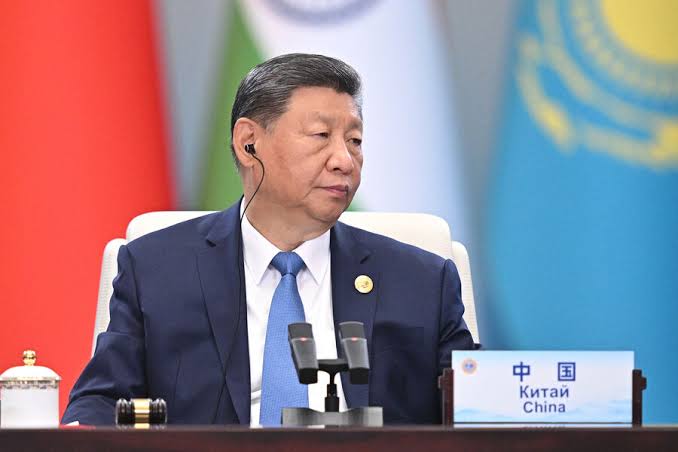
I am putting forward a Global Governance Initiative, to work with all countries in building a fairer and more reasonable system of global governance, and to jointly advance the building of a community with a shared future for mankind
Xi Jinping,
The contemporary system of international relations is undergoing a period of profound transformation associated with the transition from a relatively stable unipolar order to a multipolar configuration. Under these conditions, issues of global governance have acquired particular relevance.
On 1 September 2025, at the expanded summit of the Shanghai Cooperation Organisation (SCO+) in Tianjin, Chinese President Xi Jinping put forward the Global Governance Initiative (GGI, Chinese: 全球治理倡议). In his address, the Chinese leader formulated five core principles of the Initiative:
-
sovereign equality;
-
adherence to international law;
-
the practice of multilateralism;
-
a people-centred approach;
-
a focus on tangible results.
The Initiative was presented as a response to the question of «what kind of global governance system should be built and how it should be reformed». The simultaneous publication of the conceptual document established the Initiative as a significant element of contemporary Chinese diplomacy [1]. The SCO platform, which brings together a substantial part of Eurasia and the countries of the Global South, provided a favourable audience. At the same time, acute crises persisted in the world, intensifying the sense of dangerous uncertainty in global governance.
The immediate process of its creation logically continued the series of Chinese initiatives. This Initiative became the fourth in the sequence of China’s global initiatives, following the Global Development Initiative (2 September 2021) [2], the Global Security Initiative (21 April 2022) [3], and the Global Civilization Initiative (15 March 2023) [4].
It is positioned as a framework designed to set out the principles and directions for reforming the existing system of global governance amid global turbulence. Moreover, it logically continues the previous Chinese initiatives, facilitating a transition to the level of systemic reform of governance institutions.
The three preceding initiatives laid a practical and normative foundation. They enabled China to test mechanisms for mobilising support from the countries of the Global South, to establish partnership networks, and to accumulate experience in formulating «Chinese solutions» to global problems. Thus, by 2024-2025, Chinese diplomacy had reached the conclusion that a shift was necessary from sectoral proposals to a comprehensive framework encompassing the system of governance itself.
The process of shaping the Initiative progressed from the formation of conceptual prerequisites and the accumulation of institutional experience to its official proclamation, the publication of the conceptual document, and the first steps of institutionalisation. It reflects the evolution of the Chinese approach to the international order and a response to the structural changes in the world system.
The process of creating any major international initiative begins with reflection on existing theoretical and practical problems. The concept of global governance as an independent phenomenon took shape as early as the end of the twentieth century, as a response to the growing interdependence of states and the limited capacities of traditional interstate regulation.
A classic work that systematised this concept was the report of the Commission on Global Governance entitled Our Global Neighbourhood [5]. The authors of the report emphasised the need to move from «governance by states» to more inclusive forms of coordination involving non-state actors and focusing on shared values. They proposed a model of a «global neighbourhood» based on common values, the strengthening of the role of the United Nations, and broader participation by non-state actors.
Earlier, J. N. Rosenau and E.-O. Czempiel substantiated the possibility of the existence of ordered forms of governance in the absence of a world government [6]. They pointed to the polycentric nature of contemporary world politics and the role of informal rules, norms, and networks. In addition, Thomas G. Weiss has repeatedly analysed in detail the normative, political, and institutional gaps in global governance [7, 8].
Since the 2010s, the Chinese side has gradually adapted these theoretical approaches to its own foreign policy practice. The Chinese Global Governance Initiative draws on this theoretical tradition but interprets it through the prism of sovereign equality.
The internal preparation process included analytical work by Chinese research centres. The conceptual note of the Ministry of Foreign Affairs of the People’s Republic of China, published simultaneously with the announcement of the Initiative, explicitly identifies three key shortcomings of the existing system:
-
serious underrepresentation of developing countries;
-
erosion of the authority of the UN Charter and unilateral practices;
-
lag in addressing new challenges.
The Initiative is not aimed at creating a parallel system but seeks to improve existing institutions with the United Nations playing a central role. An important condition was the strengthening of the role of the SCO as a platform for dialogue with representatives of the Global South and Eurasia.
The primary stated objective of the Initiative is to contribute to the building of a more just and reasonable system of global governance, as well as to the advancement of a community with a shared future for humanity [9]. According to the conceptual document, the Initiative is directed at resolving the fundamental question of our time: what kind of global governance system should be constructed and how it should be reformed and improved.
The specific target objectives include:increasing the representation of the countries of the Global South in international institutions (the United Nations, the IMF, the World Bank, and the WTO);
-
strengthening the authority of international law and countering the practice of double standards;
-
enhancing the effectiveness of existing mechanisms in addressing contemporary challenges (climate change, artificial intelligence, cyberspace, and outer space);
-
preserving and strengthening the central role of the United Nations.
It is important to emphasise that the objective is formulated not as the creation of an alternative or parallel system, but as the improvement of the existing one. The Chinese side has repeatedly stated that reform does not mean dismantling the current international order, but is aimed at making institutions more capable of taking action, adapting, and serving the interests of all countries, particularly developing ones.
Thus, the target orientation of the Initiative is reformist rather than revolutionary in nature, which distinguishes it from certain more radical concepts of restructuring the world order.
By 2025, Chinese diplomacy had accumulated sufficient institutional and normative experience, which made it possible to move from sectoral initiatives to a comprehensive framework. The Chinese side identifies the “global governance deficit” as the key reason for putting forward the Initiative. Conceptual documents highlight three main manifestations of this deficit.
First, the serious underrepresentation of the countries of the Global South in key international institutions (the United Nations, the IMF, the World Bank, and the WTO).
Second, the erosion of the authority of existing mechanisms, expressed in the selective application of international law and the growth of unilateral sanctions. And third, insufficient effectiveness in addressing the contemporary technological challenges of a globalised world.
The growth of the economic, institutional, and political weight of the countries of the Global South has created an objective demand for a revision of the rules established in the previous century. Positioning itself as the largest developing country and a permanent member of the United Nations Security Council, the People’s Republic of China has assumed the role of articulator of these demands. Moreover, the Chinese leadership deliberately linked the Initiative to the 80th anniversary of the United Nations, thereby emphasising continuity with the purposes and principles of the UN Charter while simultaneously underscoring the need for their updating.
Ideologically, the Initiative rests on the concept of a «community with a shared future for humanity», advanced by Xi Jinping in 2013. Its five core principles – sovereign equality, the international rule of law, humanism, multilateralism, and a focus on tangible results – represent a synthesis of the traditional norms of the UN Charter and the Chinese vision of further development.
The semantic core of the Initiative is defined through five interrelated principles that form its normative and value foundation.
The first principle is sovereign equality. It is interpreted as the fundamental premise of global governance. All states, regardless of size, strength, or wealth, should enjoy equal rights to participate in decision-making and to benefit from global governance. This principle directly refers to the UN Charter and is opposed to the logic of «might makes right».
The second principle is adherence to international law. It presupposes the uniform application of norms without double standards and a rejection of the imposition of the “house rules” of individual states upon the entire international community.
The third principle is the practice of multilateralism. It emphasises the necessity of extensive consultations, joint construction, and shared benefits. Multilateralism is understood as «true» multilateralism, that is, one that excludes bloc confrontation and unilateral actions.
The fourth principle is a people-centred approach. Global governance should serve the interests of peoples rather than the narrow interests of individual states or elites. This emphasis brings the Initiative closer to the humanistic traditions in the theory of global governance.
The fifth principle is a focus on tangible results. The Initiative insists on a transition from declarations to concrete actions and measurable outcomes.
Taken together, these principles form a semantic construct in which sovereignty and equality constitute the foundation, international law serves as the guarantee, multilateralism functions as the method, people-centredness acts as the value orientation, and effectiveness serves as the criterion of success.
The semantic content also includes the idea of continuity. The Initiative is positioned as a development of the three previous Chinese global projects and as a contribution to the realisation of the concept of a community with a shared future for humanity. It claims the role of an «operating system» that unites sectoral initiatives into a single logic.
The content of the Initiative is predominantly normative and framework-oriented in nature. It sets out principles and directions but does not contain detailed institutional projects or quantitative indicators. This allows for flexibility in its subsequent implementation.
Over a relatively short period – from the moment of its announcement until September 2026 – the Initiative progressed from a conceptual proposal to active promotion, the formation of international support, and the first institutional steps.
At the first stage of official launch and conceptual formalisation (September 2025), a favourable international reaction became a crucial condition. The second stage of active promotion and the formation of international support (September–December 2025) was characterised by intensive diplomatic work.
Chinese representatives systematically explained the content and principles of the Initiative at various multilateral forums, including the United Nations, emphasising its compatibility with the UN Charter. According to the Ministry of Foreign Affairs of the People’s Republic of China, during the first year the Initiative was supported or positively received by approximately 160 countries and international organisations; a «Group of Friends of Global Governance» was established within the framework of the United Nations (comprising more than 60 countries). Support from United Nations Secretary-General António Guterres further strengthened the legitimacy of the proposal.
In parallel, work was under way to link the Initiative with practical mechanisms. Particular attention was paid to issues of reforming international financial institutions, the governance of artificial intelligence, and dispute settlement. As early as May 2025, the Convention on the Establishment of the International Organization for Mediation was concluded; it entered into force on 29 August 2025 and was subsequently regarded as one of the practical instruments consistent with the spirit of the Initiative.
The third stage of institutionalisation and concretisation (2026) is associated with the transition from declarations to more systemic implementation. On 17 June 2026, the State Council Information Office of the People’s Republic of China published a White Paper [10]. The document elaborated the principles of the Initiative, analysed the current challenges of global governance, and set out specific Chinese proposals. At the press conference held on the occasion of its publication, Foreign Minister Wang Yi outlined priority directions: strengthening coordination on artificial intelligence, establishing new dialogue platforms, and developing dispute-resolution mechanisms.
Among the practical steps taken in 2026, particular mention should also be made of the preparations for the first Global Governance Forum in Xiong’an, scheduled for autumn 2026. It is intended to become a regular platform for discussing the reform of global governance with the participation of representatives of states, international organisations, the academic community, and the business sector.
In addition, China intensified its efforts to establish a World Organization for Cooperation on Artificial Intelligence, which corresponds to the principle of focusing on tangible results in new areas of global governance.
The results of the first year of activity can be assessed as significant. One of the most evident outcomes of the first year was the rapid mobilisation of international support. This indicator substantially exceeded initial expectations. Diplomatic work included systematic explanations of the principles of the Initiative at United Nations platforms, in bilateral negotiations, and at multilateral forums.
An important achievement was the consolidation of the Initiative’s normative foundation. The Initiative established a normative base (the conceptual document and the White Paper), created institutional mechanisms (the Group of Friends), and laid the groundwork for practical projects in the fields of mediation, artificial intelligence governance, and regular dialogue. The adopted documents provided conceptual clarity and enabled the international community to discuss the content of the Initiative in a more substantive manner.
At the same time, the full realisation of the stated objectives – such as enhancing the effectiveness and fairness of global governance – will require a longer period. At the current stage, the Initiative has successfully fulfilled the task of introducing a new agenda and mobilising supporters. Further results will depend on the ability to convert the accumulated political capital into concrete institutional changes.
Among the principal achievements of the period 2025–2026, the following can be listed:
-
the rapid formation of broad international support;
-
the creation of an institutional mechanism in the form of the Group of Friends of Global Governance;
-
the publication of the programmatic conceptual document and the White Paper, which provided the normative base;
-
the linking of the Initiative with practical projects;
-
the strengthening of narratives concerning the need to increase the representation of the Global South and the effectiveness of existing institutions without dismantling the UN system.
These results indicate that, within a relatively short period, the Initiative has moved from the category of a declarative proposal to that of an operational diplomatic instrument. The principal achievements are associated with the rapid expansion of the circle of supporters, the embedding of the Initiative in the United Nations agenda, and the commencement of translating its principles into practical projects. At the same time, a comprehensive assessment of the long-term impact of the GGI will require further observation of the implementation of the declared measures. At the present stage, the Initiative has already demonstrated China’s capacity to formulate and promote comprehensive proposals in the field of global governance in a timely manner.
The primary direction of the further development of the Initiative remains the deepening and concretisation of its normative foundations. The five core principles (sovereign equality, adherence to international law, multilateralism, a people-centred approach, and a focus on tangible results) establish a framework that requires continuous filling with concrete content.
In the coming years, the priority will be the translation of these principles into operational criteria and standards. This presupposes the elaboration of more detailed recommendations concerning the reform of key global institutions, as well as the governance of new technological domains. The White Paper of the current year has already identified these areas as priorities. Further development is likely to be associated with the preparation of sector-specific conceptual documents.
An important direction will remain the linkage with the three previous Chinese initiatives. The present Initiative is positioned as an “operating system” that unites sectoral projects. In the longer term, this may lead to the formation of a more coherent Chinese architecture of global governance.
The institutional development of the Initiative will be determined by several parallel processes.
First, the strengthening and expansion of the «Group of Friends of Global Governance». Further growth in membership and a transition from a consultative format to a more structured mechanism for coordinating positions may significantly enhance the influence of the Initiative within the United Nations.
Second, the establishment and development of specialised platforms. The first Global Governance Forum in Xiong’an, scheduled for the autumn of the current year, has the potential to become a regular international event. In the event of its successful holding, it may become established as an annual platform for dialogue among states, international organisations, the academic community, and the business sector.
Third, the promotion of new mechanisms in specific spheres. Particular attention is being paid to the governance of artificial intelligence. Plans for the establishment of a World Organization for Cooperation on Artificial Intelligence and the holding of specialised events in 2026 indicate China’s intention to occupy leading positions in this field. Similar efforts may be undertaken in the areas of mediation and sustainable development.
Practical implementation will be concentrated on several priority areas where the governance deficit is most pronounced. These include:
a) reform of the international financial architecture with a view to increasing the representation of developing countries;
b) the formation of inclusive norms and mechanisms for the governance of artificial intelligence;
c) the strengthening of multilateral approaches to the climate agenda;
d) the development of instruments for the peaceful settlement of disputes;
e) support for the implementation of the Pact for the Future and the 2030 Agenda for Sustainable Development.
Success in these directions will depend on China’s capacity not only to put forward initiatives but also to provide them with adequate resources, as well as on its ability to strike a balance between advancing its own interests and building a broad consensus.
The prospects for further development appear favourable, and among the positive factors the following may be listed:
-
the continuing demand of the countries of the Global South for an enhanced role in global governance;
-
the accumulated diplomatic capital and the broad support for the Initiative;
-
the existence of programmatic documents that set a clear framework;
-
the congruence of the Initiative’s principles with a number of ideas that have long been discussed in the theory of global governance.
At the same time, serious constraining factors exist. Geopolitical tensions and competition among major powers may hinder the formation of consensus. Scepticism on the part of certain Western states towards Chinese initiatives persists.
In the medium term, development is most likely to proceed along the path of gradual institutionalisation, expansion of the circle of supporters, and the accumulation of practical cases in specific spheres. A radical restructuring of the global architecture should not be expected; a more realistic scenario is that of evolutionary influence upon existing institutions.
In conclusion, it should be noted that the Global Governance Initiative emerged at the intersection of objective structural changes in the world system, theoretical developments in the field of global governance, and a purposeful Chinese foreign-policy strategy. Its principal causes are linked to the recognition of deficits in representation, authority, and effectiveness of existing institutions. The preconditions were the previous Chinese global initiatives and the concept of a community with a shared future for humanity. The enabling conditions were the historical moment of the 80th anniversary of the United Nations, the SCO platform, and the growing demand of the countries of the Global South for a more just order.
The primary objective of the Initiative is to contribute to the construction of a more just and effective system of global governance while preserving the central role of the United Nations. Its semantic content is defined by five interrelated principles that form an integral normative construct combining sovereign equality, the rule of law, multilateralism, people-centeredness, and effectiveness. The concrete content is framework-oriented in nature and sets the directions of reform without rigid institutional detail. It represents China’s attempt to offer a comprehensive normative response to the structural problems of the contemporary system of global governance.
The process of its creation represents a consistent transition from sectoral proposals to a systemic framework for reforming global governance. It rested upon theoretical developments in the field of global governance, the practical experience of the three preceding Chinese initiatives, an analysis of the structural deficits of the existing system, and the utilisation of a favourable international political context.
The Global Governance Initiative does not claim to dismantle the existing system; rather, it proposes its reform on the principles of sovereign equality and genuine multilateralism. In any event, the emergence of the GGI reflects profound shifts in world politics and merits careful scholarly analysis.
The prospects of the Initiative are, on the whole, favourable owing to the broad support it enjoys and its correspondence to the demands of a significant part of the international community. Nevertheless, success will depend on the capacity to transform declarations into measurable results and on the foreign-policy context. It has the potential to become a stable element of the contemporary system of global governance, provided that implementation is consistent and flexible. GGI further fate will depend on the ability of the international community to convert the proclaimed principles into concrete institutional changes.
Oleksandr St. Lozovytkyi, Ph.D. in Political Science, Professor, European Association of Chinese Studies (Paris, France, EU)
Conclusions:
1. Concept Paper on the Global Governance Initiative / Ministry of Foreign Affairs of the People’s Republic of China. Beijing, 1 September 2025. URL: https://www.fmprc.gov.cn/eng/xw/wjbxw/202509/t20250901_11699912.html
2. The Global Development Initiative / Ministry of Foreign Affairs of the People’s Republic of China. Beijing, 2 September 2021. URL: https://www.fmprc.gov.cn/eng/zy/jj/GDI_140002/wj/202406/P020240606606193448267.pdf
3. The Global Security Initiative / China Diplomacy. Beijing, 21 April 2022. URL: https://en.chinadiplomacy.org.cn/pdf/The_Global_Security_Initiative_Concept_Paper.pdf
4. The Global Civilization Initiative / China Diplomacy. Beijing, 15 March 2023. URL: https://en.chinadiplomacy.org.cn/gci/index.shtml
5. Commission on Global Governance. Our Global Neighborhood : The Report of the Commission on Global Governance. Oxford : Oxford University Press, 1995. 410 p.
6. Rosenau J. N., Czempiel E.-O. (eds.). Governance without Government : Order and Change in World Politics. Cambridge : Cambridge University Press, 1992. 311 p.
7. Weiss T. G. Global Governance : Why? What? Whither? Cambridge : Polity Press, 2013. 256 p.
8. Weiss T. G., Wilkinson R. (eds.). International Organization and Global Governance. 3rd ed. London ; New York : Routledge, 2023. 845 p.
9. Fu Xiaoqiang. Global Governance Initiative: China’s Proposal to Build a More Just and Equitable Global Governance System / China International Studies. 2025. Vol. 35, No. 6. P. 4–14.
10. More Just and Equitable Global Governance: China’s Principles, Proposals and Actions / Ministry of Foreign Affairs of the People’s Republic of China. Beijing, 17 June 2026. URL: https://english.www.gov.cn/archive/whitepaper/202606/17/content_WS6a326192c6d00ca5f9a0bab7.html