Авторы публикации
WEEKLY SUMMARY:
THE UKRAINIAN DIMENSION.
(7–14 September 2026)
The intensification of the peace process, launched by the shuttle visits of US President’s Special Envoys Steve Witkoff and Jared Kushner to Moscow and Kyiv, resembled an attempt to technically restart the negotiation process or even to imitate it, which the parties needed for domestic political reasons (the elections in the United States and strong public demand for peace in Ukraine and the Russian Federation). In reality, neither Russia nor Ukraine is yet prepared to sacrifice anything to achieve a compromise and a ceasefire. Both sides remain prepared to continue the war.
Nevertheless, all participants continue to maintain the appearance of a negotiation process, proceeding from their own political interests. For Russia, restoring relations with the United States is important, including discussions on sanctions and the prospects for economic cooperation. Ukraine does not want to appear responsible for the failure of the negotiations in the eyes of the Donald Trump administration and simultaneously seeks to use these contacts to secure additional military and financial assistance. Strategically, however, Ukraine does not intend to make any concessions for the sake of a peaceful settlement and will wait for the results of the US congressional midterm elections in November 2026 before shaping its negotiating strategy. This is precisely why the visit of S. Witkoff and J. Kushner to Ukraine was unable to produce constructive results regarding the settlement of the war.
The Trump team is preparing for the US congressional elections, and therefore needs a public image of renewed negotiations on Ukraine that can be presented to American voters as the result of the President’s diplomatic efforts. European countries are participating in this process to preserve their influence over a possible agreement and prevent decisions on Ukraine and European security from being made without their involvement.
At the same time, following the visits of J. Kushner and S. Witkoff to Moscow and Kyiv, the impression may arise that the positions of the United States and the Russian Federation are currently closer to each other than those of the United States, Ukraine and the European countries. Both the White House and the Kremlin appear to be oriented towards reaching a final agreement to end the war, while the Ukrainian leadership is still speaking predominantly about various forms of cluster ceasefires. It is telling that following the visits of S. Witkoff and J. Kushner, D. Trump held an approximately one-hour telephone conversation specifically with V. Putin, while no separate conversation with V. Zelenskyy took place. A future meeting between the Presidents of Ukraine and the United States has also not yet been scheduled. Moreover, US President D. Trump called on Ukraine to stop striking Russian fuel infrastructure, effectively shifting onto Kyiv part of the responsibility for the diesel shortage and the energy consequences of the war with Iran that he launched, ahead of the US congressional elections on 3 November 2026.
This approach by Washington generally strengthens the Kremlin’s political position. Russian presidential aide Y. Ushakov publicly formulated one of Moscow’s key demands to Washington: “The United States must cease all assistance to Kyiv in order to achieve the earliest possible settlement of the war in Ukraine.”
Ukraine currently has no intention of making concessions to Moscow or playing along with D. Trump and, together with its European partners, is adopting a wait-and-see position, anticipating a future shift in the political balance in the United States — the weakening of the Trump team and the Democratic Party’s return to power following the congressional elections. This is another reason why Ukraine is unlikely to accept any US proposals for a peaceful settlement that it considers disadvantageous before November 2026.
At the same time, Ukraine has to anticipate the continuation of hostilities and prepare for a difficult winter amid periodically renewed, almost continuous Russian missile and drone attacks.
The Russian Federation continues its regular large-scale strikes against Ukraine, expanding the geographical scope of the attacks and the range of targeted civilian, energy, transport and logistics infrastructure. Recent targets have included shopping centres in Sumy and Pavlohrad, fuel facilities in Kyiv, an industrial enterprise in Dnipro, food and pharmaceutical warehouses, and port and railway infrastructure. At the same time, Russian strikes are increasingly taking the form of a “fire carousel” — successive waves of drones, decoy targets and missiles intended to exhaust and overload Ukrainian air defences. Kyiv is already adapting its transport operations and air-raid alert system to prolonged attacks.
A new stage of escalation was the attack by a jet-powered drone on a passenger train near the Yahodyn station on the Polish border. Shortly before the strike, a diplomatic train travelled along this route carrying former UK Prime Minister Boris Johnson, former Swedish Prime Minister Carl Bildt and security advisers from several European countries. Such an attack may have been intended to increase the personal risks faced by Western representatives and reduce the frequency of their visits to Kyiv, which visibly demonstrate Ukraine’s inclusion in the Western sphere of influence.
An additional threat is the possible mass production of jet-powered drones in the Russian Federation, with former Google CEO Eric Schmidt citing an estimate of 80,000 aircraft by December of this year. At the same time, such a large figure may also serve a political function: creating the impression that Ukraine’s further exhaustion is inevitable and thereby increasing pressure on Kyiv to make concessions as part of a peace settlement.
In any case, the authorities’ principal task is to preserve the resilience of the energy system, major cities and rear infrastructure amid the continuing shortage of air-defence systems and uncertainty regarding the volume of external assistance. In particular, large-scale long-term contracts establish the foundation for Ukraine’s future supplies but do not cover its current requirements, because a significant time gap remains between the allocation of funding, the placement of orders and the actual delivery of weapons. Ukraine is concluding contracts for the supply of approximately 1,000 missiles for Patriot systems. However, most of these missiles will arrive only in subsequent years, meaning that long-term contracts do not resolve the problem of protecting the country during the coming winter. According to President V. Zelenskyy, Ukraine needs to receive 100–120 Patriot missiles each month during the coming winter — 300–360 interceptors over the three principal winter months. Kyiv is therefore asking its allies to transfer interceptors from their existing national stockpiles. Germany was the first to respond to this appeal: Defence Minister Boris Pistorius announced the urgent transfer of PAC-2 missiles to Ukraine from Bundeswehr stocks and called on other countries to take similar decisions.
The Ukrainian Government warns that delays in international funding could lead to restrictions on public spending and delays in social payments. This warning is also being used as an instrument of public pressure on the Verkhovna Rada to accelerate the adoption of legislation that is unpopular with society. To unlock part of the assistance by 1 November, the Government must adopt 44 resolutions, while Parliament must pass 43 laws, including the taxation of international parcels valued at up to €150 and measures concerning judicial reform. An additional risk is the gap between the $81 billion in military assistance promised for 2026 and the $72 billion that has been confirmed, while Kyiv’s stated requirement for a further $27 billion is causing disagreement among its European partners. At the same time, the Ukrainian budget already includes expected receipts of $52 billion from the EU loan package in both 2026 and 2027, two-thirds of which is intended for defence, as well as approximately $52 billion from non-EU countries and international financial institutions over the two-year period.
In Ukraine, the institutional confrontation continues between the anti-corruption bodies and individual elements of the law-enforcement hierarchy that are politically aligned with the Presidential Office, affecting the distribution of influence within the state system. The latest manifestation of this process was the “Carthage” case, which developed into an open conflict between the Office of the Prosecutor General and NABU and SAPO. Following the investigation into the activities of Prosecutor General Ruslan Kravchenko’s associates and his announcement of his resignation, he brought accusations against NABU Director Semen Kryvonos and a person connected to SAPO Head Oleksandr Klymenko, and then left the country. NABU and SAPO described the developments as a continuation of systematic pressure by the authorities. However, it remains unclear whether the Prosecutor General acted on his own initiative or whether his actions were coordinated at a higher political level. President Volodymyr Zelenskyy and Head of the Presidential Office Kyrylo Budanov publicly distanced themselves from R. Kravchenko’s actions. The President also called on the Verkhovna Rada to support the Prosecutor General’s dismissal without delay.
_________________________
Peace negotiations. Results of the visit by US President’s Special Envoys S. Witkoff and J. Kushner to Moscow and Kyiv.
On 5 September 2026, US President’s Special Envoys Steve Witkoff and Jared Kushner arrived in Moscow, where they held more than three hours of closed-door talks with Russian President Vladimir Putin. Russian presidential aide Yuri Ushakov and Special Envoy Kirill Dmitriev also participated on the Russian side. The parties discussed possible parameters for ending the war, the situation on the front line and the prospects for Russian-American economic cooperation. Y. Ushakov described the talks as “constructive, frank and useful”, although no specific agreements or breakthrough were announced. V. Putin asked that his gratitude and “best wishes” be conveyed to D. Trump, noting that the situation surrounding Ukraine remained difficult. Y. Ushakov later publicly formulated one of Moscow’s key demands to Washington: “The United States must cease all assistance to Kyiv in order to achieve the earliest possible settlement of the war in Ukraine.”
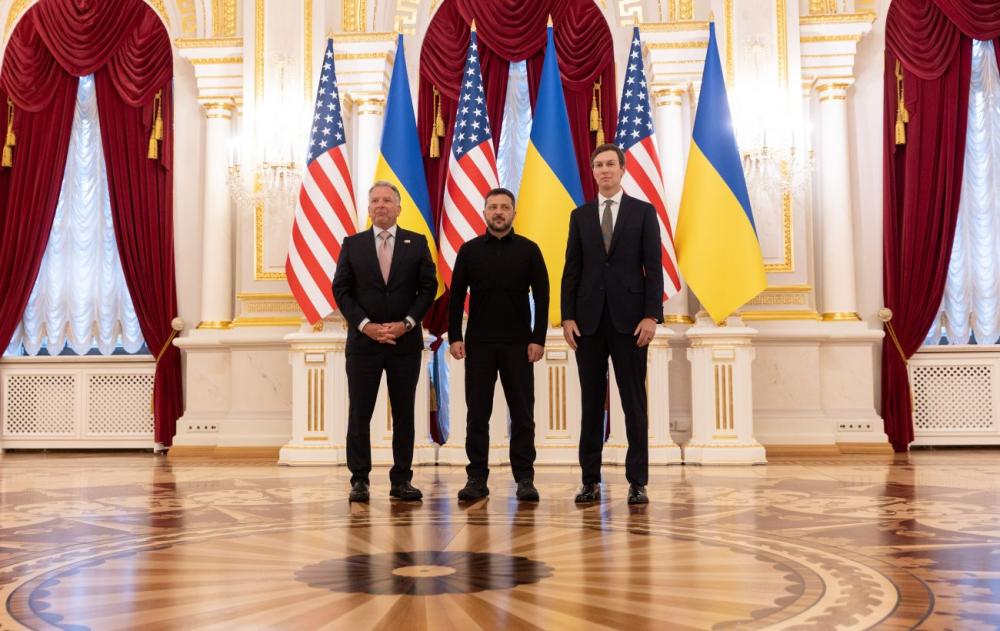
On 6 September, S. Witkoff and J. Kushner arrived in Kyiv and also held extended talks with Ukrainian President Volodymyr Zelenskyy.
Ukraine invited European representatives (French President’s Diplomatic and National Security Adviser Emmanuel Bonne, German Chancellor’s Foreign and Security Policy Adviser Günter Sautter, and UK Prime Minister’s National Security Adviser Jonathan Powell) to participate in the meeting with S. Witkoff and J. Kushner. The Europeans were expected to support Ukraine, strengthen its negotiating position and protect it from possible pressure. Alongside Ukrainian President Volodymyr Zelenskyy, the Ukrainian negotiating team included Head of the Office of the President of Ukraine Kyrylo Budanov, First Deputy Head of the Office of the President Sergiy Kyslytsya, Head of the Foreign Intelligence Service of Ukraine Rustem Umerov, and Chairman of the Servant of the People parliamentary faction Davyd Arakhamia.
V. Zelenskyy later stated that the US side had presented several “worthy ideas”, the details of which it was decided not to disclose temporarily, pending further elaboration. No specific agreement was reached as a result of the visit, although preparations began for subsequent consultations among Ukraine, the United States and European partners, as well as for a possible new trilateral meeting with the Russian Federation.
The talks concerned the so-called winter package. In particular, Ukraine raised the issue of supplies of Patriot air-defence systems financed by European countries. V. Zelenskyy also expects to meet US President Donald Trump in the latter part of September (provisionally, as there is currently no confirmation that such a meeting is being prepared) and to secure approval for an additional “winter package” of support, primarily air-defence systems and missiles to protect Ukraine’s energy infrastructure.
V. Zelenskyy stated that Ukraine was prepared for so-called cluster or sectoral ceasefires — separate agreements to halt mutual strikes against port, energy and other critical infrastructure. Moscow, however, is not currently prepared to accept such agreements because it believes that it retains an advantage over Ukraine in these areas. On the Ukrainian side, the discussion concerns exclusively partial de-escalation measures: no specific plan for a final peace settlement or parameters for a comprehensive peace agreement are currently being discussed.
The Ukrainian side was apparently not prepared to discuss any new peace plans or initiatives. Ukraine’s principal strategy was to avoid discussing specific peace plans and instead attempt to use the visit to obtain additional packages of financial and military assistance, as well as new weapons supplies from the United States.
It is unknown what was discussed during the separate closed meeting between Steve Witkoff and Volodymyr Zelenskyy. However, the delegation-level talks considered the creation of a demilitarised zone in the Donetsk and Zaporizhzhia regions as an element of disengagement between the parties, as well as the possible deployment of a contingent from UN member states there. The parties also discussed ideas contained in Donald Trump’s original 28-point peace plan, presented in November 2025. These included Ukraine’s renunciation of NATO membership and the enshrinement of neutral status while retaining the possibility of joining the European Union, corresponding amendments to the Constitution of Ukraine, a reduction in the size of the Ukrainian army, possible security guarantees and investments in the country’s reconstruction financed from frozen Russian assets.
The lack of substantive public information about the negotiations was offset by an active media component. Davyd Arakhamia appeared before journalists wearing a T-shirt bearing the words “Kyiv Regime”, and identical T-shirts were presented to Steve Witkoff and Jared Kushner. Volodymyr Zelenskyy also joked that the presence of the American representatives had “worked better than Patriot”, because the Russian Federation suspended its strikes on Kyiv during their visit. These episodes, and the broader emphasis on the outward atmosphere of the negotiations, effectively diverted attention from their limited informational content and lack of substantive results.
Nevertheless, Ukraine’s final public assessment of the negotiations was cautiously positive. Volodymyr Zelenskyy described the three rounds of talks as “very substantive” and reported the emergence of several new ideas, while simultaneously acknowledging the absence of significant progress in the negotiations and stating that the war would most likely continue through the winter.
For the presidential team, the principal result was apparently the maintenance of direct contact with D. Trump’s circle, the inclusion of the Europeans in the negotiating format and the postponement of further discussions until subsequent meetings.
Steve Witkoff and Jared Kushner also spoke of a “substantive” discussion and renewed diplomatic momentum. J. Kushner stated that the United States was working to create a “peace package” for a settlement in Ukraine. He added that he hoped negotiations would resume in a trilateral format involving Ukraine, Russia and the United States. S. Witkoff, for his part, noted: “I think we made significant progress in Moscow. We heard new ideas. You heard President Zelenskyy speak about trilateral talks, which we hope will be announced in the near future. In Moscow, we discussed many other important and well-founded ideas, which we brought here to Kyiv. We believe that cooperation is crucial. That is why representatives of the intelligence services of EU countries are here today. We brought members of our team who are deeply involved in finding a solution here. To achieve a result, both sides need to make compromises and bring their positions closer together. And we believe that we have everything necessary to accomplish this. We are determined, we care, and we hope that all of this will lead to a successful, peaceful and diplomatic solution,” S. Witkoff stated.
US Secretary of State Marco Rubio stated that, following the visits of US special envoys Steve Witkoff and Jared Kushner to Kyiv and Moscow, a roadmap for resuming negotiations between Ukraine and the Russian Federation could be developed within the next several weeks. “In my view, an opportunity to develop a roadmap will emerge in the coming weeks for further steps towards resuming negotiations and, possibly, reaching an outcome acceptable to both sides,” M. Rubio said.
M. Rubio described the meetings with Volodymyr Zelenskyy and Vladimir Putin held on 5–6 September as “substantive”, noting the emergence of new ideas for a peaceful settlement to which the parties had demonstrated a certain degree of openness. At the same time, the official emphasised that he was taking a restrained position, expressing neither excessive optimism nor pessimism, because both warring parties continue to maintain firm “red lines”, while there are currently no signs of readiness to make major concessions. “I do not want to characterise them as good or bad, productive or unproductive — except to say that they were substantive*. We have been observing the conflict for quite a long time, and so far we have not seen significant progress from* either side in terms of willingness to make concessions, while both sides continue to adhere to very clear ‘red lines’**,” M. Rubio noted.
M. Rubio’s statement regarding the possible emergence of a roadmap in the coming weeks suggests that Washington is indeed attempting to prepare a new negotiating format, determine the sequence of further steps and find room for manoeuvre between Moscow’s and Kyiv’s “red lines”. However, at present, this concerns only intentions and “new ideas”. There are no agreed parameters for a ceasefire, mutual concessions, security guarantees or an approved negotiating format. Therefore, the current diplomatic activity creates the appearance of movement to a greater extent than it demonstrates any genuine convergence of positions.
At the same time, the impression may arise that, at this stage, the positions of the United States and the Russian Federation are closer to each other than those of Washington, Ukraine and the European countries. Both Washington and Moscow are oriented towards reaching a final agreement to end the war, while the Ukrainian leadership is still speaking predominantly about various forms of cluster ceasefires.
This may explain why, following the visits of S. Witkoff and J. Kushner, D. Trump held an approximately one-hour telephone conversation with Russian President V. Putin, while no separate telephone conversation with V. Zelenskyy took place. Following the talks, Russian presidential aide Y. Ushakov stated: “Trump is interested in achieving a breakthrough in the Ukrainian settlement during his presidency. In his conversation with Putin, Trump advanced the idea that the conflict in Ukraine must be brought to an end, which would open prospects for the large-scale restoration of relations between Russia and the United States. Putin supported Trump’s commitment to building a constructive partnership between Russia and the United States.” The US President himself stated that V. Putin wanted to reach a deal, adding that if V. Zelenskyy wanted the same, “that would be good”. This formulation effectively shifts part of the responsibility for further progress in the negotiation process onto the Ukrainian side. D. Trump also allowed for the possibility of another bilateral meeting with the Russian President.
In addition, D. Trump called on Ukraine to stop striking Russian diesel production and storage infrastructure. “Zelenskyy has to do one thing. He has to stop destroying diesel fuel in Russia. That is what is causing the diesel shortage. This is not a Middle East problem. This is the result of what is happening between Russia and Ukraine,” the US President stated. In Russia, D. Trump’s appeal to the Ukrainian leadership was welcomed. Ahead of the US congressional elections on 3 November 2026, D. Trump is effectively shifting responsibility onto Ukraine for the energy and price consequences of the war with Iran that he launched, presenting Ukrainian strikes on Russian oil infrastructure as the principal cause of the diesel shortage.
The “Carthage” case developed into an open conflict between the Office of the Prosecutor General and the anti-corruption bodies.
The NABU and SAPO investigation into the “Carthage” case developed from criminal proceedings concerning the protection of fraudulent call centres into an open conflict between the Office of the Prosecutor General and the anti-corruption bodies. During the renewed investigative actions at the Office of the Prosecutor General, five additional notices of suspicion were prepared. First Deputy Prosecutor General Mariia Vdovychenko submitted her resignation. Searches had previously been conducted at the residences of Head of the Odesa Regional Military Administration Oleh Kiper in Kyiv and Odesa. The official’s telephone was seized, although he was not detained. Both M. Vdovychenko and Deputy Head of the International Cooperation Department of the Office of the Prosecutor General Serhii Kropyva, who is implicated in the “Carthage” case, have connections to O. Kiper.
Against the background of the investigation, Prosecutor General Ruslan Kravchenko submitted his resignation. Before leaving office, however, he brought the conflict with NABU and SAPO into the public sphere, announcing that he had signed a notice of suspicion against NABU Director Semen Kryvonos. The Prosecutor General accused him of forging official documents and receiving an unlawful benefit on an especially large scale, and also alleged that he had arranged a fictitious adoption of a child to avoid legal liability. In addition, R. Kravchenko announced a notice of suspicion against a person close to SAPO Head Oleksandr Klymenko and accused employees of the anti-corruption bodies of unlawfully accessing materials from criminal proceedings.
NABU and SAPO rejected these accusations and described the Prosecutor General’s actions as a continuation of systematic pressure on the independent anti-corruption bodies. According to their assessment, the active phase of this confrontation began in the summer of 2025 with an attempt to subordinate NABU and SAPO to the Office of the Prosecutor General. The Bureau also emphasised that it was not participating in a political struggle and that, at the time of R. Kravchenko’s public statement, the notice of suspicion had not been formally served on S. Kryvonos.
After signing the documents, R. Kravchenko left Ukraine. He explained the trip as an official assignment and said that he intended to inform international partners about the situation within the anti-corruption bodies. According to the official version of the Office of the Prosecutor General, his presence in France was connected with his participation in PACE hearings concerning abducted Ukrainian children. Nevertheless, the combination of his resignation, the accusations against the leadership of NABU and SAPO, and his subsequent departure abroad reinforced the impression of a systemic crisis within Ukraine’s law-enforcement hierarchy.
Overall, the developments appear to represent a continuation of the struggle between the presidential hierarchy and the anti-corruption bodies for influence over the country’s key state institutions. However, it remains unclear whether R. Kravchenko acted independently — motivated, for example, by personal revenge, a desire to respond to the investigation into his associates, or other considerations — or whether his actions were coordinated at a higher political level.
Publicly, President Volodymyr Zelenskyy distanced himself from the Prosecutor General’s actions and demanded that the Verkhovna Rada immediately support his dismissal: “There is only one path for this Prosecutor General — dismissal from office. That is exactly what I told him. Ukraine has seen all the reasons. If he considers this political pressure, let him call it that. I ask parliamentarians to support this dismissal without delay.” Head of the Presidential Office Kyrylo Budanov also distanced himself from the developments, focusing primarily on their foreign policy consequences: “Unfortunately, I do not have enough time to answer all your questions, so I will put it briefly: all of this is abnormal and causes maximum damage to Ukraine’s image in the world.”
Thus, the President and the Head of his Office publicly presented R. Kravchenko’s actions as an independent course of action. However, their statements alone do not yet provide a definitive answer as to whether the attack on the leadership of NABU and SAPO was solely the personal initiative of the outgoing Prosecutor General or part of a broader institutional confrontation.
Russia’s air terror: the “fire carousel” tactic in the skies over Ukraine.
The Russian Federation continues its regular large-scale strikes against Ukraine, expanding the geographical scope of its attacks and the range of targeted civilian, energy, transport and logistics infrastructure. Recent targets have included shopping centres in Sumy (9–10 September) and Pavlohrad (10 September), fuel facilities in Kyiv, a sunflower oil production plant in Dnipro, food and pharmaceutical warehouses, and port and railway infrastructure.
A new stage of escalation was the attack by a jet-powered drone on a passenger train near the Yahodyn station on the Polish border. Shortly before the strike, a diplomatic train passed through the area carrying former UK Prime Minister Boris Johnson (who attended the annual international security conference, the Yalta European Strategy — YES Annual Meeting 2026), former Swedish Prime Minister Carl Bildt and European security advisers. Such an attack may have been intended to exert demonstrative pressure on European elites. It is telling that as early as 2 September, Deputy Chairman of the Russian Security Council Dmitry Medvedev, while threatening Western politicians with “inevitable retribution”, specifically noted that they “often travel to Kyiv by train”. Russia is undoubtedly irritated by the regular visits of Western politicians and officials to Kyiv, as they visibly demonstrate Ukraine’s inclusion in the Western sphere of influence and the continuing political support for the Ukrainian leadership. The strike on a route used by foreign delegations may therefore have been intended to increase the personal risks associated with such journeys and gradually reduce the frequency of Western contacts with Kyiv.
At the same time, Kyiv itself remains one of the priority targets of Russian attacks, and the city authorities are therefore adapting the capital’s operations to prolonged air-raid alerts. The curfew has been shortened to the period from 01:00 to 05:00, while aerial threats have been divided into a “yellow” level for drone attacks and a “red” level for missile, ballistic or combined threats. During a “yellow” alert, the green metro line operates in full, including services across the Pivdennyi Bridge; during a “red” alert, it operates only on separate sections. The first 40–50 mobile shelters, each designed to accommodate approximately 30–40 people, are planned for installation at public transport stops.
Russia’s strike tactics are increasingly taking the form of a “fire carousel”: drones and decoy targets are launched in successive waves from different directions. The first groups identify the operation of radars and mobile fire teams, force the expenditure of ammunition and overload air-defence command systems. The main attack drones, jet-powered UAVs or missiles may then be directed through the weak points that have been identified. At the same time, hours-long alerts disrupt the operation of transport, businesses and public institutions, increasing psychological and economic pressure on the population.
The main advantage of this tactic lies in numerical superiority and an unfavourable ratio for Ukraine between the cost of attack and the cost of interception: a cheap drone can force air defences to employ a significantly more expensive missile. However, prolonged attacks require the mass and sustainable production of drones, while the repetition of routes gradually makes them easier to detect. Slow-moving aircraft remain vulnerable to electronic warfare, mobile fire teams and interceptor drones, while the large number of decoy targets reduces the proportion of platforms carrying an actual warhead.
Former Google CEO Eric Schmidt stated that open sources had cited a figure of approximately 80,000 jet-powered drones, which Russia could allegedly prepare by December of this year, while acknowledging that he did not know whether this estimate was accurate. If such a quantity is indeed assembled, Ukraine’s existing air defences will obviously be unable to intercept every aircraft using conventional means. At the same time, the figure may reflect maximum production capacity or the combined output of various types of UAVs rather than an actual stockpile of jet-powered drones. Such estimates may also be used to reinforce the narrative that Ukraine is incapable of sustaining a prolonged defence and to pressure Kyiv into accepting compromises as part of a peace settlement.
Western partners have agreed on new military support measures for Ukraine.
Following the 36th meeting of the Ukraine Defence Contact Group in the Ramstein format, held on 8 September, the partners agreed on new military support measures focused primarily on strengthening air defences and supplying drones and artillery ammunition. Germany announced new deliveries of interceptor missiles for Patriot systems and weapons for F-16 aircraft, as well as the procurement of drones. The United Kingdom will allocate £100 million to purchase US weapons through the PURL mechanism, provide an additional 95,000 drones by the end of 2026, and supply tens of thousands of extended-range artillery shells financed by other countries. The Netherlands will contribute $300 million to the Drone Line project and provide 300 anti-UAV missiles.
Estonia will maintain its support for Ukraine in 2027 at no less than 0.25% of GDP. Norway confirmed its previously announced $200 million package for the procurement of Patriot missiles. Spain will allocate €2 million to purchase fuel through the NATO Support and Procurement Agency and will also supply air-defence missiles and artillery ammunition. Lithuania will contribute $10 million to the PURL mechanism, Poland is preparing a new €50 million aid package that includes air-defence systems, and Sweden will provide a $28 million package, half of which — $14 million — will be directed to PURL.
A separate source of funding will be the EU’s two-year €90 billion loan to Ukraine: the European Union has approved the use of €6.1 billion to purchase interceptor missiles for Patriot systems, drones and electronic warfare equipment. Five exemptions from the programme’s standard conditions have been established for this purpose: three concern Ukrainian drones and components whose cost exceeds the established limits, while two relate to US equipment, including PAC-3 missiles. Ukraine will also be able to purchase them through NATO’s PURL mechanism.
Ukrainian Defence Minister Yevhenii Khmara stated that, using the EU loan and assistance from its partners, Ukraine is concluding contracts for the supply of approximately 1,000 missiles for Patriot systems. However, most of these missiles will arrive only in subsequent years, meaning that long-term contracts do not resolve the problem of protecting the country during the coming winter. Kyiv is therefore asking its allies to transfer interceptors from their existing national stockpiles. Germany was the first to respond to this appeal: Defence Minister Boris Pistorius announced the urgent transfer of PAC-2 missiles to Ukraine from Bundeswehr stocks and called on other countries to take similar decisions.
The Ukrainian Government is urging Parliament to pass the legislation required to unlock international funding.
The Ukrainian Government states that the slowdown in international funding could lead to restrictions on public spending and delays in social payments unless the Verkhovna Rada passes the legislation required to unlock the assistance. Finance Minister Sergii Marchenko warned that social payments could be delayed if the current situation persists. According to him, the Government has exhausted its ability to persuade Parliament and is being forced to reduce expenditure: “We have exhausted all verbal means of communication and are therefore compelled to introduce measures to restrict spending. We have reached the limit, and there is no explanation as to why, during this difficult period, we cannot vote for these bills while understanding the full importance of the issue.”
One of the conditions for unlocking part of the external assistance remains the adoption of legislation imposing taxation on international parcels valued at up to €150, which the Verkhovna Rada has once again failed to support. Overall, to fulfil the commitments agreed with its partners, the Government must adopt 44 resolutions by 1 November, while Parliament must pass 43 laws. According to Prime Minister Sergii Koretskyi, the relevant package covers tax changes, including taxation on small parcels, as well as judicial reform and other institutional commitments.
At the same time, a gap remains between the volume of military support announced by Ukraine’s allies and the funds actually allocated. At the NATO summit in July, Ukraine’s partners pledged to provide $81 billion in military assistance during 2026, while the Ministry of Defence of Ukraine reports that $72 billion has so far been confirmed. Consequently, approximately $9 billion in funding remains unsecured. During the summer, representatives of European institutions in Kyiv also analysed Ukraine’s budget figures to formulate their own assessment of the actual shortfall.
At the same time, Ukraine’s European partners do not share a single assessment of Kyiv’s stated requirement for an additional $27 billion, with some officials considering the figure inflated. Nevertheless, EU representatives warned member states as early as the spring that Ukraine’s actual requirements could be several billion euros higher than the initial estimates.
Under the EU loan package, Ukraine expects to receive approximately $52 billion in 2026 and a further $52 billion in 2027, with two-thirds of these funds intended for defence expenditure. In addition, non-EU countries and international financial institutions are expected to provide approximately $52 billion in loan financing during 2026–2027. These anticipated receipts are already being included by the Ukrainian Government in its budget planning and financing of current obligations.
Hostilities.
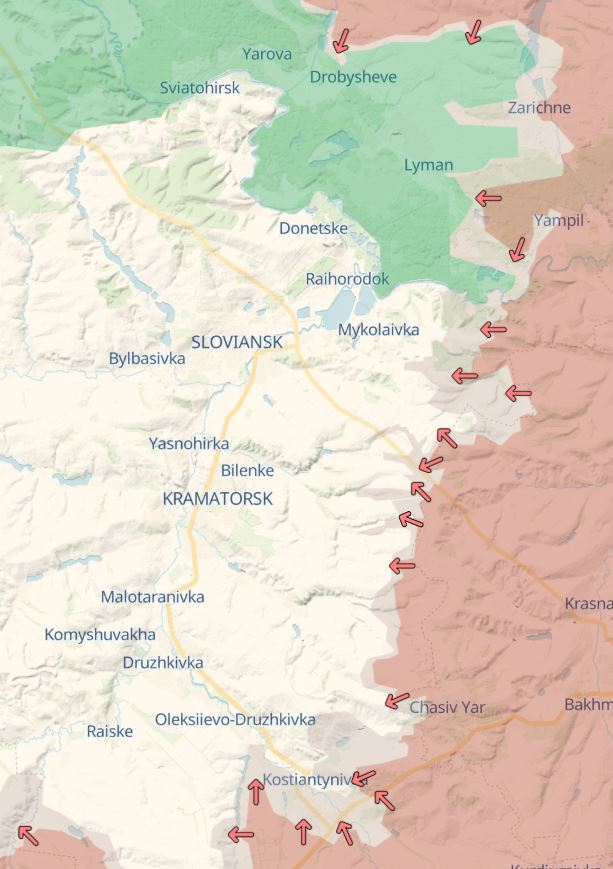
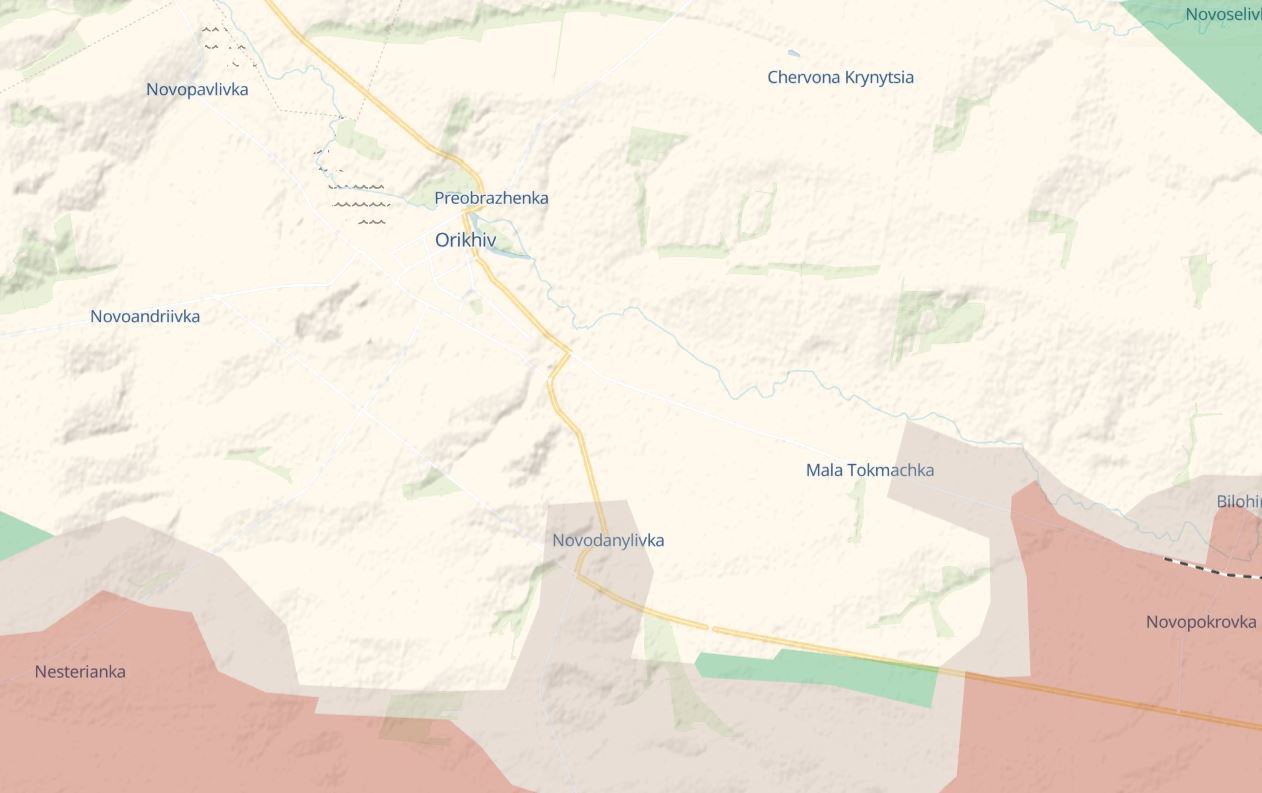
The pace of the Russian offensive generally remains slow; however, the front line continues to shift gradually, while new threats to Ukrainian defences are emerging in several sectors. Over the past week, the Russian Federation captured approximately 31 km² and currently controls 117,072 km², or 19.39% of Ukraine’s territory. No significant breakthroughs occurred, although Russian troops advanced in the areas of Huliaipole and Orikhiv (Zaporizhzhia Region), Dobropillia, Kostiantynivka and along the Sloviansk–Kramatorsk axis (Donetsk Region).
The most dangerous developments are being recorded along the Orikhiv axis (Zaporizhzhia Region). The battle for the Orikhiv fortified area is effectively beginning. Russian units are penetrating the south-eastern outskirts of Orikhiv, while the settlement of Novodanylivka, south of the city, has been moved into the grey zone. The potential loss of Orikhiv could open the way for Russian troops to advance further towards Zaporizhzhia and worsen the position of the Armed Forces of Ukraine along the entire southern front line, although the immediate threat to the city remains limited.
Along the Lyman axis (Donetsk Region), the Armed Forces of Ukraine have been attempting since May to eliminate the Russian bridgehead on the western bank of the Zherebets River. Certain successes have been achieved, but the bridgehead has not yet been completely eliminated. Its elimination would reduce pressure on Lyman and Sloviansk, although the four-month Ukrainian offensive has not yet developed into an operational breakthrough.
At the same time, the front is approaching Sloviansk and Kramatorsk (Donetsk Region), while small-arms engagements have already been reported near the settlement of Mykolaivka. Its capture would allow the Russian Federation to establish a foothold for exerting pressure on Sloviansk and advancing across the Siverskyi Donets towards Lyman. At the same time, Russian claims that Lyman and Sviatohirsk have been captured do not currently correspond to the actual situation.
Along the Kupiansk axis (Kharkiv Region), the position of the Armed Forces of Ukraine is gradually deteriorating: Russian troops have partially restored the presence they lost following Ukrainian counterattacks. The situation remains contradictory in the area of the so-called Krasnoyarsk salient (Kharkiv Region), which covers approximately 400–500 km². The Russian side claims that Ukrainian units in this area have been encircled, while Ukraine denies this. However, the penetration of Russian groups into several settlements creates a threat that the salient will gradually be compressed and that Ukrainian defences on the left bank of the Siverskyi Donets will become more difficult. The main forces of the two sides have not yet been committed here or along the Sumy axis (Sumy Region).
Maps of hostilities.
(According to DeepState Map)
Donetsk Region.

Zaporizhzhia Region.
Ruslan Bortnik, Oksana Krasovskaya
for the Ukrainian Institute of Politics
Friends, we would like to remind you that additional analytical products from the Ukrainian Institute of Politics are available to organisations, businesses and private clients: Weekly Intelligence Brief, Geopolitical Risk Reports, Executive Briefings, as well as specialised analytical materials and forecasts upon individual request. For additional information, please contact us at: uiamp2012@gmail.com or by phone: +38 (093) 757-75-65.