Авторы публикации
WEEKLY SUMMARY:
THE UKRAINIAN DIMENSION.
(October 19–26, 2026)
Ukraine’s political system is entering a winter period of turbulence, as growing expectations of Russian strikes against Ukraine’s energy infrastructure, combined with increasing political pressure from Washington, create the conditions for another “perfect storm.”
Despite the intensification of diplomatic contacts over the past week, the situation surrounding Ukraine continues to develop according to the logic of a protracted war, while the positions of the parties remain far from agreement on the terms for ending it.
The approaching U.S. congressional midterm elections on November 3 are increasing the Trump administration’s interest in demonstrating a diplomatic achievement and strengthening the Republican Party’s domestic political standing. However, the White House’s attempts to agree on the parameters of a possible peace agreement are encountering incompatible demands from the warring parties (Russia and Ukraine) and disagreements between Washington, Kyiv, and European capitals.
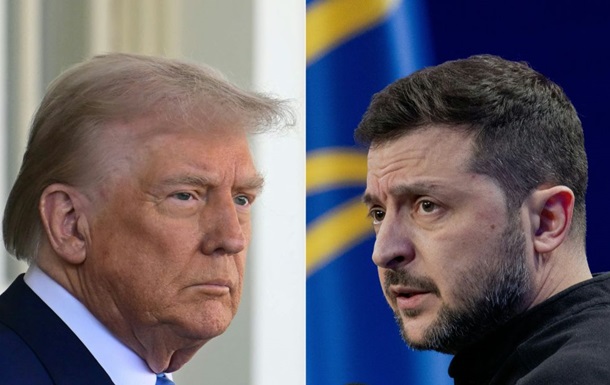
The coordination of American proposals is accompanied by a deepening crisis in Ukrainian-American relations and increasing pressure from Washington on Kyiv. The U.S. administration is demanding that Ukraine conclude a deal to end the war and refrain from striking Russian oil refineries. Calls for presidential elections to be held in Ukraine are creating additional political pressure. These disagreements are accompanied by periodic information confrontations between U.S. President D. Trump and Ukrainian President V. Zelensky: Against the backdrop of rising fuel prices and a virtual deadlock in efforts to resolve the Middle East crisis, U.S. President Donald Trump is attempting to shift the attention of American society to the Russian-Ukrainian war, portraying Ukrainian strikes against Russian oil refineries as one of the causes of the energy crisis in the United States and Ukrainian President Volodymyr Zelensky as a political obstacle to concluding a peace agreement. Meanwhile, the Ukrainian leader is attempting to secure the support of American society and European allies by criticizing Washington’s policy toward Ukraine. V. Zelensky, having secured the support of European partners (the EU has allocated funding for defense needs, confirmed deliveries of weapons and air defense systems; Kyiv has also requested an additional €70 billion for 2027 on top of the €90 billion already allocated for 2026–2027), made it clear that he would not unilaterally observe an energy ceasefire. Against this backdrop, repeated disruptions to the warning system for Russian ballistic missile launches and restrictions on the military use of Starlink are increasing Kyiv’s vulnerability. Elon Musk’s statement (the founder and head of SpaceX) that the “loophole” allowing Ukrainian forces to use Starlink for offensive drone strikes had been closed, together with his indication that the U.S. government controls the military Starshield system, suggests that SpaceX’s actions regarding communication restrictions for the Armed Forces of Ukraine were most likely coordinated with the U.S. administration. At the same time, since October 16, the Ukrainian side has not carried out strikes against major Russian oil refineries, which may be linked to an informal agreement with the United States to limit such attacks in exchange for restoring the early warning system for Russian ballistic missile strikes, as well as reinstating the previous operating conditions of Starlink and Starshield. However, Ukraine continued to attack oil infrastructure and petrochemical enterprises. Thus, on October 18, the St. Petersburg Oil Terminal and the Ruchyi oil depot were attacked; on October 24, the General Staff of the Armed Forces of Ukraine reported a strike on Togliattikauchuk, while reports also emerged of a strike on Omsky Kauchuk; and on October 26, a strike was reported against Voronezhsintezkauchuk.
Shuttle negotiations involving U.S. Special Envoy Steve Witkoff with representatives of European countries and the President of Ukraine in Oslo (October 20), and with Russian President V. Putin in St. Petersburg (October 21), revealed a gap between the development of a peace package and the willingness of the parties to make real concessions for its adoption.
There is no indication of full alignment between the positions of the United States, Ukraine, and Europe: Kyiv rejects the withdrawal of troops from the Ukrainian-controlled part of Donbas. Ukrainian President V. Zelensky stated his readiness to freeze the war along the current front line, but refused to cede additional territories to Russia.
The interconnection between territories, security guarantees, sanctions, and reconstruction remains a subject of bargaining between the parties. According to preliminary information, the main provisions of the American proposals for ending the war envisage the creation of a demilitarized zone in Donbas; for Russia — the opportunity to conclude business deals with American companies, the lifting of sanctions and normalization of political relations, the resumption of Russian gas supplies to Europe, and the restoration of Nord Stream operations; for Ukraine — an investment package and EU membership in exchange for abandoning NATO membership.
Steve Witkoff brought documents containing American proposals for a peace settlement to Russia and also discussed the possibility of a sector-specific ceasefire and the organization of a trilateral meeting between the leaders of the United States, Russia, and Ukraine. Moscow rejected a pause in hostilities and sector-specific ceasefires, agreeing in principle only to negotiations between technical delegations in Abu Dhabi in November. This round of negotiations could become the fourth of this format this year alone. In 2026, three rounds of trilateral negotiations between Ukraine, Russia, and the United States have already taken place: on January 23–24 and February 4–5 in Abu Dhabi (UAE), and on February 17–18 in Geneva (Switzerland). Technical delegations proved unable to achieve a breakthrough without a political decision. A return to the technical format in itself is more likely to indicate a lack of substantial progress: this format previously failed to overcome the fundamental disagreements between the parties. In fact, this concerns the possible formal resumption of the negotiation process in the absence of an agreed political basis for ending the war.
At the same time, the Kremlin is promoting a meeting between the leaders of the United States, Russia, and China at APEC in Shenzhen (China) on November 18–19, 2026, which currently excludes Ukraine. The choice of formats allows Moscow to maintain access to Washington and involve Beijing as a sympathetic moderator, while simultaneously limiting the influence of Europe and Ukraine. The November schedule also makes it possible to take into account the results of the November 3 U.S. elections when developing a new strategy.
In parallel, the United States and Russia are developing a series of small bilateral deals, in addition to the oil and diesel agreements, while the release of U.S. citizen Steven Gabbard maintains a positive atmosphere and creates precedents for further agreements.
Overall, Russia's behavior may indicate a calculation to convert its advantage in missiles and drones into the weakening of Ukraine and more favorable negotiating positions before the spring of 2027. For Ukraine and Europe, this increases the cost of maintaining the status quo: additional funding, weapons, and human resources are needed. Otherwise, Russia's demands will only continue to grow.
The main problem with the current negotiation process is the absence of an agreed position even within the Western coalition — between the United States, Ukraine, and European allies — let alone the fundamental contradictions with Moscow. The Trump administration is seeking the rapid conclusion of a peace agreement, including through concessions by Ukraine. Kyiv and its European partners, by contrast, are focused on continuing military containment and the attrition of Russia and are unwilling to accept the Kremlin's main demands. Moscow, in turn, is making it clear that substantive dialogue will begin only after sanctions (primarily European sanctions) are lifted and Ukrainian troops are withdrawn from the entire territory of Donbas. Therefore, the likelihood of a comprehensive agreement remains low for now, especially without a change in the balance of power or the political leadership of the warring parties.
___________________________________
The Peace Negotiation Process.
On October 20, a meeting between Ukrainian President V. Zelensky and U.S. Special Envoy Steve Witkoff took place in Oslo. The negotiations were attended by Norwegian Prime Minister Jonas Gahr Støre and Finnish President Alexander Stubb, while U.S. Special Envoy Jared Kushner joined remotely. The discussions focused on the content of the proposals that the American delegation was to convey to Moscow, security guarantees for Ukraine, and preparations for a meeting at the level of heads of state. Before the consultations, V. Zelensky also held a telephone conversation with U.S. Secretary of State Marco Rubio, after which he reported receiving “positive signals” from Washington. These negotiations continued the consultations held in Miami (October 9, 2026), representing another attempt to coordinate a common position among Ukraine, the United States, and European allies regarding peace agreements. Earlier, in Miami, the American side presented a peace plan comprising three main components: security guarantees for Ukraine (compatible with Article 5 of the NATO Charter), guarantees for its post-war reconstruction, and a “roadmap” for accession to the European Union. Washington subsequently announced that these proposals had been conveyed to Ukraine and its European partners and stated that it was awaiting their response. Oslo was not chosen as the venue for the new negotiations by chance — it represents precisely the northern alliance of European countries that take the most uncompromising position toward Russia and any concessions to Moscow. However, the outcome of these negotiations does not suggest that the parties' positions were fully coordinated.
On October 21, S. Witkoff presented the prepared proposals to Russian President V. Putin in St. Petersburg. From a practical standpoint, Witkoff could have presented Russia with two main proposals: a sector-specific ceasefire in various formats (which the Kremlin had previously rejected) and the organization of a trilateral meeting between the leaders of Ukraine, Russia, and the United States. The Kremlin stated that the conversation had been substantive, while Putin promised to study the proposals presented. Witkoff noted that “there is still much important work ahead.” The parties discussed the possibility of resuming the trilateral negotiation format (United States — Russia — Ukraine) at the technical level.
Moscow has so far shown no readiness for a trilateral meeting of leaders, which Ukraine and the United States have been insisting on. No concrete agreements were reached following the contacts. Russian Presidential Aide Yury Ushakov stated that the proposals conveyed by S. Witkoff following the consultations in Oslo were “not entirely satisfactory” to Moscow. At the same time, he reported V. Putin's readiness in principle to resume trilateral negotiations around November 10, primarily on the issue of establishing a post-war security system for Russia and Ukraine. According to Ushakov, V. Putin positively assessed the mediation efforts of the American administration and confirmed his willingness to facilitate a diplomatic settlement concerning Iran, emphasizing that the possibilities for negotiations with Tehran were far from exhausted.
The key obstacle to negotiations remains the fact that Washington, Kyiv, and European capitals have not yet developed a unified approach to the settlement, while their disagreements with Moscow are even more profound. The D. Trump administration seeks the rapid conclusion of a peace agreement, including through concessions by Ukraine. Kyiv and its European partners, by contrast, are focused on continuing the military containment and attrition of Russia and are unwilling to accept the Kremlin's main demands. Moscow, in turn, is making it clear that substantive dialogue will begin only after sanctions (primarily European sanctions) are lifted and Ukrainian troops are withdrawn from the entire territory of Donbas.
The likelihood of a comprehensive peace agreement remains low without a substantial change in the balance of power or the political positions of the parties. Negotiations make it possible to maintain diplomatic channels and discuss individual agreements, but progress toward an overall agreement is constrained both by disagreements among the United States, Ukraine, and Europe and by contradictions with Russia.
The Ukrainian leadership and European partners expect that a change in the political balance in the United States could alter Washington's approach to ending the war. The nearest reference point is the congressional midterm elections on November 3, 2026, and, in the longer term, the 2028 presidential election. Such expectations reduce Kyiv's willingness to make rapid concessions within the framework of American peace initiatives. The divergence in approaches is causing irritation within the D. Trump administration and creates the risk of a further deterioration in relations with Ukraine and a reduction in American support.
The harsh rhetoric in the periodic public exchanges between D. Trump and V. Zelensky is particularly indicative in this regard.
Trump is threatening the possible introduction of 200% tariffs against Ukraine and Russia over the absence of a peace agreement. “Tariffs helped us end eight wars. Perhaps we should immediately apply this approach to Ukraine and Russia. I had not thought about it before, but it would not work anyway, because we buy very little from them,” the U.S. President said.
Regarding V. Zelensky, Trump said: “Zelensky is a man who should have settled this war a long time ago. If he had listened to me, he would have made a much better deal long ago, and one million fewer people would have died on the Ukrainian side. And, frankly, I think it is time for someone else to negotiate on behalf of Ukraine. Because what happened is this: the front line has barely moved, but a million people — an enormous number of people — have died. Ukraine is losing its male population. Ukraine could have settled this issue long ago. If he had listened to me, remember the meeting in the Oval Office? He would have settled everything long ago. Perhaps it is time for Zelensky to let someone else handle the negotiations.”
“Ukraine must want to make a deal, because the United States has spent enormous amounts of money, Europe has also spent enormous amounts of money, and now Europe is tired of it,” he said.
At the same time, Trump noted that “a meeting between Putin and Zelensky is not necessary for a settlement in Ukraine.” A trilateral meeting between the leaders of Ukraine, the United States, and Russia, which V. Zelensky insists upon, currently appears unlikely, since Moscow sees no point in such a format before the main terms of a peace agreement have been agreed upon in advance.
For his part, V. Zelensky continues to criticize Trump. In an interview with British journalist Steven Bartlett, he said: “Trump has decided to blame all the problems on me rather than Putin, explaining to his supporters that diesel fuel prices in America are supposedly rising because of us. I believe it is wrong and unacceptable for Trump to blame me for Russia's aggression and the crimes committed by Russia. He is changing the context, and that is unfair. I think this is simply an attempt to divert attention from Iran, from what is happening in the Middle East. The Strait of Hormuz is blocked. That is the root of the problem. But all of this is being shifted onto us, and I, as the leader of our country, am becoming the target of attacks.” “Trump should use the same tone toward Putin as he uses toward me.” Regarding “hellish sanctions,” he said: “Trump can do it. I do not know why he does not do it.”
In an interview with ABC News, V. Zelensky stated his readiness to conclude a peace agreement “as early as today” and cease hostilities along the current front line, without ceding additional territories to Russia. He linked the cessation of Ukrainian strikes against Russian oil refineries to one of three conditions: a mutual energy ceasefire, permission to use Starlink on Russian territory to strike ballistic missile launchers, or the supply of interceptor missiles for Patriot systems.
V. Zelensky also stated that he would run for a second term if elections were held before the end of the war, describing this as his responsibility for defending the country. To prepare for the vote, he proposed ensuring at least 60 days of ceasefire in order to introduce the necessary legislative amendments and create conditions for the safe participation of citizens, including military personnel.
It should be noted that a significantly more serious risk for Ukraine and Europe at present is a possible trilateral deal between the United States, China, and Russia, under which the major powers could reach agreements on a broader range of geopolitical and economic issues, including the settlement of the war in Ukraine, without the direct participation of Kyiv and its European allies and without fully taking their interests into account.
Overall, the U.S. congressional election campaign is already drawing to a close, so the current situation will have only a limited impact on the elections. It is unlikely that Ukraine and Europe will now agree to D. Trump's proposals, allowing him to announce the conclusion of a peace agreement, which would also have to be agreed upon with Russia. This issue is gradually acquiring significance in the context of the U.S. presidential election on November 7, 2028, and Washington's longer-term strategic interests.
The issue is now less about pre-election publicity and more about U.S. economic interests, a reassessment of relations with Russia and China, and the possible formation of a new geopolitical triangle: Washington — Moscow — Beijing. Important venues for discussing more extensive agreements could include the APEC summit on November 18–19, 2026, in Shenzhen (China), and the G20 summit on December 14–15 in Miami (United States). If meetings between D. Trump, V. Putin, and Xi Jinping take place, the discussions could concern a broader geopolitical deal encompassing not only the terms for ending the war in Ukraine, but also sanctions policy, energy markets, trade and economic relations, and the redistribution of spheres of influence among the major powers. At the same time, V. Zelensky also views the G20 summit as a possible venue for trilateral negotiations between Ukraine, the United States, and Russia, although the parties' participation in such a format has not yet been agreed upon.
Washington is seeking to reach a deal with Moscow either through direct Russian-American negotiations or by achieving a compromise peace settlement in Ukraine. The second option is politically safer for Trump, as it would reduce domestic criticism associated with the possible conclusion of a separate deal with Russia. A direct agreement between Washington and Moscow also remains possible, but this path is considerably more dangerous for Trump, as his administration could face harsh criticism within the United States. American society remains largely pro-Ukrainian. Sympathy and support for Ukraine persist among a significant proportion of the U.S. population. According to various estimates, 50–70% of Americans support Ukraine.
The White House is therefore in no hurry to formally sever relations with Ukraine or completely terminate cooperation, since such decisions could entail serious domestic political costs against the backdrop of continued support for Ukraine within American society. Instead, D. Trump and his entourage are seeking to reduce V. Zelensky's popularity among Americans in order to weaken public resistance to a possible tightening of Washington's policy toward Kyiv. Furthermore, an official termination of aid to Ukraine could trigger legal proceedings and political initiatives against the administration, up to and including impeachment attempts, which the Democratic Party could use in its struggle against the Republicans. However, in a critical situation, Trump and his team may proceed with a comprehensive deal with Moscow, despite the potential domestic political costs.
Against the backdrop of the crisis in Ukrainian-American relations, V. Zelensky continues his public information self-defense.
On October 25, 2026, Ukrainian President Volodymyr Zelensky gave another extensive interview to Alla Mazur, host of the “TSN. Week” program on the “1+1” television channel, as part of the national “United News” telethon, in which he discussed negotiations aimed at ending the war. When asked about the contents of the document containing American proposals for ending the war, which U.S. Special Envoy Steve Witkoff had delivered to Russian President Vladimir Putin in St. Petersburg following the negotiations in Oslo on October 20, the Ukrainian President declined to disclose the document's contents in detail, citing agreements with the American side. However, he commented on individual provisions concerning security guarantees, the size of the Ukrainian army, neutral status, and territories.
Regarding security guarantees, Ukraine's neutral status, and possible restrictions on the size of the Armed Forces of Ukraine, V. Zelensky emphasized that these issues cannot be determined by the Russian side. “I probably will not discuss this in detail because we have certain agreements with the Americans. Nevertheless, our position is clear. Our security guarantees are our security guarantees. They cannot be imposed by the Russian side. Therefore, the conclusions are clear: restrictions on our army and Ukraine's neutrality are not up for discussion,” the President stated. According to him, security guarantees must provide either for Ukraine's membership in NATO or for commitments by the United States and European countries analogous to Article 5 of the North Atlantic Treaty.
V. Zelensky also emphasized that Ukraine's security guarantees must be legally binding and approved at the legislative level by the guarantor countries, particularly by the U.S. Congress. “This is not simply a matter of an agreement between the President of Ukraine and the President of the United States of America. There must be approval of legally binding security guarantees, meaning Congress. Congress must vote on the security guarantees if these are bilateral security guarantees between Ukraine and the United States.”
V. Zelensky separately addressed the issue of the size of the Armed Forces of Ukraine: “If I have sufficient funding, I want to maintain an army of 800,000 personnel. We ourselves decide what our army will be like.” At the same time, he noted that Kyiv's position regarding the inadmissibility of restrictions on the size of the Ukrainian army generally coincides with the American position.
Regarding territories, V. Zelensky clarified: “The issue of territories is a red line that can be discussed exclusively at the level of leaders.” At the same time, he confirmed that the American side had repeatedly raised the issue of a possible exchange of territories.
According to V. Zelensky, the United States has fully restored the operation of the early warning system for Russian ballistic missile strikes and has also lifted some restrictions on the use of Starlink and Starshield by Ukrainian military personnel. The President reported that the terminals had resumed operating at speeds of up to 420 km/h, compared with the previous limit of 100 mph (approximately 161 km/h). He described the negotiations as productive and stated: “We got back what we needed.” At the same time, according to him, two of the three key problems — restrictions on satellite communications, intelligence support, and the shortage of air defense systems — had been resolved, while the issue of supplying air defense systems remains open.
Regarding Ukraine's financing in 2027, V. Zelensky stated that an additional $70 billion would need to be secured on top of the $45 billion already available, bringing the total to $115 billion. “We are talking about 70 plus the 45 that we already have. That is, we have received, I believe, we have discussed everything in detail, and the leaders understand that we need this. I see a positive signal, and it is impossible for us without it. It is simply a task that needs to be accomplished, and that is all,” the President emphasized.
V. Zelensky separately commented on the humanitarian situation in the Russian-occupied town of Oleshky in Kherson Oblast. According to him, the town and its surrounding areas are heavily mined, and the Russian side will not agree to the evacuation of all residents to Ukrainian-controlled territory.
In political terms, V. Zelensky's interview represented a continuation of his public information self-defense against the backdrop of deteriorating relations with the D. Trump administration and increasing American pressure concerning peace negotiations, territorial concessions, and the holding of elections in Ukraine. The main emphasis was placed on the domestic audience: he demonstrated that the Ukrainian leadership retains control over the negotiation process, is securing the restoration of American military and technological support, and does not agree to settlement terms imposed from outside.
What Is Happening with Starlink in Ukraine?
The main instrument of U.S. pressure on Ukraine could be the gradual restriction of critically important military and technological support without formally terminating it: maintaining Starlink restrictions, disruptions in the transmission of warnings about Russian missile attacks, and reductions in arms deliveries under the pretext of high demand from other U.S. partners — Saudi Arabia, Israel, and Taiwan. Such a policy of gradually exhausting Ukraine could strengthen Russia's advantages in aerial warfare, accelerate the destruction of Ukrainian energy and logistics infrastructure during the winter of 2026–2027, and subsequently worsen the position of the Armed Forces of Ukraine on the front line. Ultimately, military and economic exhaustion could provoke both internal destabilization and a change of government in Ukraine itself.
Restrictions on the operation of Starlink and Starshield pose a serious military and technological threat to Ukraine, as they allow the United States to effectively regulate the offensive and defensive capabilities of the Ukrainian army by changing the technical parameters of satellite communications. The issue concerns not so much the direct dependence of the Armed Forces of Ukraine on American technologies as Washington's ability to determine the limits of their use under combat conditions.
On the night of October 14, 2026, Ukrainian military personnel encountered restrictions on the operation of Starshield terminals — the military segment of SpaceX's satellite communications system. When a certain speed was exceeded, according to Ukrainian military sources, ranging from 72–120 to 160 km/h depending on the equipment, the connection could be interrupted. This complicated the use of certain reconnaissance and strike drones, as well as high-speed interceptor drones. Following the initial disruptions, some functions were restored, but the speed restrictions remained in place. The Ukrainian side is negotiating with the United States and SpaceX to have them lifted.
Before the restrictions were introduced, military Starshield terminals had no movement speed limits whatsoever. Internet connectivity operated reliably at any speed at which Ukrainian drones and military equipment were moving. At present, SpaceX has partially restored operations, establishing a stable maximum movement speed of 160–161 km/h. Kyiv's main demand is the complete removal of all speed restrictions for the military Starshield package. As a compromise interim solution, Ukraine is demanding that the speed limit be raised to at least 450 km/h.
The introduction of the restrictions coincided with intensified demands from the D. Trump administration to halt Ukrainian strikes against Russian oil refineries, which Washington links to rising global fuel prices ahead of the U.S. congressional midterm elections. And it is most likely that the restrictions were introduced through an informal political decision by the D. Trump administration, but, of course, no one will admit to making such a decision, since it would contradict U.S. congressional decisions on allocating aid to Ukraine. In the future, such an order could also become grounds for new impeachment proceedings.
U.S. President Donald Trump publicly avoided giving a direct answer to the question of whether he had personally called Elon Musk to request the removal of speed restrictions for Starlink terminals in Ukraine. Responding to questions from American journalists on Thursday, October 22, Trump said literally the following: “Well, I don't want to talk about it, but I know it was a very interesting situation... I don't want to comment on it one way or another. It doesn't matter whether I called or someone else did. I think the main thing is that he restored its operation.”
At the same time, the U.S. President emphasized that his relationship with Musk remains “very good.” Thus, Trump himself neither confirmed nor denied that the call had taken place. Earlier, The Wall Street Journal reported that Trump had allegedly asked Musk to remove the speed limit (approximately 160 km/h) for the Armed Forces of Ukraine. According to the publication, the call took place on Wednesday, October 21. Elon Musk himself stated that Ukrainian military personnel had allegedly used Starlink terminals for drone strikes in violation of the system's terms of service. According to him, this capability had been restricted the previous week.
At the same time, Ukrainian President V. Zelensky clarified in comments to journalists that full connectivity (at speeds of up to 400 km/h) had not yet been restored. In Oslo, V. Zelensky also raised the problems of transmitting American warnings about Russian missile launches and restrictions on satellite communications. On October 25, he reported the full restoration of warnings and the operation of Starshield at speeds of up to 420 km/h, describing these changes as the result of his conversation with S. Witkoff.
Most likely, from the White House's perspective, this is an attempt to minimize its own electoral losses and demonstrate that the American administration was not involved in creating a security crisis for Ukraine. Earlier, U.S. Secretary of State Marco Rubio had already stated that D. Trump finds it distressing to see Russian ballistic missiles striking residential buildings in Kyiv.
In the American information space, footage of destroyed Ukrainian cities and the consequences of Russian attacks appears constantly and is actively used by Trump's Democratic opponents to criticize him. American society remains largely pro-Ukrainian. Sympathy and compassion for Ukraine persist among a significant proportion of the U.S. population. According to various estimates, 50–70% of Americans support Ukraine. Furthermore, an official termination of aid to Ukraine could provoke legal proceedings and political initiatives against Trump, up to and including impeachment attempts. The Democratic Party would certainly take advantage of such an opportunity.
The direct termination of military aid to Ukraine is politically risky for D. Trump, as it could provoke resistance from Congress and intensify criticism from Democrats and some Republicans. Otherwise, the consequences of a complete Starlink shutdown would be considerably more extensive. Standard terminals provide communications between units, coordination of operations, transmission of intelligence data, and command and control of troops. Their widespread shutdown could disrupt coordination between Ukrainian units, the operation of unmanned systems, and the stability of defenses in certain sectors of the front.
European countries do not yet have a fully functional alternative to Starlink and Starshield. Although satellite projects are currently being developed and the use of European commercial networks is being discussed, their capabilities remain limited in terms of coverage, the number of terminals, deployment speed, and integration into Ukraine's military infrastructure. The creation of comparable European systems is regarded as a task for the next several years, approximately until 2029–2030.
Restrictions on Starlink and Starshield create a mechanism for external regulation of Ukraine's military capabilities. Depending on the scale of the restrictions, Washington can influence the intensity of Ukrainian offensive operations, the effectiveness of long-range strikes, and the ability to counter Russian drones. The main danger is that further restrictions on satellite communications, combined with reductions in intelligence support and arms supplies, could lead not only to a decline in the offensive potential of the Armed Forces of Ukraine, but also to a weakening of Ukraine's defense forces as a whole.
The “Envelope Case”: Increasing Pressure from Anti-Corruption Institutions on the Leadership of the Presidential Servant of the People Faction.
Anti-corruption bodies have once again intensified the investigation into payments of monetary rewards to members of parliament from the Servant of the People faction in exchange for the required votes in the Verkhovna Rada — the so-called “envelope case.” On October 19, the non-governmental organization Anti-Corruption Action Center (AntAC) submitted a report of a possible criminal offense by the head of the presidential faction, Davyd Arakhamia, to Acting Prosecutor General Anton Kovalsky, demanding that the relevant information be entered into the Unified Register of Pre-Trial Investigations (URPI) and that the investigation be assigned to the National Anti-Corruption Bureau of Ukraine (NABU). Earlier, in February 2026, former Prosecutor General Ruslan Kravchenko had refused to register similar criminal proceedings against D. Arakhamia, citing the fact that the relevant circumstances were already being investigated by NABU. As of October 26, 2026, the new Acting Prosecutor General, A. Kovalsky, had also not opened separate proceedings against D. Arakhamia. The Prosecutor General's Office reported that the materials submitted had been forwarded to NABU for inclusion in the existing investigation. AntAC announced its intention to challenge the prosecutor's office's inaction in court. The “envelope case” had already developed further on December 27, 2025, when NABU and the Specialized Anti-Corruption Prosecutor's Office (SAPO) announced suspicions against five sitting members of parliament, including Deputy Head of the Servant of the People faction Yuriy Kisel. According to investigators, an organized group operated within the presidential faction, arranging payments to deputies in exchange for the required votes. According to materials from the High Anti-Corruption Court, the scheme was allegedly directed by a member of parliament from the faction's leadership, who received $85,000 at the end of 2025 for possible subsequent distribution among other deputies. During the investigation, searches were conducted at the premises of an aide to D. Arakhamia, and detectives obtained authorization to collect his biological samples. Based on these circumstances, AntAC suspects that D. Arakhamia himself may have been the organizer of the scheme. However, his involvement in the crime has not been proven by investigators, and he has not been formally notified of suspicion.
The confrontation surrounding the case is taking on the character of an institutional conflict between the anti-corruption establishment and the Prosecutor General's Office. Under Article 482-2 of the Criminal Procedure Code of Ukraine, only the Prosecutor General is authorized to enter information about a possible criminal offense committed by a member of parliament into the Unified Register of Pre-Trial Investigations. Thus, despite possessing investigative materials, NABU and SAPO cannot independently initiate separate proceedings directly against D. Arakhamia. A. Kovalsky's refusal to carry out the necessary procedural actions effectively preserves the situation established under R. Kravchenko and intensifies the contradictions between the anti-corruption bodies and the prosecutor's office.
The revival of the “envelope case” is becoming another avenue of pressure on the leadership of the parliamentary majority within the framework of the ongoing confrontation between the anti-corruption establishment and the current authorities. Unlike investigations targeting individual members of the presidential entourage, the possible prosecution of D. Arakhamia would directly affect the functioning of the Servant of the People faction, through which parliamentary support for the government's key decisions is secured. At the same time, the prosecutor's office's continued refusal to open proceedings indicates that existing procedural mechanisms still make it possible to contain the expansion of the investigation to the senior leadership of the presidential faction. Further escalation of the conflict, including a possible court challenge to the actions of the Prosecutor General's Office, could increase pressure on the presidential power structure and create additional risks to the stability of the parliamentary majority.
A new political and financial conflict is emerging around the leadership of the National Bank of Ukraine and the privatization process of state-owned banks.
The focus of attention has shifted to NBU Governor Andriy Pyshny, reports of searches, personnel changes at Ukrgasbank, and preparations for the sale of two state-owned banks — Sense Bank and Ukrgasbank — with the involvement of the international financial group Rothschild & Co. NABU searches targeting NBU Governor Andriy Pyshny and preparations for the privatization of two state-owned banks.
On October 21, 2026, the National Anti-Corruption Bureau of Ukraine (NABU), together with the Specialized Anti-Corruption Prosecutor's Office (SAPO), conducted searches at the National Bank of Ukraine and at the residence of its Governor, Andriy Pyshny. The investigative actions are connected with an investigation into the activities of companies implicated in the “Midas” corruption case and the alleged links of their owners to the former leadership of the Office of the President. Against this backdrop, discussions about the possible resignation of A. Pyshny, whom the media associate with former Head of the Office of the President Andriy Yermak, have intensified again in political circles. A. Pyshny himself stated that the investigation does not concern the activities of the National Bank or the performance of his official duties. According to him, the searches uncovered no materials indicating that he or NBU employees had committed any offenses. On the same day, the National Bank officially denied reports that A. Pyshny had allegedly submitted his resignation. Thus, as of October 26, he continues to head the regulator, and there is no information that he has been formally notified of suspicion.
The investigation is connected with possible informal influence over the management of the nationalized Sense Bank and the Karpatneftekhim enterprise. According to investigative journalism reports, brothers Vasyl and Andriy Vesely may have gained influence over these assets through their connections with former Head of the Office of the President A. Yermak and businessman Timur Mindich. In particular, Vasyl Vesely has been linked to personnel appointments and the formation of Sense Bank's supervisory board. Former Chairman of the bank's supervisory board Şevki Acuner claimed that V. Vesely's candidacy had been recommended by A. Pyshny. The NBU Governor himself denied the alleged connections. Member of Parliament Yaroslav Zhelezniak publicly called on A. Pyshny to resign.
At the same time, on October 20–23, 2026, Ukraine's Ministry of Finance formally arranged the involvement of the international financial group Rothschild & Co in preparations for the privatization of two state-owned banks simultaneously — Sense Bank and Ukrgasbank. The British company N. M. Rothschild & Sons Limited was appointed as financial adviser and will work jointly with the Ukrainian investment banking company FinPoint. The relevant trilateral agreements were signed with the Ministry of Finance and both banks. The advisers are tasked with conducting a financial valuation of the assets, determining the initial value of the state-owned shareholdings, organizing the search for potential investors, and preparing competitive bidding procedures. The government had made the decision to prepare the banks for sale on October 1, 2025, while the tender to select an adviser was announced on March 31, 2026. As of October 26, the process concerns preparations for privatization, rather than a completed sale of the banks.
Personnel changes are taking place at Ukrgasbank in parallel. A decision has been made to replace the current head, Rodion Morozov, who is associated with NBU Governor A. Pyshny, with Artem Shevalev, who previously represented Ukraine at the European Bank for Reconstruction and Development in the United Kingdom. These changes are taking place against the backdrop of preparations for the bank's privatization and increased attention to the distribution of managerial influence in the state-owned banking sector.
In political terms, the searches targeting A. Pyshny represent a continuation of the expansion of anti-corruption investigations to representatives of the government's financial and economic establishment who are associated with the former leadership of the Office of the President. Unlike previous episodes involving individual officials and heads of state-owned enterprises, the current investigation has affected the head of an independent financial regulator. At the same time, preparations for the privatization of Sense Bank and Ukrgasbank create conditions for changes in the ownership structure and the redistribution of managerial influence in the state-owned banking sector.
Thus, two processes are unfolding simultaneously around the NBU and state-owned banks: an anti-corruption investigation into possible informal connections in the management of financial assets and preparations for the transfer of two state-owned banks to private investors. Their coincidence in time increases political pressure on A. Pyshny and raises the significance of personnel decisions in the banking sector.
The Ukrainian government is tightening the rules for reserving employees liable for military service at energy and military-industrial enterprises from mobilization.
According to the changes announced by Prime Minister Serhiy Koretsky and clarified by the Ministry of Economy, the reservation quota is being reduced from 100% to 95%. At the same time, employees directly involved in weapons production, the fulfillment of defense orders, repair work, and emergency restoration operations will retain full reservation from mobilization. The reduction will primarily affect auxiliary and support personnel. Enterprise managers will be able to independently determine which employees to reserve within the established quota.
The procedure for calculating quotas is also changing: employees who already have deferments from mobilization on other grounds, including parents of multiple children and guardians, will now also be taken into account. Ministries and regional military administrations are required to review the criteria for designating enterprises as critically important within 10 days after the changes enter into force. However, no automatic reassessment of the status of all enterprises is envisaged.
The Cabinet of Ministers has also established a Coordination Center for Reservation Issues, headed by deputy ministers of economy and defense. It will coordinate increases in reservation quotas above 50%, review applications for the designation of enterprises as critically important, and recommend the revocation of such status, including on the basis of materials provided by law enforcement agencies. The review period is up to one month, or up to 7 working days in urgent cases. Final decisions will remain with the authorized state bodies.
Thus, the new rules simultaneously reduce reservation opportunities and strengthen state control over enterprises. Including employees who already have deferments in quota calculations further limits the available quotas, while the revision of critical importance criteria increases the risk that some personnel, including those employed in the energy and defense sectors, may lose their reservation from mobilization.
Intensification of Russian Strikes Against Ukraine’s Energy Infrastructure. Kyiv’s Preparations for Winter and the Escalation of the Confrontation Between Central and Local Authorities.
During the period of October 19–26, 2026, Russia continued large-scale strikes against Ukraine’s energy, transport, and civilian infrastructure. According to Ukrainian President Volodymyr Zelensky, more than 170 energy facilities have been damaged since October 11, including thermal power plants, substations, and coal mines. During individual waves of attacks, more than 28 energy facilities sustained damage, including over 10 facilities in a single night. The strikes are increasing the risks of prolonged power outages and disruptions to heating supplies ahead of the winter period.
A particularly difficult situation is developing in Kyiv, where Russian attacks periodically cause damage to energy and transport infrastructure, disrupt metro operations, and complicate transport connections between the right and left banks of the Dnipro River. According to the capital’s mayor, Vitali Klitschko, between October 19 and 23, air raid alerts were declared 30 times, with a total duration of more than 30 hours. As a result of the attacks, 4 people were killed and more than 50 were injured. On October 19, the Chernihivska metro station sustained significant damage and was closed to passengers. The platform, facade, stained-glass windows, railway tracks, contact rail, power supply systems, and train control systems were damaged. On October 20, train services on the red line between the Akademmistechko and Lisova stations were restored, although trains passed through Chernihivska without stopping. On the night of October 22, metro infrastructure on the Southern Bridge was also damaged, as a result of which services on the green line were divided into the Syrets–Vydubychi and Osokorky–Chervony Khutir sections. Traffic restrictions on the Southern Bridge and congestion on alternative routes further complicated transport connections between the two banks.
Against the backdrop of the attacks, the political confrontation between the presidential power structure and Kyiv Mayor Vitali Klitschko has intensified over the capital’s preparations for the 2026–2027 heating season. V. Zelensky accused the city authorities of lagging behind other regions in implementing the energy resilience plan. In response, V. Klitschko pointed to insufficient air defense protection for the capital’s energy facilities and problems with state funding. According to his data, the number of strikes on the capital’s CHPP-5 and CHPP-6 combined heat and power plants increased from 19 in 2025 to almost 50 in 2026.
Funding for Kyiv’s energy resilience plan has become a separate point of contention. The Kyiv City Council adopted the document as early as March 10, 2026, but it was approved at the national level only in August. The initial cost of the measures amounted to UAH 67 billion, which was reduced to UAH 37 billion following a revision, of which the state and the city were each expected to allocate approximately UAH 10 billion. According to the city administration, the plan was more than 50% implemented by the beginning of October. At the same time, on October 15, the Cabinet of Ministers allocated UAH 1.98 billion for the implementation of regional resilience plans, but Kyiv received no funding under this allocation.
On October 14, V. Klitschko addressed the Verkhovna Rada, accusing the central authorities of restricting funding for local self-government and attempting to shift responsibility for the consequences of Russian strikes onto the city. For its part, the central government continues to criticize the pace of Kyiv’s preparations for winter. The disagreements also concern the distribution of powers between the elected mayor and the Kyiv City Military Administration.
Thus, Kyiv’s preparations for winter are becoming one of the main areas of confrontation between central and local authorities. Against the backdrop of large-scale Russian strikes and damage to energy facilities and transport infrastructure, the conflict between V. Zelensky and V. Klitschko is increasing the risks of a governance crisis in the capital. Possible prolonged disruptions to electricity and heating supplies, as well as further interruptions to transport connections between the right and left banks, could turn the energy crisis into an additional factor of domestic political instability.
Sociology.
According to a survey conducted by the Kyiv International Institute of Sociology (KIIS) on October 8–16, 2026, 92% believe that Russian strikes against Ukraine's energy facilities, ports, warehouses, and railway infrastructure are aimed at destroying Ukraine's economy and creating unbearable living conditions in order to force the country to capitulate. Another 3% believe that Russia is responding to large-scale Ukrainian strikes against Russian economic facilities; 2% believe that Russia attacks exclusively military-related facilities and does not seek to destroy the economy or make life unbearable for Ukrainians. Another 3% found it difficult to answer.
Regarding the main obstacles to achieving peace, 64% consider Russia to be the main problem and disagree that the Ukrainian authorities need to make greater concessions. At the same time, 14% agree with both statements, 7% disagree with both statements, and 4% believe that the problem lies in the Ukrainian leadership's unwillingness to compromise rather than in Russia.
When choosing between two explanations, 78% believe that Russia seeks to subjugate Ukraine and is not ready for a peace under which Ukraine would remain a sovereign state with a strong army. Another 12% believe that peace is being obstructed by the Ukrainian leadership's excessive unwillingness to compromise. Thus, the majority of Ukrainians place primary responsibility for the absence of peace on Russia, rather than on the position of their own leadership.
Regarding the level of trust in Ukrainian President V. Zelensky, 54% trust the President, including 22% who completely trust him and 32% who rather trust him. Another 41% do not trust him, including 24% who do not trust him at all and 17% who rather do not trust him. The balance of trust and distrust stands at +13 percentage points. Compared with late August and early September, the figures have not changed.
At the same time, a noticeable increase in trust in V. Zelensky was observed between October 8–9 and October 10–16: on October 8–9, 43% trusted him and 52% did not, giving a balance of −9 percentage points; on October 10–16, 57% trusted him and 39% did not, bringing the balance to +18 percentage points.
Thus, following the announcement of the “diesel deal” and increased U.S. pressure on Ukraine, trust in V. Zelensky rose by 14 percentage points, while the balance of trust improved by 27 percentage points. KIIS acknowledges the possible influence of methodological factors but believes that such a significant change most likely reflects a “rally-around-the-flag” effect against the backdrop of external pressure on Ukraine.
Notably, Ukrainian society perceives domestic political problems and Russian aggression as two entirely different issues. Dissatisfaction with the country's own authorities, including corruption scandals involving figures close to the government, which are already having a substantial impact on V. Zelensky's ratings, does not imply a willingness to make concessions to Russia. In other words, the logic that “if the President is bad, then Russian terms must be accepted” in order to achieve peace does not work in Ukrainian society.
Regarding the transfer of the entire Donbas to Russian control in exchange for security guarantees, 61% consider such a concession categorically unacceptable, while 35% are prepared to agree, although most of them regard it as a difficult condition. Another 4% remain undecided. Compared with late July and early August, there have been no statistically significant changes. Among respondents surveyed on October 8–9, 57% opposed handing over Donbas, compared with 62% on October 10–16. The difference falls within the margin of error.
For comparison, according to Rating Group (October 3–5, 2026), 56% consider territorial concessions acceptable for the sake of lasting peace, provided there are security guarantees from the United States and Europe — compared with 59% in August 2025. Unlike KIIS, this question concerns territorial concessions in general rather than the transfer of the entire Donbas.
Regarding willingness to continue enduring the war, 62% are prepared to endure it for as long as necessary, 4% for another year, and 21% for a period ranging from several months to six months. Another 13% remain undecided. Compared with mid-September, the figures have not changed. On October 8–9, 60% expressed a willingness to endure the war for as long as necessary, compared with 63% on October 10–16. The difference falls within the margin of error, and there are no signs of substantial demoralization against the backdrop of pressure.
At the same time, in Kyiv, despite regular Russian strikes, willingness to endure the war is above the national average at 68%, almost matching the level in western regions — 69%, where the consequences of the war are felt to a considerably lesser extent.
Regarding the expected timeframe for ending the war, 10% expect it to end before the close of 2026, 13% in the first half of 2027, 17% in the second half of 2027, and 39% in 2028 or later. Another 21% found it difficult to answer. Thus, society as a whole is oriented toward the prospect of a prolonged conflict, rather than its imminent conclusion.
It is noteworthy that the results of the KIIS survey (October 8–16, 2026) differ substantially from the earlier Rating Group survey (October 3–5, 2026). According to KIIS, 61% of Ukrainians categorically oppose handing over the entire Donbas to Russia even in exchange for security guarantees, whereas according to Rating Group, 56% consider territorial concessions acceptable for achieving peace, provided there are international security guarantees and prospects for European integration. This demonstrates how significantly sociological survey results can vary depending on how a question is formulated.
The Rating Group survey emphasizes what Ukraine could gain as a result of an agreement, while the nature of territorial concessions remains undefined. KIIS, by contrast, asks respondents to assess a specific concession — the transfer of the entire Donbas, without specifying the content of the security guarantees offered in return. Under conditions of extreme pressure from the war, psychological exhaustion, and heightened emotions within society, the wording of a question becomes particularly important. Therefore, responsibility for developing the terms of a peace settlement and managing this process rests primarily with political elites.
Support for an abstract compromise does not yet mean agreement with its specific terms: it is considerably easier to agree with the abstract idea of compromise than with its concrete implementation. A more objective picture could be obtained through a survey that simultaneously specifies both Ukraine's gains — for example, security guarantees, EU accession, and international assistance — and the nature of the concessions, for which various options are also possible. For example, a cessation of hostilities along the front line is also a territorial compromise, while the withdrawal of Ukrainian troops from Donbas could be accompanied by legal recognition of Russian control or take place without such recognition. Compromises on humanitarian issues are also possible. All these scenarios carry different costs and may receive entirely different levels of public support.
The Course of the War and the Situation on the Front Line.
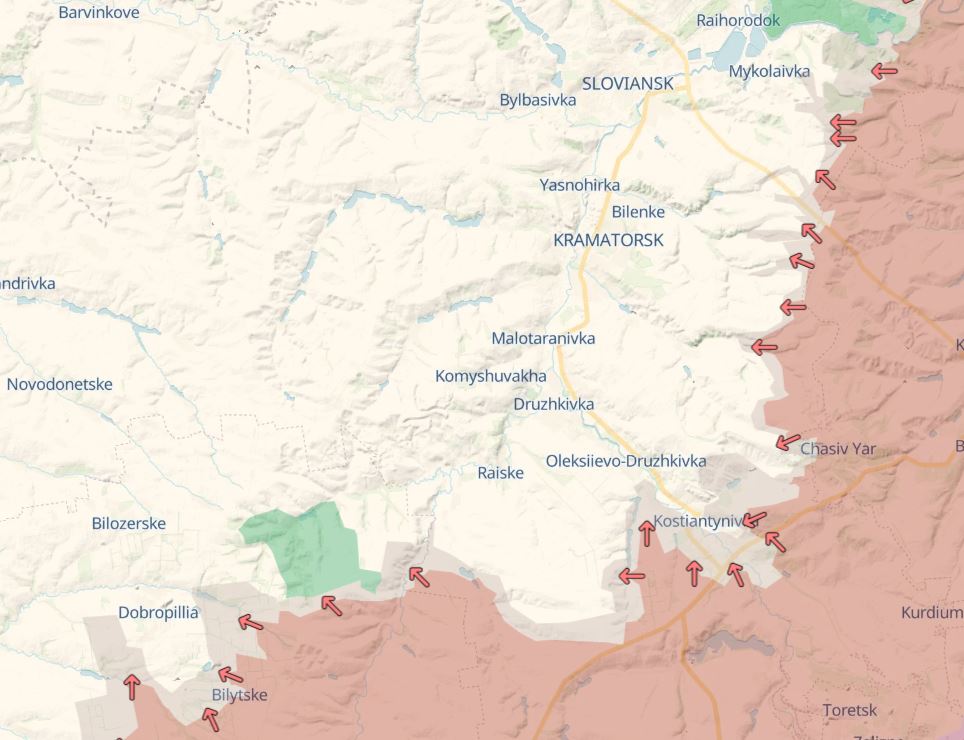
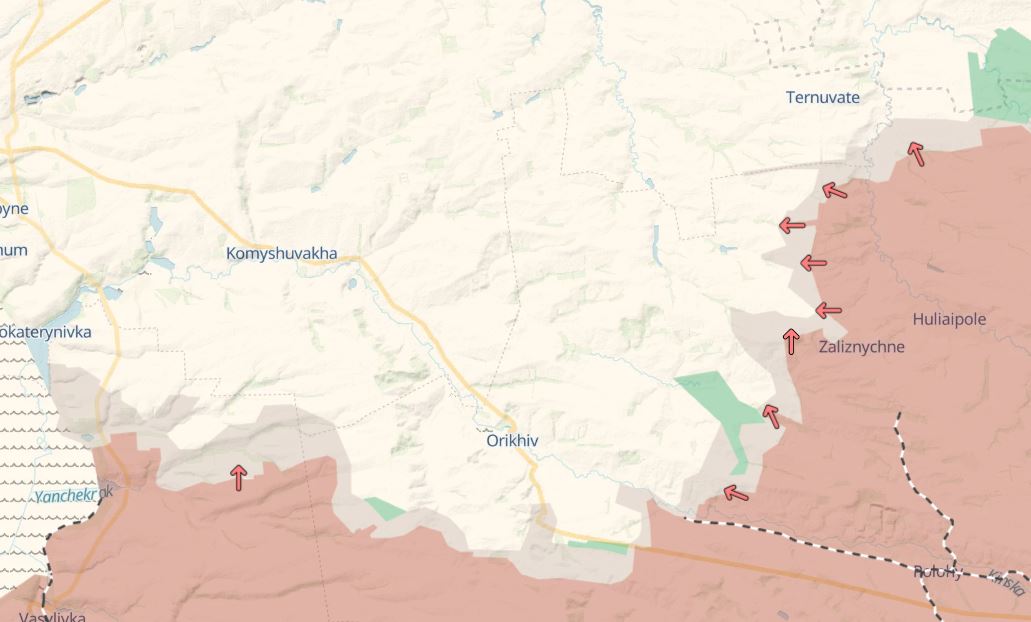
Throughout October 19–25, 2026, Russian troops continued their slow offensive in several sectors of the front, primarily in the Huliaipole, Orikhiv, Dobropillia, and Sloviansk–Kramatorsk directions. Over the past week, the front line formally shifted by 20 km² in Russia's favor, and Russia now controls 117,076 km², or 19.39% of Ukraine's territory.
In the Zaporizhzhia direction, Russian troops are gradually expanding their offensive zone from Huliaipole toward Orikhiv. Changes in the front line in the Shcherbaky area indicate the continuation of Russian assault operations aimed at reaching Orikhiv and creating conditions for a subsequent offensive against the city. One of the Russian command's likely operational objectives remains establishing control over Orikhiv by the end of 2026.
In the Dobropillia direction, Russian units continued their advance, developing an encirclement of the city. During the week, an expansion of the Russian presence in adjacent sectors of the front was observed. Despite Russian claims of having captured Dobropillia, there is still no confirmation that the city has come entirely under Russian control.
The Kostiantynivka direction remains one of the most difficult. Kostiantynivka has probably been captured by Russian troops or is close to being fully captured. Fighting is approaching Oleksiievo-Druzhkivka, where Russian sabotage and reconnaissance groups are reportedly already operating actively.
In the Sloviansk–Kramatorsk direction, Russian troops advanced in the Rai-Oleksandrivka area, gradually reducing the distance to Sloviansk and Kramatorsk. Over the past year, the front line in certain sectors has moved approximately 7–10 km closer to these cities, accompanied by intensified strikes against the transport, energy, and civilian infrastructure of the Sloviansk–Kramatorsk agglomeration — the last major industrial and urban area of Donetsk Oblast remaining under Ukrainian control.
Against the backdrop of the deteriorating security situation, on October 22, 2026, the authorities of Donetsk Oblast expanded the mandatory evacuation of families with children to all settlements within the Sloviansk and Kramatorsk territorial communities, including the cities of Sloviansk and Kramatorsk themselves. The corresponding decision was announced by Vadym Filashkin, Head of the Donetsk Regional Military Administration, who linked it to the worsening security situation and daily Russian strikes against residential neighborhoods, transport, and civilian infrastructure. In total, the expanded evacuation zone covers 20 settlements.
Also, on October 26, 2026, the Verkhovna Rada of Ukraine voted for the 21st time since the beginning of the full-scale war to extend martial law and general mobilization for another 90 days — from October 31, 2026, to January 29, 2027. A total of 293 members of parliament voted in favor of Draft Law No. 16182 on the extension of martial law, while 281 deputies supported Draft Law No. 16183 on the extension of general mobilization.
Maps of Military Operations.
(According to DeepState Map)
Donetsk Region.
Zaporizhia Region
Ruslan Bortnik, Oksana Krasovskaya
for the Ukrainian Institute of Politics
Friends, we would like to remind you that the Ukrainian Institute of Politics offers additional analytical products for organizations, businesses, and private clients: Weekly Intelligence Brief, Geopolitical Risk Reports, Executive Briefings, as well as special analytical materials and forecasts prepared on request. For further information, please contact uiamp2012@uiamp2012@gmail.comgmail.com or call +38 (093) 757-75-65.