Авторы публикации
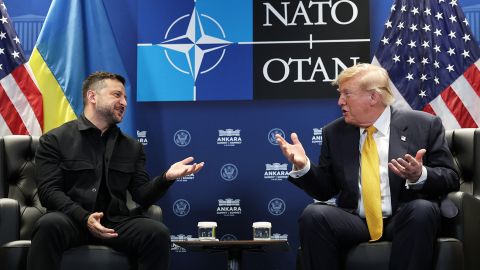
The negotiation process between Ukraine and Russia is currently at one of its lowest points since the beginning of the war. This period can likely be compared to the first half of 2023 or similar phases. While technical consultations between the parties continue and the dynamics of contacts remain, political negotiations on ending the war between Ukraine and Russia, with the participation of Europe and the United States, are effectively stalled at this stage. It is still unclear whether they are fully halted or merely postponed until the end of summer or early autumn. It is likely that negotiations may resume closer to the U.S. congressional elections this fall, when President Donald Trump may seek to demonstrate another foreign policy success. Alternatively, talks could resume once the military-political balance between Ukraine and Russia shifts again, allowing Trump to exert pressure on the losing side and demand concessions, as he previously did with Ukraine.
Notably, the focus of U.S. pressure in the negotiation process is gradually shifting from Kyiv to Moscow. While just a few months ago the emphasis was mainly on the need for Ukrainian concessions, Washington is now increasingly expecting specific steps from Russia. One of the key arguments behind this shift is the changing nature of the war: Ukraine has significantly increased the number of impactful strikes against Russian rear areas, military infrastructure, and logistics. Overall, the combination of recent U.S. statements — support for Ukrainian strikes on Russian territory, discussions on Patriot missile licensing, and a shift in rhetoric — appears to reflect the preparation of a U.S. negotiating position ahead of potential contacts with Moscow. The signal to Russia is fairly clear: if Moscow does not demonstrate greater flexibility, the scale and scope of American support for Ukraine may be further expanded.
The decisions of the NATO summit in Ankara (July 7–8, 2026) lay the groundwork for a prolonged technological war in long-term planning. President Volodymyr Zelensky returned from the summit with commitments of funding for 2026–2027, formal U.S. approval for the production of Patriot missiles and long-range strikes against Russian rear areas, contracts for UAVs, and the removal of U.S. pressure regarding territorial concessions. This relative financial security now guarantees Ukraine’s ability to sustain the war at least until the end of 2027. It also deprives the Kremlin of expectations that Donald Trump will pressure Ukraine or that funding for Kyiv will be fully cut off. A key political shift and achievement for Ukraine at the Ankara summit is that U.S. pressure on Kyiv to accept unfavorable concessions to Russia has largely disappeared from the agenda.
Against the backdrop of its calls for implementing the “spirit of Anchorage” being effectively ignored, Moscow is once again raising the stakes. The Kremlin has officially stated that the so-called “special military operation” has turned into a “real war” due to the involvement of Western and NATO countries on Ukraine’s side. The Russian leadership is demonstrating its territorial ambitions and signaling that even in the event of military control over Donbas, additional demands may emerge over time. At a minimum, these could include cities such as Zaporizhzhia and Kherson, and potentially other regions of Ukraine.
Is the “spirit of Anchorage” dead?
For nearly a year, Moscow has insisted that the United States implement the so-called Anchorage arrangements, viewing them not so much as a path to peace or even victory, but as a tool to split the U.S.–European–Ukrainian coalition and trigger a political crisis within the West and Ukraine itself. In the Russian interpretation, this involves recognizing the new “realities on the ground,” as well as fulfilling a number of political and military conditions, including the withdrawal of Ukrainian troops from still-unoccupied territories of Donbas that Russia considers its own, Ukraine’s renunciation of NATO membership, restrictions on Western military assistance, and the launch of negotiations on a new European security architecture that takes Russian demands into account.
However, as early as June 2026, Russian Foreign Minister Sergey Lavrov and presidential aide Yuri Ushakov accused the United States of abandoning the so-called Anchorage arrangements. Shortly afterward, the Kremlin declared that the “spirit of Anchorage” was definitively dead and that the peace settlement process had reached a deadlock.
Against this backdrop, U.S. Secretary of State Marco Rubio emphasized that no formal agreements had been reached at the Anchorage summit in August 2025, and that only proposals had been discussed, while noting that the United States remains ready to return to a more constructive negotiation format.
At the same time, Ukrainian Foreign Minister Andrii Sybiha stated that if the “spirit of Anchorage” had ever existed, it is now definitively dead. With this statement, Ukraine once again underscores its intention to nullify any outcomes and agreements between the United States and Russia. This is not only because such arrangements are unacceptable to Ukraine, as they imply the withdrawal of Ukrainian troops from the Donetsk region, but also because they were developed without the participation of Ukraine and its key European partners.
Ukraine and its European partners have for some time been attempting to reorient Donald Trump away from the logic of the so-called “Anchorage” approach and to push him toward revising his approach to the war in Ukraine — in favor of a scenario based on ending the war along the current line of contact while maintaining continued military and political pressure on Russia. In recent months, Kyiv has partially succeeded in influencing this position.
How do Ukraine’s strikes on Russia’s rear infrastructure change negotiation positions?
The intensification of Ukrainian strikes on Russia’s rear infrastructure, particularly on Moscow and Crimea in June 2026, was driven in part by political considerations. Attacks on Russia’s rear directly undermine attempts to impose an unfavorable peace on Kyiv in the form of the so-called “Anchorage” framework (which implies the withdrawal of Ukrainian forces from the Donetsk region).
The isolation of Crimea through the destruction of military facilities also serves as a tool to demonstrate Russia’s vulnerability to its partners, challenging the Kremlin’s ability to dictate terms at the negotiating table. Large-scale strikes on Crimea, as well as on Moscow, were intended to demonstrate to the White House, President Donald Trump, and European partners that Russia is not winning the war, that its deep rear is vulnerable, and that its air defense systems are ineffective. The escalation of Ukrainian strikes, along with burning Russian oil refineries, is leading Western elites — who often assess the course of the war partly “through visuals” — to reassess the situation, seek to increase pressure on Moscow, abandon certain previous consensuses, and reconsider the overall trajectory and prospects of the war.
The intensity of Ukrainian strikes on Russian rear areas increased significantly during the spring–summer of 2026. In May and June 2026 alone, Russian air defense systems reported intercepting more than 32 000 Ukrainian drones. Ukrainian attacks disabled over 42% of Russia’s oil refining capacity, while total industry losses reached $13.5 billion. Oil processing in Russia fell to its lowest level in more than 21 years, amounting to 3.91 million barrels per day. A fuel crisis affected up to 78 regions of Russia, with the most severe shortages and restrictions recorded in southern Russia, central regions, and the Volga area. In addition to Crimea, whose infrastructure is now regularly targeted, strict fuel limits have been introduced in the occupied parts of the Luhansk, Donetsk, Kherson, and Zaporizhzhia regions.
On the battlefield, Russia is attempting to restore its previous pace of offensive operations: in June, its territorial gains amounted to about 84 square kilometers. This is higher than in May 2026, when only 14 square kilometers were recorded — the lowest monthly figure since 2023. However, current results remain far below last year’s pace: in June 2025, Russian forces advanced by approximately 556 square kilometers in a single month. In other words, despite the increased intensity of assault operations, the effectiveness of Russia’s offensive remains significantly constrained and not comparable to previous periods.
At the same time, while heavy defensive battles continue in Donbas, particularly around Kostiantynivka, strikes on Russia’s rear have become one of Ukraine’s key instruments of pressure on the Kremlin in the negotiation process. Earlier, Moscow attempted to use a similar approach by striking Kyiv. Precise and technology-driven attacks have demonstrated to allies that Ukraine is capable of waging war effectively with modern means, strengthened the confidence of Western countries, and temporarily removed demands for major concessions — such as the withdrawal of Ukrainian forces from Donbas — from the agenda. Western media are already actively reporting that Ukraine has rejected Trump’s 28-point peace plan and is now seeking more favorable conditions, citing changes on the battlefield. Officially, no such rejection has been announced. However, Trump’s peace plan — whether 21, 22, or 28 points — has largely disappeared from the information space, and even American sources mention it less and less frequently.
All of this is affecting Moscow’s negotiating position and its international influence — both among its adversaries and its partners. The recent NATO summit in Ankara has become a confirmation of this broader reassessment. In particular, U.S. President Donald Trump unexpectedly stated that the United States is ready to provide Ukraine with a license to produce Patriot missiles and signaled that he does not oppose long-range Ukrainian strikes on Russian rear areas, which, in his view, could help bring the war closer to an end.
Why is the Kremlin once again reviving old narratives?
Amid the lack of response to Russia’s calls to implement the “spirit of Anchorage,” Moscow is once again raising the stakes. In early July 2026, Kremlin spokesperson Dmitry Peskov officially stated that the so-called “special military operation” had turned into a “real war” due to the involvement of Western and NATO countries on Ukraine’s side. Will the war remain confined to just four regions? Commenting on the situation, President Vladimir Putin told a Russian journalist that Ukraine had allegedly proposed limiting hostilities to Donbas, as well as the Zaporizhzhia and Kherson regions. According to Putin, Russia rejected this idea, arguing that such an arrangement would allow the Ukrainian Armed Forces to reinforce their positions in the southeast. “Proposals are coming from Kyiv to limit hostilities to the territories of the so-called ‘DPR,’ ‘LPR,’ as well as the Zaporizhzhia and Kherson regions. This would allow the Ukrainian Armed Forces to redeploy units from other directions. It would be a lifeline for Kyiv under conditions of manpower shortages. But saving the Kyiv regime is not part of our plans,” Putin stated. He also said that Russia intends to establish a security zone in the border areas of the Sumy and Kharkiv regions. According to him, Ukraine will pay with territory for its incursion into the Kursk region.
In effect, Russia has already laid claim to a sixth territorial component of Ukraine — in addition to Crimea, Donetsk, Luhansk, Zaporizhzhia, and Kherson regions — under the guise of a so-called buffer zone. Moscow is considering occupying a strip approximately 10 to 30–40 kilometers deep into Ukrainian territory along the Sumy and Kharkiv regions, and possibly partially the Chernihiv region. This potential zone could include major cities such as Sumy, and in a highly unfavorable scenario, even Kharkiv, the entire salient near Velykyi Burluk, and several other territories. At present, Russia lacks the resources to implement such a plan. However, these ambitions have already been officially declared and are now presented as a legitimate objective of the Russian military. In addition, Putin reiterated that Russia continues to pursue the goal of capturing all of Donbas, as well as the so-called “Novorossiya.” By reviving the concept of “Novorossiya,” Russia is effectively signaling potential claims over the entire south of Ukraine, including Odesa and Mykolaiv regions, parts of Dnipropetrovsk and Kirovohrad regions, and possibly certain areas of the Vinnytsia region.
In essence, the Kremlin is making it clear that even if it establishes military control over Donbas, its list of demands may continue to expand. In particular, Russian rhetoric already suggests the possible inclusion of cities such as Zaporizhzhia and Kherson, and in a broader scenario, other regions of Ukraine, depending on Russia’s military capabilities and the level of resistance from the Ukrainian Armed Forces.
At the same time, Russia’s current resources do not allow for a large-scale offensive. At this stage, they are sufficient mainly for localized tactical advances — in Donbas, in border areas, and in certain sectors of the Zaporizhzhia direction.
Moscow no longer trusts the West. Russian Foreign Minister Sergey Lavrov, summarizing Russia’s broader strategy of information pressure — including references to the Minsk agreements, NATO non-expansion, and Anchorage — stated that Russia will no longer trust Western statements about their willingness to negotiate on Ukraine.
During a press conference following talks with the Foreign Minister of Mozambique, Lavrov said that the West is merely “simulating” a desire for a diplomatic settlement. According to him, instead of genuine dialogue, European countries have shifted to issuing open ultimatums to Russia. It should be recalled that on June 7, 2026, the leaders of the United Kingdom, France, Germany, and Ukraine, during a meeting in London, outlined five conditions for peace. These included the payment of reparations and the deployment of Western troops in Ukraine. In essence, Europe, while positioning itself as a full-fledged negotiating actor, is in practice putting forward its own terms for ending the war — a position that is clearly unacceptable to the Kremlin and will not be accepted by it.
Lavrov emphasized that the previous reserve of “goodwill and hope” has been completely exhausted, and Moscow will no longer trust statements from Western capitals. As evidence, he cited failed peace initiatives and agreements dating back to 2014. The overall Russian position is that Western partners are not demonstrating a willingness to compromise, which renders any further negotiation efforts meaningless.
The Political Game of U.S. President Donald Trump.
U.S. President Donald Trump is interested in securing a ceasefire between Ukraine and Russia before the congressional elections this fall.
Observing the results of Ukrainian strikes on Russian territory, particularly against oil refineries, and seeing how actively and effectively Ukraine is targeting Crimea and disrupting logistics around the peninsula — both land and maritime — Trump and his inner circle may be testing Moscow’s willingness to abandon the previous Anchorage framework.
Previously, Trump tended to back the perceived winner. However, since there is currently no clear winner in the Russia–Ukraine war, he may instead aim to freeze the existing status quo.
It appears that Trump is now leaning toward the view that an objective compromise for a ceasefire could be halting hostilities along the current line of contact. During the Anchorage talks, he did not hold this position and assumed that Ukraine would have to make concessions due to its setbacks on the battlefield. Now, however, he seems to consider a ceasefire along the frontline as the most realistic option.
Donald Trump does not show a desire to completely break with Western allies over Moscow’s positions, but his approach remains strictly pragmatic, transactional, and largely unpredictable. The G7 summit (June 15–17, Évian, France) and the NATO summit (July 7–8, Ankara, Turkey) confirmed a degree of Western solidarity in supporting Ukraine. Leaders adopted joint final documents, reaffirming financial and military commitments to strengthen Ukraine’s defense capabilities, including with the signature of President Trump.
A key outcome of the G7 and NATO summits was a shift in the overall political atmosphere surrounding Ukraine. Trump has clearly moved away from direct political pressure on Kyiv, although he also shows little inclination to significantly increase pressure on Russia. In particular, Trump stated that the United States is already putting pressure on Putin. At the same time, Washington is signaling that the primary responsibility for long-term security guarantees for Ukraine should lie with European allies. The United States is willing to provide certain technological and defense-industrial solutions, but not to bear the main burden of the future security architecture.
At the same time, Trump’s current public rhetoric toward Ukraine sharply contrasts with his earlier statements from January–March 2026, when he openly said that Zelensky “has no cards” in negotiations with Putin and that Ukraine should make concessions. Moreover, at the beginning of the active phase of the U.S.–Iran conflict and U.S. strikes on Iran (February–March 2026), Ukraine offered Washington its proven technologies for intercepting and countering Iranian Shahed-type drones. Trump responded at the time with a sharp rejection: “Zelensky is the last person we need help from,” adding, “We don’t need their help with drones. We know more about drones than anyone. We have the best drones in the world.”
Now, however, the U.S. president states that Volodymyr Zelensky seeks to end hostilities and suggests that Russian President Vladimir Putin may share a similar intention. At the same time, Trump acknowledges that resolving the war between Ukraine and Russia is a “complex task.”
At the NATO summit, Trump again compared the war in Ukraine to a fight between two children in a park who did not like each other and started fighting. In doing so, he effectively continues to equate the roles of the aggressor (Russia) and the victim (Ukraine). He also stated that a peace agreement between Ukraine and Russia has been “in development for a long time” and contains both advantages and drawbacks.
At the same time, Trump considers a meeting between Putin and Zelensky in Moscow to be unacceptable. This is important for Ukraine, as the proposal for Zelensky to meet in Moscow is seen as a political maneuver by Russia — effectively a disguised refusal. When asked whether he would be willing to travel to Moscow for peace talks, Zelensky said such a trip would be difficult and dangerous. “It’s complicated, there are many Ukrainian drones there. It’s dangerous,” the Ukrainian president said. This allows Zelensky to continue insisting publicly on a meeting with Putin in a different location, forcing the Kremlin either to accept (which is unlikely) or to openly refuse.
Overall, the combination of Trump’s recent steps — particularly the shift in political rhetoric, support for Ukrainian strikes on Russian territory, and discussions about granting Ukraine a license to produce Patriot missiles — indicates the formation of a tougher U.S. negotiating position ahead of potential contacts with the Kremlin. In essence, this is not escalation for its own sake, but a tool of pressure on Russia aimed at reducing its demands in a potential peace agreement.
Against the backdrop of Washington’s demonstrated readiness to increase military and technological support for Ukraine, another instrument of pressure on Russia could be the so-called “hell sanctions bill.” The “Sanctioning Russia Act” was developed by Republican Senator Lindsey Graham (who passed away in July 2026), one of the most vocal supporters of Ukraine and a leading “hawk” among Republicans, together with Democrat Richard Blumenthal, and was officially introduced in the U.S. Senate on April 1, 2025. However, work on the bill and its political transformation took more than a year. The final breakthrough in negotiations came at the NATO summit in Ankara, when the White House became fully disillusioned with the Kremlin’s diplomatic flexibility. Graham and his colleagues rewrote the text in coordination with the U.S. Treasury, replacing rigid automatic triggers with presidential discretion (lowering the tariff ceiling to 100% and granting Trump veto authority).
This legislation effectively gives Donald Trump a “manual control panel” over the global economy. In its current form, it grants the president the authority to impose tariffs of up to 100% on key goods from China, India, Turkey, Egypt, and Uzbekistan for purchasing Russian oil, gas, and uranium, as well as to introduce strict restrictions on Iran. At the same time, the law does not obligate Trump to act automatically: he can unilaterally freeze sanctions, grant exemptions to specific countries, or activate them at any moment. This allows the White House to use the threat of economic blockade as a flexible negotiating lever, pressuring both Moscow toward peace and Beijing or New Delhi toward economic concessions.
In this context, the main signal from the United States to Russia is quite clear: if Moscow does not make concessions, the scale and nature of American support for Kyiv may be further expanded, including in more sensitive areas for Russia. At the same time, Washington is signaling its readiness to intensify sanctions pressure not only on Russia itself but also on countries and companies that continue economic cooperation with it, thereby increasing the overall economic and political cost of the conflict for Moscow.
Instead of conclusions.
The negotiation process remains far from achieving mutual compromise and continues to be stuck in a deep political deadlock. The main reason is that neither Ukraine nor Russia is willing to make concessions that could form the basis of an agreement. The positions of the parties on key issues of a future settlement remain fundamentally incompatible. Under these conditions, the United States shows reduced interest in active engagement, as there is no tangible outcome that could be presented as a political success to the American public. The situation in the Middle East also plays a role, acting as a distraction for the main mediator — the United States — reducing its focus and level of involvement in the Ukrainian negotiation track, although it is not the primary cause of the current stagnation.
No major shift in the strategy of Western allies is expected in the near future. Against the backdrop of a military and diplomatic stalemate, the main approach remains focused on sustained defense combined with limited tactical counteroffensives. While Ukraine defends key cities in Donbas and gradually exhausts Russian forces, sanctions and information operations continue to work against Moscow, undermining its internal stability. In this mode, Western allies are capable of supporting Ukraine for at least another two years. Funding is expected to be sufficient to maintain both frontline stability and domestic political stability. At the same time, Ukraine will formally continue to support the negotiation process. However, the overall strategy aimed at victory has not changed and is unlikely to be revised in the near term. Simultaneously, Ukraine will be waiting for the outcome of the U.S. congressional elections. A potential shift in the political balance in favor of Democrats could redirect U.S. policy more strongly in Ukraine’s favor.
Russia is also oriented toward the outcome of the U.S. elections, understanding that a strengthening of Democrats in Congress could further limit the possibility of returning to the “spirit of Anchorage.” Despite significant political and economic pressure, Moscow still retains substantial internal resources that allow it to sustain a prolonged war of attrition. Putin may be willing to agree to a temporary pause in hostilities only in exchange for serious concessions, such as the withdrawal of Ukrainian forces from Donbas or the provision of compensatory mechanisms by the United States, including possible recognition of part of the occupied territories or the easing of sanctions. However, such decisions remain highly complex and politically toxic for Trump, especially ahead of congressional elections, and are therefore close to unrealistic.
In the current situation, Russia intends to continue the war, even if territorial gains remain limited, as this allows the Kremlin to demonstrate to its domestic audience through information policy that the situation is developing in the desired direction. It cannot be ruled out that after the parliamentary elections in Russia, a new wave of partial or covert mobilization may be announced due to the depletion of contract recruitment rates and the need for troop rotation. Postponing this unpopular decision until after the elections would allow the Kremlin to minimize social discontent during the voting period. Control over the Donetsk region had been viewed by Russia as a key political objective to be achieved before autumn. However, the Kremlin has now effectively expanded its territorial demands, returning to the concept of so-called “Novorossiya” while also officially declaring its intention to create a buffer zone along Ukraine’s northeastern border. As a result, Russian claims now extend well beyond the five occupied territories — Crimea, Luhansk, Donetsk, Zaporizhzhia, and Kherson regions — potentially encompassing a sixth direction: a border strip in the Sumy, Kharkiv, and possibly Chernihiv regions.
In essence, both sides are increasingly betting on the continuation of a prolonged war, attempting to exhaust each other through increasingly painful strikes on rear, energy, transport, and military infrastructure, while seeking to shift the balance of power in their favor before returning to political negotiations. Therefore, further waves of escalation are highly likely. Only after such phases may new attempts at political settlement emerge, although at present this remains an extremely complex task. Given that the war continues to play an important role in U.S. elections and in Putin’s political future, combined with the gradual depletion of resources on both sides, the risk of escalation and attempts to dramatically alter the course of the war is increasing.
At the same time, situational ceasefires closer to the U.S. congressional elections cannot be ruled out, as well as limited agreements — for example, on halting hostilities at sea — if they align with the interests of the parties. However, a long-term cessation of the war at this stage appears highly unlikely.
This is further reinforced by the fact that technological and tactical advantages in the war constantly shift from one side to the other. Neither Ukraine nor Russia has at any point achieved full dominance across all key components of warfare. While Russia controls approximately 20% of Ukrainian territory and continues to make gradual advances in Donbas, Ukraine currently holds an advantage in medium-range strike drones and long-range strike capabilities. It is worth recalling that in 2022–2023, when Ukraine conducted successful offensive operations in the Kharkiv and Kherson regions, Russia maintained superiority in artillery and combat aviation. During the Russian offensive in 2025–2026, despite Moscow’s broader strategic initiative, Ukraine retained advantages in specific technological areas, including reconnaissance, targeting, and the precision use of advanced weapons systems.
Thus, throughout the war, neither side has achieved comprehensive superiority across all domains of warfare. Instead, there has always been a combination of competing trends. Each side continues to demonstrate selective advantages, allowing its leadership to sustain, both domestically and among allies, the perception that it controls the course of the war and retains a path toward victory.
Ruslan Bortnik and Oksana Krasovskaya
for the Ukrainian Institute of Politics