Perspective – Written by Ruslan Bortnik
The full analysis is available here.
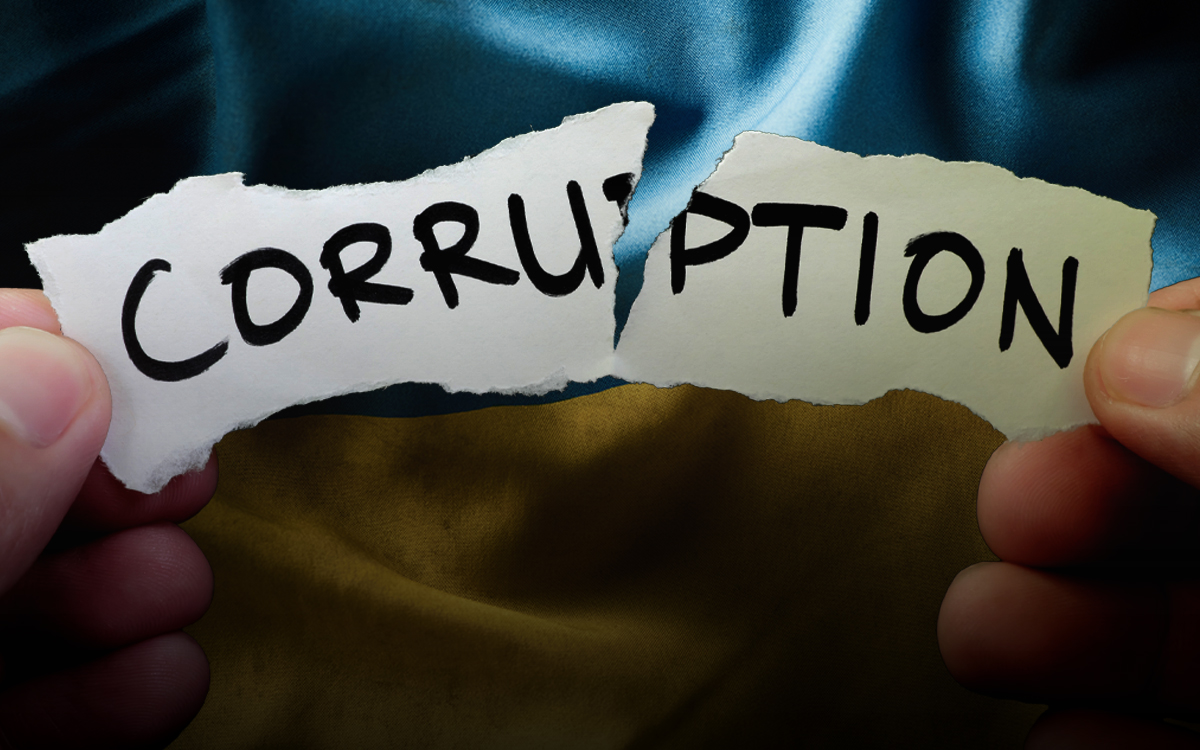
Today, Ukraine finds itself at a precarious political crossroads, caught between war, internal power struggles, and growing Western pressure. The July 2025 standoff over anti-corruption bodies revealed more than just an internal tug-of-war in Kyiv—it exposed the fragility of President Volodymyr Zelensky’s military authority and tensions with key Western allies. The attempt to shift the balance of power in favor of the presidential vertical not only antagonized established anti-corruption institutions but also provoked the first serious street protests since the Russian invasion. The result was Zelensky’s tactical retreat, a clear signal that, in the context of war in Ukraine, the balance of power is increasingly shaped by Western donors as much as by domestic players. But it doesn’t seem that the proper political lessons were learned from this situation, and the latent confrontation between the “presidential vertical” and the “anti-corruption vertical” continued to escalate until its next public outburst in November 2025. Trust in the “presidential vertical,” shaken in the summer, was further undermined when the National Anti-Corruption Bureau of Ukraine (NABU) brought serious corruption charges against the president’s inner circle and pressure on the discredited Ukrainian elites to accept Trump’s peace plan intensified manifold.
Zelensky’s Attempt to Balance Ukraine’s Political Order
The attack of Ukrainian authorities on anti-corruption agencies in July was rooted in the Ukrainian elite’s desire to limit the influence of Western partners, including European institutions, through the system of anti-corruption bodies. It is important to understand that internal power in Ukraine has traditionally rested on two pillars. On the one hand, there is the “presidential vertical,” comprising the Security Service of Ukraine (SBU), the Prosecutor General’s Office, the State Bureau of Investigation, and the Asset Recovery and Management Agency (ARMA). On the other hand, there is the “anti-corruption vertical,” consisting of the National Anti-Corruption Bureau of Ukraine (NABU), the Specialized Anti-Corruption Prosecutor’s Office (SAPO), the National Agency on Corruption Prevention (NAPC), and the High Anti-Corruption Court (HACC), as well as a group of media outlets and politicians created and supported at the request of Western partners, primarily the Brussels elite and the United States Democratic Party.
The Ukrainian president attempted to change this balance of power, not by eliminating the second pillar—the anti-corruption agencies—but by establishing control over them by subordinating them to his prosecutor general. After the Republicans led by Donald Trump came to power in the United States, the position of liberal Democrats in Washington noticeably weakened, and with it the position of Ukrainian anti-corruption institutions, especially those that previously enjoyed USAID support. The Ukrainian president’s team appears to have perceived this situation as an opportunity to weaken the competing anti-corruption vertical.
The recent government reshuffles were also related to this, as the consistent removal of liberal figures close to the Democrats and the Brussels elite is a kind of preparatory stage for the restructuring of the anti-corruption system under the control of the presidential vertical. However, these reshuffles were more aimed at balancing than at a radical redistribution of power.
The new composition of Prime Minister Yulia Svyrydenko’s government strengthened the administrative bloc of Head of the Office of the President Andriy Yermak, as the government has included experienced officials, many of whom previously held positions in Zelensky’s team and have proven themselves effective and loyal to the president. Of note is the resignation of Olha Stefanishyna from her position as Deputy Prime Minister for European Integration, as well as the earlier dismissal of Deputy Prime Minister for Reconstruction Alexander Kubrakov and Mustafa Nayem, the former head of the Agency for Reconstruction and Development and the replacement of Prosecutor General Andrei Kostin with Ruslan Kravchenko.
However, under public pressure and, above all, the negative reaction of the European Union and the G7, the president was unable to further implement his strategy of weakening the anti-corruption vertical through law. After the enactment of Law No. 12414 (4555-IX) “On Amendments to the Criminal Procedure Code of Ukraine Regarding the Specifics of Pre-Trial Investigation of Criminal Offenses Related to the Disappearance of Missing Persons under Special Circumstances During Martial Law,” it was Brussels that reacted most harshly to the attempt to subordinate NABU and SAP: European partners sharply condemned such initiatives and slapped President Volodymyr Zelensky on the wrist, threatening to cut off aid. Meanwhile, disgruntled and incited youths took to the streets to protest. The demonstrations were later dubbed “Cardboard Maidan.”
Overall, the protests that took place in several Ukrainian cities against Law No. 12414 left a strong impression on the authorities and raised serious concern within the Office of the President of Ukraine. The largest demonstrations were recorded in Kyiv, Lviv, Dnipro, Kharkiv, Odesa, Rivne, and Poltava. Estimates ranged from 15,000 to 20,000 people. Protests took place across the country, with approximately 7,000–8,000 people gathering in Kyiv. These were the first full-scale political protests since the invasion of Ukraine. However, mass protests were avoided thanks to the swift repealing of the law and assurances that the independence of anti-corruption agencies would be preserved.
Western Support Allowed the Protests to Succeed
Formal political and informational support from the European Union created a sense of relative security among the protesters, as it was clear that the Ukrainian authorities would not dare suppress the protest by force, and a sense of conviction in the correctness of their actions. Protest slogans written on pieces of cardboard gave the demonstrations the name “Cardboard Maidan.” Key Western partners—representatives of the G7 countries, the European Union, and the United States—publicly expressed concern about the adoption of Law No. 12414 and the curtailment of the independence of Ukraine’s anti-corruption bodies.
Almost immediately after the Verkhovna Rada voted to adopt the law on July 22, 2025, the G7 ambassadors issued an official statement emphasizing that any steps to undermine the independence of NABU and SAPO posed a threat to the progress of reforms and Ukraine’s European integration. In Brussels on July 23, European Commissioner for Economic Affairs Valdis Dombrovskis directly linked continued financial support and the prospect of Ukraine’s future EU membership to the independence of the anti-corruption system, emphasizing that NABU and SAPO must operate without political interference. That same day, the head of the EU delegation to Ukraine, Katarina Mathernová, also emphasized that trust between the EU and Ukraine is built on an effective and independent anti-corruption vertical. For its part, the U.S. Embassy in Kyiv published several statements on social media on July 22–23 calling for the preservation of the independence of NABU and SAPO as a basis for continued support from Washington.
Funding from the European Union, which has become Ukraine’s largest donor, is particularly important for Ukraine. The EU has warned that it will freeze funding under the Economic Sustainability Programme (ERA) and cease support from the European Bank for Reconstruction and Development and the European Investment Bank until the Ukrainian parliament restores the institutional independence of anti-corruption bodies, including NABU and SAPO. Ukraine risks losing €20 billion in EU aid tied to anti-corruption.
However, the protests were only partly directly related to the status of anti-corruption bodies. They also became a rallying point for citizens disillusioned and dissatisfied with the Ukrainian government and opposition. Although the fight against corruption is one of the biggest challenges for Ukrainians, as evidenced by sociological surveys—nearly 80 percent of the population and 76 percent of businesses cite corruption as the second most important problem in the country after the war with Russia—many protesters did not fully understand the details of the adopted changes. Instead, their participation gave them the opportunity to openly express their dissatisfaction with the government and President Zelensky’s team. Demanding the elimination of corruption de facto meant accusing the government of political abuses and demonstrating dissatisfaction with the state’s overall course.
The Government Retreats, But Does Not Admit Mistakes
During the “Cardboard Maidan,” for the first time since the full-scale invasion, President Volodymyr Zelensky suffered a serious political defeat and was forced to retreat under external pressure, primarily from European allies, and domestic pressure from the opposition. As a result, on July 31, 2025, the Verkhovna Rada of Ukraine adopted Presidential Bill No. 13533 “On the Restoration of the Powers of the National Anti-Corruption Bureau of Ukraine (NABU) and the Specialized Anti-Corruption Prosecutor’s Office (SAPO),” which became Law No. 4560-IX, repealing the vast majority of provisions limiting the independence of anti-corruption bodies.
Overall, the situation has put the president and his team in a difficult position: Internal disagreements and growing mistrust threatens to exacerbate fragmentation within the government, weakening the president’s overall political position. The attempt to establish tighter control over anti-corruption agencies has also resulted in the government losing influence over the Bureau of Economic Security (BES) and potentially losing control over the Asset Recovery and Management Agency (ARMA)—structures crucial to the struggle for political influence and assets in Ukraine, after supporters of a liberal, pro-Western course demanded during protests that their people be appointed to lead these agencies and that their work be restructured.
The crisis has negatively impacted European integration and the trust of key EU allies. The European Union now frequently speaks of the need to strengthen institutional oversight over Ukraine and consolidate the position of anti-corruption agencies as key arbiters of EU membership and reform issues, while maintaining a balance between pressure and strategic support. Meanwhile, Ukraine’s practical dependence on Europe will only grow as Europe provides all financial assistance and approximately 80 percent of military aid, including future purchases of American weapons.
At the same time, although Europe had the opportunity to tighten Kyiv’s conditions in terms of personnel policy, reforms, and the monitoring of aid, Brussels understood that, given the ongoing war with Russia and the threat of Ukraine’s possible military defeat, destabilization could lead to unpredictable consequences. Therefore, pressure on the Ukrainian government was carefully measured, which, it seems, was not properly understood in Kyiv.
Mistrust and poor relations between key parties in Ukraine—anti-corruption agencies, law enforcement, the parliament, and the presidential administration—have persisted and continued to have a destabilizing effect on the Ukrainian political system. Since the decision to restore the powers of NABU and SAPO was not the result of an agreement between the parties but rather the result of direct pressure and street mobilization, reinforced by the threat of cutting off funding, the Ukrainian authorities likely sought to counterattack and undermine trust in anti-corruption structures. Intense competition and the mutual discrediting of key anti-corruption and law enforcement agencies in Ukraine continued. Specifically, the SBU conducted investigations into the ties between Ruslan Magamedrasulov, head of the NABU interregional department, and his father with Russia. In response, NABU conducted searches of the homes of SBU employees as part of the Kolomoisky case. This dynamic not only undermined public trust in law enforcement agencies themselves but also weakened Ukraine’s political and legal system as a whole, creating the risk of new scandals and a crisis of governance.
The level of mistrust between law enforcement and anti-corruption agencies reached such a level that it inevitably led to another crisis. On November 10, 2025, a large-scale corruption scandal, later dubbed “Minditchgate,” unfolded in Ukraine. NABU and SAPO conducted large-scale anti-corruption searches in the energy sector. The operation, dubbed “Midas,” targeted the inner circle of President Volodymyr Zelensky. NABU officially announced the uncovering of a “high-level corruption network” in the energy sector, which, according to investigators, had been operating for at least 15 months and had access to strategic state-owned enterprises, including Energoatom and Ukrenergo. The organization’s primary activity was the systematic receipt of corrupt bribes from Energoatom’s contractors in exchange for contracts to build defense structures against Russian air strikes. According to NABU, more than 70 searches were conducted as part of Operation Midas, seizing significant amounts of cash and documentary evidence. The estimated value of the alleged bribes is approximately $100 million.
At the center of the investigation is businessman Timur Mindich, co-owner of the Kvartal 95 studio and former business partner of President Volodymyr Zelensky. The National Anti-Corruption Bureau of Ukraine (NABU) believes he was one of the masterminds behind the scheme, coordinating interactions between officials and commercial entities that received lucrative contracts in the energy sector through his influence on Energy Minister G. Galushchenko (now the Minister of Justice) and in the defense sector through his influence on Defense Minister R. Umerov (now the Secretary of the National Security and Defense Council). Mindich himself left Ukraine several hours before the searches began, giving rise to speculation about a possible information leak. The so-called “Mindich tapes”—hours of recordings of criminal group members released by anti-corruption agencies, which may feature a voice resembling that of President Volodymyr Zelensky—are also being actively discussed. According to NABU, investigators have access to several hours of audio recordings—“wiretaps”—that allegedly capture negotiations regarding the distribution of contracts and possible orders from above.
NABU and SAPO, as well as associated media outlets, indicate that four Ukrainian government ministers were involved in Mindich’s scheme. These include two former ministers—Oleksandr Chernyshov (former Deputy Prime Minister for Reconstruction of Ukraine and former Head of the Ministry for Development of Communities, Territories, and Infrastructure) and former Defense Minister Rustem Umerov (currently Secretary of the National Security and Defense Council and on assignment in Türkiye)—as well as two current ministers—Energy Minister Svitlana Hrynchuk and former Energy Minister, now Justice Minister Herman Galushchenko. The head of the Office of the President, Andriy Yermak, has also been implicated.
The initial failure of the president to tilt the balance of power in Ukraine in his favor and the subsequent corruption scandal provoked a shocking backlash both domestically and internationally. While this revelation hasn’t yet sparked large-scale protests in Ukraine, it has triggered a major political crisis: Discredited government officials were dismissed, the pro-presidential majority was demoralized, and parliament was blocked by the opposition, which is demanding the resignation of the entire government and the head of the Office of the President. Taking advantage of Zelensky’s weakened presidency, the United States proposed a plan to end the war that demands significant concessions from Ukraine. All this occurred against the backdrop of bad news from the front and a sharp deterioration in public opinion toward the government, which the public blames for hours-long power outages caused by Russian air strikes.
For the United States and the European Union, the unfolding internal crises in Ukraine have become not only a shock but also a tool for exerting pressure on Ukraine. In the EU, Brussels and individual member states can use these crises as proof that Ukraine is not yet ready for full membership in the European Union, as Kyiv is unable to ensure the fight against corruption and the stable functioning and independence of key anti-corruption institutions. For the United States, they have meant a shift in the political balance in and around Ukraine, which could be used to achieve a peace agreement between Ukraine and Russia, primarily through concessions on the part of Ukraine. In any case, both the “Cardboard Maidan” and “Minditchgate” demonstrated a trend toward the leading “presidential vertical” in Ukraine weakening and cast doubt on the political future of Volodymyr Zelensky after the next elections in Ukraine. Whether the Ukrainian government will be able to survive these crises and make productive, pragmatic decisions remains an open question.