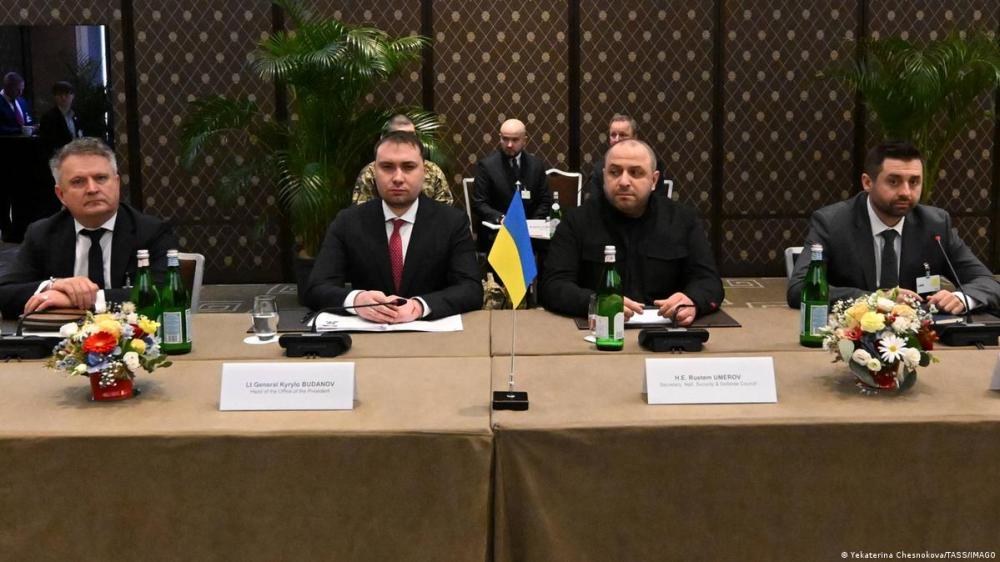
The Geneva round of talks, as expected, failed to produce a tangible breakthrough in the peace process. The parties limited themselves to confirming their readiness to continue dialogue, which is generally a positive sign, but there was no convergence of positions on key strategic issues. Discussions were primarily technical. Strategically, the negotiations stalled on two key issues: territory and security guarantees. Specifically, the United States is not yet prepared to commit to security guarantees until a political compromise on territorial matters is reached between Kyiv and Moscow. However, the issue of both territory and security guarantees for Ukraine runs deeper. Essentially, it involves a redistribution of spheres of influence between Russia and Western countries in and around Ukraine. It is the lack of agreement on this fundamental framework that is blocking progress in the negotiation process.
Progress of peace negotiations. On February 17–18, 2026, the next round of trilateral negotiations between the United States, Ukraine, and the Russian Federation took place in Geneva, Switzerland.
The Ukrainian delegation retained virtually its previous composition: it is led by National Security and Defense Council Secretary Rustem Umerov, Kirill Budanov, head of the Office of the President of Ukraine, and David Arakhamia, head of the Servant of the People parliamentary faction. The Russian delegation was this time led by Vladimir Medinsky, Chairman of the Interdepartmental Commission on Historical Education of the Russian Federation, replacing Igor Kostyukov, Chief of the Main Directorate of the General Staff of the Russian Armed Forces (formerly the GRU), who also participated in the negotiations. The American delegation is still led by US Presidential Envoy Steve Witkoff, along with Donald Trump's son-in-law Jared Kushner, but US Secretary of the Army Daniel Driscoll has also joined the negotiations (recall that in November 2025, it was Driscoll who was tasked with presenting the 28-point US peace plan to Ukrainian President V. Zelensky).
The adjustment of the delegation's composition is due to the return of political issues to the agenda. The main issue in Geneva was territory—the Donetsk region. This is now the main political issue. Therefore, Russia once again needed V. Medinsky, who, in addition to having institutional memory of negotiations dating back to Minsk and Istanbul in 2022, is a political figure and is in contact not with the Russian Defense Minister, but with the Russian President. Technical and military-technical models for ensuring the ceasefire were discussed with I. Kostyukov.
Regarding the participation of US Army Secretary Daniel Driscoll, his presence is also significant. Driscoll is considered a figure close to US Vice President David Vance and Donald Trump's political circle, including the conservative wing of the MAGA (Make America Great Again) movement within the Republican Party. His status is military-political, not purely diplomatic. This may indicate that the negotiations are becoming more substantive: discussing the comparison of the parties' military potentials, the parameters for the disengagement of forces, control of demilitarized zones, and other military-technical aspects.
Moreover, Driscoll's presence may indicate a de facto division of the negotiations into two parallel subgroups – political and military. Steve Witkoff and Jared Kushner represent the political and diplomatic community, but are not military experts. Therefore, the participation of a representative of the American military leadership strengthens the negotiating framework and demonstrates that the United States is simultaneously conducting political dialogue and technical work on the military component of a possible agreement.
The choice of Geneva as the negotiating venue is particularly noteworthy. It represents a compromise between the previously discussed Istanbul and Miami. The United States did offer to hold this round of talks in Miami, but the Russian side made it clear that participation and travel to the United States would only be possible if sanctions restrictions on delegation members were lifted. According to diplomatic sources, the Americans were willing to provide one-time entry permits, but Moscow did not consider this a sufficient guarantee. As a result, despite the undesirability of rejecting the proposal by Trump and his special envoy, a third compromise option—Switzerland—was chosen. However, Geneva is also a convenient location in terms of logistics and diplomatic infrastructure. European delegations are planned for subsequent stages, and Switzerland allows for their seamless integration.
Ukraine consistently promotes the idea of involving its European partners, as this strengthens its negotiating position. In particular, while the Trump administration emphasizes the need for Kyiv to seek compromises, the argument in Europe is more often that Moscow should make concessions. Indicative was the statement by European Union diplomat Kaja Kallas at the Munich Security Conference that "Russia is not a superpower," that it has not achieved significant successes on the front lines, and therefore should not be given the maximum demands in the negotiations.
Furthermore, the potential peace settlement models being discussed by Ukraine, which could theoretically be acceptable to Moscow, envisage the participation of European structures in monitoring the ceasefire. Ceasefire monitoring is viewed not as the exclusive prerogative of the United States, but as a multilateral mechanism. In this sense, Geneva allows for the negotiation process to be linked to the European dimension in advance —both through the formal involvement of delegations and through parallel meetings and consultations with European elites and international organizations.
In fact, without European participation, it's impossible to reach any substantive agreement. A huge number of key issues—from Ukraine's accession to the EU to the fate of Russia's frozen assets—are under European jurisdiction. If Europe doesn't participate in the negotiations, the process will never be fully completed and no lasting agreements will be reached. Therefore, involving Europeans in the negotiations is essential. And overall, the likelihood that Europe will become a full participant in the negotiations at some point is significant and will participate in the final transaction, gradually growing. This can be considered a positive signal.
The negotiations are currently comprehensive and multi-layered. A Ukrainian-European-American consultation format is also taking place in Geneva. It's important to note that the Ukrainian delegation held meetings with the Europeans and Americans jointly, not separately—meaning there were no parallel attempts to derail US peace initiatives. At the same time, there's also a Russian-American track: separate bilateral meetings are taking place between Moscow and Washington. This is crucial, as reaching a final agreement without Russian-American agreements is virtually impossible. The war is part of a broader geopolitical standoff between Russia and the West, and without a reduction in tensions between the US and Russia, a cessation of hostilities is unlikely.
Following the talks, the head of the Russian delegation, Vladimir Medinsky, stated that the negotiations had been "difficult, but businesslike," and announced a new round would be held soon. Previously, Western media reported a "deadlock" in the political part of the talks following the first day. Meanwhile, Steve Witkoff declared "significant progress." On the Ukrainian side, Kirill Budanov confirmed that negotiations would continue in the near future. He said the discussions at the Geneva talks were "difficult, but important." In other words, the statements lacked any specifics.
Following the conclusion of the Geneva round, the media actively circulated a story about a supposed split within the Ukrainian delegation—referred to as the "Budanov group" (Kirill Budanov and David Arakhamia), which allegedly seeks to conclude a peace agreement based on the American model as quickly as possible, and the "Yermak group," which opposes concessions. However, this interpretation appears to be an oversimplification and largely misrepresents the actual configuration of the negotiations.
There are no separate "Budanov" or "Yermak" negotiating groups. Even if differences in assessments of pace and tactics may exist within the delegation, this has not resulted in an institutional rift. This refers to Zelenskyy's negotiating group, within which nuanced positions are possible, but strategic confrontation is not. It is conceivable that Budanov, like Arakhamia, is theoretically more flexible regarding the format of agreements with the Americans—in line with the logic of a pragmatic agreement, if it meets Ukraine's interests. However, the final decision still rests with the President. Even if certain disagreements arise, they are of a working nature and do not transform into a political rift. Ultimately, the negotiating position is formed and approved by the head of state, not by individual participants in the process.
To understand the real results of Geneva, it is necessary to monitor the further development of the process. Will the current round in Geneva lead to a significant result? Overall, no significant breakthrough was expected from Geneva. Most likely, none will occur. This stage is primarily aimed at working out technical details and further coordinating the parties' positions.
At the same time, Ukrainian President Volodymyr Zelenskyy announced that he had instructed preparations for a meeting with Russian President Vladimir Putin in Geneva. Clearly, key decisions can only be made at the level of heads of state. Presidents are the ones capable of making politically sensitive concessions and compromises, as such steps inevitably entail significant domestic political costs and will directly impact ratings.
However, this announcement of a meeting being prepared does not mean it will actually take place. Until basic agreements are reached at the delegation level and without prior agreement on the framework parameters of the agreement, the likelihood of holding a full-fledged summit of heads of state remains uncertain.
There's no significant rapprochement between the two sides. The two sides maintain roughly the same positions they held before—they simply have a better understanding of the situation and have developed several dozen solution models.
The parties still lack firm and fixed agreements; their positions remain fluid and largely incompatible.
Russia insists on the withdrawal of Ukrainian troops from the Donetsk region. This position is motivated by a broader logic: the desire to secure a division of zones of influence in Ukraine between Russia and its Western allies. This is why Russian President Vladimir Putin is talking about the participation of Ukrainian citizens living in Russia and the occupied territories in the presidential and parliamentary elections in Ukraine (which could amount to approximately 5 million people), and is also raising issues of reducing military potential and securing Ukraine's neutral status.
The Ukrainian side still shows no willingness to accept Russia's terms and proceeds from maintaining the current front line without political legitimization of territorial losses.
Europe declares its willingness to participate in security guarantees, including the possible deployment of a military contingent in Ukraine. However, this position is limited by objective factors: the low military capabilities of several EU countries and a critical dependence on US involvement. Europe alone is incapable of providing full security guarantees, a situation exacerbated by cautious public opinion in many European countries regarding the risk of a direct clash with Russia.
For Russia, the deployment of any Western troops on Ukrainian territory is tantamount to a political defeat. Moscow protested against the expansion of the Western military presence before the war, and this very argument was one of the stated motives for the invasion. Theoretically, the deployment of Western forces is only possible with the consent of the US and Russia and with much deeper security concessions from Ukraine and the West—something that appears unlikely at this stage.
United States genuinely seeks to end the active phase of hostilities as quickly as possible, including given the domestic political agenda and the upcoming congressional election campaign. Donald Trump is trying to return the negotiations to a rational and pragmatic track, convincing the parties that ending the war is more beneficial than continuing it. However, he is not prepared to make deep concessions. Specifically, Washington does not intend to provide Ukraine with unconditional security guarantees, which would automatically mean the US entering a new war, nor does it seek a formal division of spheres of influence in Eastern Europe, which would mean recognizing Russia as an equal geopolitical arbiter of the region. From a geopolitical perspective, Trump is interested in maintaining Ukraine in the Western sphere of influence, while simultaneously seeking to reduce Russia's dependence on China and exploit the economic opportunities arising from the conflict. However, he is not prepared to sacrifice too much for this.
The situation surrounding the elections in Ukraine.
On February 14, Ukrainian President Volodymyr Zelenskyy stated at the Munich Security Conference that he was ready to hold elections and a referendum on a peace agreement after a two-month ceasefire: “I’ve already spoken about this many times. Then I said that if the American side insists on it, I’m ready to show that we are ready for this. I’m very honest. Give us two months of a ceasefire, and we’ll go to the polls. That’s all. Give us a ceasefire, give us security, infrastructure—maybe not two months, but we need many days to prepare. Then give us the opportunity for our soldiers to vote—to defend our lives, our country, and vote at the same time. This is something complicated.” He also noted that comparisons with elections in other countries during wartime are difficult due to the large-scale threats. “So give us a ceasefire. President Trump can do it. Put pressure on Putin, achieve a ceasefire, then our parliament will change the law, and we’ll go to the polls if they are necessary.” If the Americans want elections in Ukraine and if the Russians want elections in Ukraine, we're open to that." In conclusion, the President added that Ukraine could also "declare a ceasefire for the Russians if they hold elections in Russia."
Many described this statement as practically a demand from V. Zelenskyy that the United States ensure a ceasefire and act as its guarantor for 60 days. However, if we take a direct quote, the President essentially said that at least two months are needed to hold elections. But this doesn't mean they will be held in exactly two months.
So far, the Ukrainian government has no plans to hold elections and makes it clear that they can only be carried out under conditions of a truce.
According to available information, a new election bill is being prepared within a working group in Parliament; a version of it is expected to be released for review on February 24. However, even after the bill's publication, its adoption and implementation could take considerable time.
Against this backdrop, Russia is declaring its readiness to ensure a ceasefire on election day in Ukraine. Specifically, Deputy Foreign Minister Mikhail Galuzin stated that Moscow is prepared to ensure the absence of airstrikes on election day in Ukraine. So, for now, Russia is saying it may cease airstrikes on Ukrainian territory on election day. But there may be more than one election day. Under current conditions, there could be, for example, seven—that is, a specific period.
Thus, Ukraine is potentially setting a position: first a ceasefire, then elections. Moscow says it is prepared to cease fire for part of the election period. This creates an opportunity for a rapprochement. If US President Donald Trump can press the parties, Moscow may agree to a certain ceasefire for the elections, but not as a precondition.
In particular, Russia and the United States could potentially agree on a model under which a partial ceasefire would be declared during the elections. Current Ukrainian legislation allows for a 60-day election campaign. Therefore, a 60-day ceasefire could be declared for the elections, or an air ceasefire could be introduced, under which fighting on the frontline would continue, but the parties would refrain from deep strikes during the voting period. This idea is being discussed. However, it could only be implemented by the two sides under direct pressure from US President Donald Trump.
Russian forces continue to strike Ukrainian energy infrastructure.
Following another Russian attack on February 17, power was cut off to consumers in the Dnipropetrovsk, Odesa, Donetsk, Kharkiv, and Zaporizhia regions. Heat supply outages were also reported in Sumy and Odesa. In Odesa, significant damage was reported at a DTEK facility, and the city is experiencing widespread power and water outages. President Volodymyr Zelenskyy warned of the possibility of an attack the previous evening. The strike coincided with a cold snap that forecasters had predicted for Tuesday.
While periodic power outages are currently affecting the entire country, Kyiv remains one of the hardest-hit regions. Mayor Vitali Klitschko's statement that approximately 500 buildings in the capital remain without heat doesn't take into account the approximately 1,100 apartment buildings where power cannot yet be restored due to damage to the Darnytsia Thermal Power Plant. Meanwhile, in areas dependent on the Darnytsia Thermal Power Plant, power outages are being minimized to allow residents to use electric appliances for heating.
The situation in Ukraine's energy sector remains extremely challenging. Since 2022, authorities estimate that more than 60–70% of the energy system, including generation and heating facilities, has been destroyed. Restoring the energy sector to pre-war levels will require significant resources— at least $20 billion, according to preliminary estimates.
The total deficit in the energy system of Ukraine at the beginning of 2026 is estimated about 5 GW. Under current weather conditions, Ukraine would require 17.5-18 GW to maintain stable system operation, but only about 11.5 GW is actually available. Electricity imports (approximately 2 GW) could increase this figure to a maximum of 13 GW. The most difficult situation in the energy system currently remains in the city of Kyiv and the region, in the city of Kharkiv and the region, as well as in the Sumy and Poltava regions.
On average, long-term emergency power outages for consumers are now possible— up to 20 hours a day, at least until the frost subsides.
According to government estimates, the country's energy system is currently in a serious, but not critical, condition, and the electricity shortage will persist for at least 3-5 years.
The course of military operations.
Although Russia's creeping advance along the front line continues, its pace has slowed somewhat. Over the past week, Russia has managed to capture only about 10 square kilometers, while the average weekly advance previously was between 50 and 100 square kilometers.
Ukraine has conducted several local counterattacks—near Pokrovsk (Donetsk Oblast), in the south toward Hulyaipole (Zaporizhzhia direction), and in the Dnipropetrovsk Oblast near the village of Ivanovka. These actions are tactical in nature and primarily aimed at clearing "gray zones" and straightening the front line, rather than achieving large-scale breakthroughs.
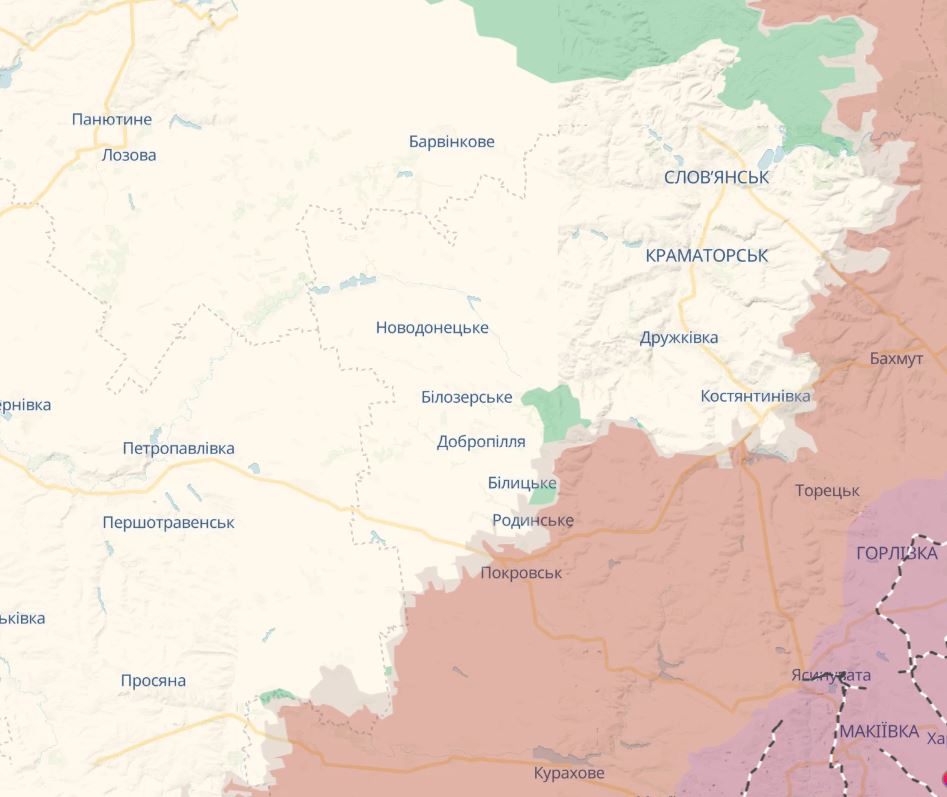
Meanwhile, the Russian army continues to exert pressure in the Donetsk region. Advances have been noted near Platonovka in the Sloviansk-Kramatorsk direction, as well as near Myrnohrad. After capturing the village of Rivne between Pokrovsk and Myrnohrad, Russian forces are attempting to gain a foothold in the neighboring village of Svetloe. Strengthening their positions in this area allows the enemy to accumulate forces for a possible advance deeper into the isthmus between Pokrovsk and Rodynske, increasing the risks for Defense Force units on the outskirts of Myrnohrad. As for Pokrovsk, Russian units are gradually drawing infantry into urban combat. Simultaneously, attempts to infiltrate the village of Grishino from both Pokrovsk and Kotlino are being recorded.
Since early February, Ukrainian forces have recaptured over 200 square kilometers, marking the fastest pace of advance in 2.5 years. The intensification of Ukrainian counterattacks is attributed to the recent restriction of Russian forces' access to the Starlink system, which has caused serious problems with communications and command and control on the battlefield. The Russian side acknowledged that Starlink had been down for about two weeks, but claimed it hadn't impacted combat capabilities. However, Ukraine claims the shutdown significantly hampered the operations of Russian units. Russia's access to Starlink terminals has long been a serious issue for Ukraine. For some time, it wasn't fully resolved, in part due to the use of unregistered terminals by some Ukrainian units. The new Defense Minister, Mykhailo Fedorov, is credited with tightening controls and restricting access for Russian forces, in part due to his established cooperation with Elon Musk. On February 2, Fedorov announced the launch of a verification procedure for Starlink terminals in the country. According to him, only verified and registered devices should operate in Ukraine, while all others are subject to shutdown—to prevent Russian troops from using the system. These measures have reportedly already had an operational effect: communication channels between Russian command posts and drone coordination have been disrupted, creating additional opportunities for Ukrainian counterattacks.
Map of military operations.
Donetsk region.
Ruslan Bortnik, Oksana Krasovskaya, Andrey Timchenko
for the Ukrainian Institute of Politics