It must be admitted that Trump's peace plan is not about international law or justice, because they do not protect Ukraine well, but about a real assessment of the military-political balance between the parties, the trends of the war and the human rights of millions of Ukrainians and Russians who suffer and may die if this war continues.
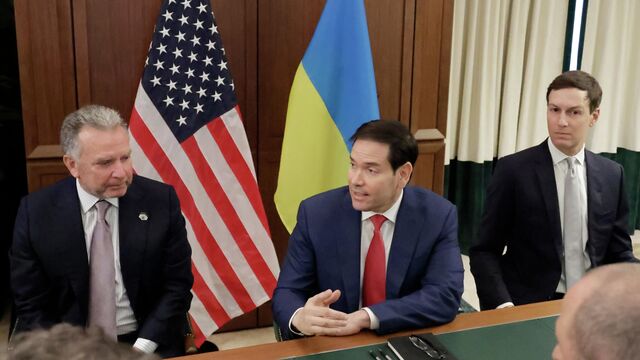
Developed in consultation with the Ukrainian and Russian sides, the team of the US President, including US Secretary of State Miguel Rubio, Special Representative of the President of the United States Stephen Whitkoff and son-in-law of US President Donald Trump Donald Kushner, is actually implementing a strategy of "sacrificing a little to save more" – part of the territory and sovereignty to save the bulk of Ukraine from destruction.
In fact, the 28-point plan provides for the end of hostilities by forming a new geopolitical status for Ukraine as a non-aligned state (without the right to deploy Western allied troops on its territory) in the Western political and economic zone of influence (the key investment manager is the United States, the possibility of integration into the EU) with the loss of part of economic (and transit) and military-political sovereignty, without strict security guarantees (without collective defense); and with the loss of part of the territories (Crimea, Donetsk and Luhansk regions, as well as large parts of Kherson and Zaporozhye) and humanitarian sovereignty in favor of the Russian Federation (restored rights of Russian speakers and the UOC). This is a kind of "Finlandization" of the period 1940-1945, but only its much milder form.
Ukraine will have to reformat power through elections (partial or complete loss of power of the team of President V. Zelensky is possible). Also, Ukraine will not be able to join NATO and must abandon this goal, but receives assurances of military-technical and economic assistance in recovery in the event of a new Russian aggression, maintains a large army (up to 600 thousand people), and Western forces are increasing in Poland (fighters) as part of the "Coalition of the Willing" or according to the model of NATO's "Eastern Guardian" operation as insurance for Ukraine. There are no restrictions on the deployment of weapons systems, or they will be provided for by subsequent US-Russian agreements (for example, within the framework of the START dialogue).
Russia, in addition to territorial gains and the new status of Ukraine, will receive a gradual lifting of sanctions in exchange for a formal renunciation of its aggressive policy and frozen assets, most of which ($100 billion) will go to the post-war reconstruction of Ukraine, and the other part to joint US-Russian economic projects. At the same time, the Kremlin will be deprived of the opportunity to influence the political and economic processes in Ukraine. or rather, in most of it (which, in fact, will not be controlled by the Russian Federation). That is why, even after the possible coordination of D. Trump's peace plan with Ukraine and Europe, then objections and discussions from the Russian side are possible. (For a more detailed selection of D. Trump's peace plan of 28 points, see the Appendix in Table No1).
At the same time, the plan itself is not an agreement, but a Declaration of Intent. The implementation of this document provides for the signing of several dozen more agreements, amendments to the Constitution of Ukraine, the NATO Charter, hundreds of laws of Ukraine or by-laws (such work is not being carried out) and can last for years, even if there is goodwill.
In fact, for the Ukrainian leadership, the implementation of this plan without fundamental changes looks extremely difficult and politically toxic. For example, how will it be possible to give an order to withdraw from the Donetsk region and be responsible for it? But at the same time, it is extremely important for Ukraine not to spoil relations with its most important ally - the United States. Therefore, the Ukrainian leadership as a whole demonstrates openness to discussing D. Trump's plan.
Ukraine, with the help of European partners (primarily Germany, France, Britain), expects to significantly change some provisions of Trump's peace plan. Thus, the European allies prepared a 24-point counter-proposal rejecting some of the conditions of D. Trump's plan. But later on November 25, British Prime Minister Keir Starmer said that Europe refuses to promote its own plan to resolve the conflict in Ukraine and is ready to cooperate on the US proposal. "There was a strong consensus that we should work with the existing text, although some parts of it are unacceptable, but other parts are substantial, and not with another text," Starmer said.
But still, the European position (albeit not a plan), which is significantly different from the position of D. Trump, will be the topic of negotiations and arguments. In Europe, they will strive to ensure that US peace proposals do not ultimately look like "remuneration of the Russian Federation for the war unleashed."
Europe proposes: a higher bar for the number of the Armed Forces of Ukraine - up to 800 thousand people (although the real number of the Armed Forces of Ukraine will be dictated by the economic capabilities of Ukraine); the abolition of the refusal to join NATO (although a consensus of members is needed here, which is not there); for some reason, the role of the United States in the dialogue has been reduced and the obligations of the Russian Federation regarding guarantees of non-aggression against Europe have been discarded; the points of humanitarian changes in Ukraine (the rights of national minorities and religious groups) have been reformatted; the ineffectiveness of the protection of which is a consequence of European policy; the refusal of amnesty was recorded; does not want to limit the elections in Ukraine to 100 days (as in the American plan); insists on the transfer of all Russian frozen assets to Ukraine; there will be no NATO troops precisely "in peacetime".
At the talks in Geneva, the delegations of the United States and Ukraine prepared an updated peace plan of 19 points. The exact content of this plan has not yet been published. But it is preliminary known that the Americans agreed to remove the clause limiting the Ukrainian army to 600 thousand servicemen. The proposal for a general amnesty for possible war crimes has been reworked to take into account the interests of "those who have suffered from the war." Ukraine allegedly agreed to limit the number of the Armed Forces of Ukraine to 800,000 soldiers.
At the same time, the most difficult elements of the plan for Ukraine, which relate to changing the territory of Ukraine, the withdrawal of Ukrainian troops from the entire Donbas, security guarantees for Ukraine, were left to the final decision of the Presidents of the two countries. But the White House said that a meeting between US leader Donald Trump and Ukrainian President Volodymyr Zelensky is not yet planned.
Also, according to the Western press, at the talks in Geneva, the US and Ukrainian delegations agreed that issues not directly related to peace in Ukraine - including the future of NATO, European security and US-Russian relations - would be excluded from the agenda.
It is obvious that in the promotion of shuttle negotiations between the United States and Ukraine and the Russian Federation, D. Trump's peace plan will change in comparison with its original version, which has already been announced in the White House, but at the same time these changes have not yet been publicly disclosed so as not to "interfere with the negotiation process." At the same time, the very process of agreeing on a peace plan is already clearly delayed. Thus, after the talks between the United States and Ukraine in Geneva, Ukraine managed to achieve an extension of the deadline previously set by US President Donald Trump - November 27, 2025 for Ukraine's support of the proposed peace plan. US Secretary of State Marco Rubio clarified that this deadline is not a fixed and irreversible date. It is more of a political reference point than a strict time limit. According to Rubio, the deadline may be postponed to next week, and the main priority of the United States is not the formal date, but the very fact of moving forward with the negotiations. He stressed: "You know, whether it's Thursday (November 27), Friday, Wednesday or Monday next week, we want it to happen sooner." There is still a high probability that the deadline will be "stretched" in the future. If negotiations continue at this pace, the process will drag on until Christmas, when the US administration goes on vacation, and will resume only in mid-January next year.
It is not known how the Kremlin will react to Trump's peace plan, which was updated at the talks with Ukraine, which was taken to Moscow by Stephen Whitkoff and David Kushner. It is important to understand that when Ukrainian officials say that "Ukraine agrees with Trump's plan," they are not referring to the US president's 28-point peace plan, which was presented to Kyiv last week, but its heavily revised and truncated version of 19 points, which the Ukrainian and American delegations discussed in Geneva. it is likely that it has been reworked in such a way that Moscow may not agree with it. In addition, two key issues - the withdrawal of Ukrainian troops from the Donetsk region and NATO membership were postponed altogether.
As long as the Russian Federation retains room for maneuver, they are talking about their readiness to discuss Trump's peace plan, but not about its adoption. Russian President Vladimir Putin refers to the 28-point peace plan, but at the same time emphasizes the need for a settlement "in the spirit of the agreements reached in Anchorage." By this, Moscow probably means preliminary non-formalized agreements with the American side, which, according to the Kremlin, set a more favorable framework for the Russian Federation than the current proposals of the United States, Europe and Ukraine.
At the same time, Putin deliberately avoids open polemics with US President Donald Trump. This position is based on the calculation that the United States and Ukraine will not be able to develop a common position in the end, and then Washington, according to Moscow's calculations, will either accept the Russian approach as a basis, or begin to put pressure on Kiev and Europe in order to make concessions. Putin does not trust the West and is not ready to end the war without prior advances. He proceeds from the experience of the Minsk agreements, which are perceived in Russian society as a deception and defeat, and Putin himself has openly criticized them in the past. Putin wants to receive an "advance" in the form of securing the Donetsk region for the Russian Federation - as a territorial guarantee in case of failure of further negotiations. Even if the rest of the plan is not implemented, he will be able to present his society as a victory.
In general, U.S. President Donald Trump and his team, despite serious achievements in the peace talks on Ukraine, still have hard and difficult work to do. It is necessary to break through the "two rings of political encirclement" – internal (on the part of the Democrats and hawks) and external – on the part of the Ukrainians, Europeans and the Kremlin. The Americans, on the one hand, need to rework or preserve the key proposals that looked attractive to Moscow, аnd on the other hand, not to slide into confrontation with allies or with one of the parties to the conflict (no matter which one).
Ruslan Bortnik and Oksana Krasovskaya for the Ukrainian Institute of Politics
Application. Table No1
|
|
Clause of the agreement |
Implementation procedure/deadline |
|
|
1. The sovereignty of Ukraine will be confirmed. |
A separate application or a Declaration? A decision of the UN Security Council? |
|
|
2. A full and comprehensive non-aggression agreement will be concluded between Russia, Ukraine and Europe. All the ambiguities of the last 30 years will be considered resolved. |
Ratification by the EU and the EU countries, Ukraine and the Russian Federation; Britain, Switzerland and Norway? |
|
|
3. It is expected that Russia will not invade neighboring countries, and NATO will not expand further. |
|
|
|
4. There will be a dialogue between NATO and Russia through the United States to address all security issues and create conditions for de-escalation in order to ensure global security and increase opportunities for engagement and future economic development. |
An agreement, a declaration? Just a conversation? |
|
|
5. Ukraine will receive reliable security guarantees. |
Reliable from whom and for what? |
|
|
6. The number of the Armed Forces of Ukraine will be limited to 600,000 people. |
Law of Ukraine "On the Number of the Armed Forces of Ukraine" The term is 1-2 months. |
|
|
7. Ukraine agrees to enshrine in its Constitution that it will not join NATO, and NATO agrees to accept in its charters a provision that it will not accept Ukraine at any time in the future. |
Changes to the CU – 2/3 of the vote. The procedure is from 6 months. Amendments to the NATO Charter – from 1 year to infinity – ratification by all countries. |
|
|
8. NATO agrees not to deploy troops in Ukraine. |
Organization Decision |
|
|
9. European fighters will be stationed in Poland. |
NATO's decisions following the example of Operation Eastern Guardian |
|
|
10. U.S. Guarantees: |
What? |
|
|
a. The U.S. will be compensated for the warranty. |
An agreement between the United States and Ukraine? Or the United States and Europe? |
|
|
b. If Ukraine invades Russia, it will lose its guarantee. |
Will it be in the Agreement? |
|
|
c. If Russia invades Ukraine, in addition to a decisive, coordinated military response, all global sanctions will be imposed, and the recognition of the new territory and all other benefits of this agreement will be canceled. |
Will it be in the Agreement? |
|
|
d. If Ukraine unreasonably launches a missile at Moscow or St. Petersburg, the security guarantee will be considered invalid. |
Will it be in the Agreement? |
|
|
11. Ukraine is eligible for EU membership; receives short-term preferential access to the European market while this issue is being considered. |
An agreement with the EU on preferences? Long Approval Time |
|
|
12. A strong global package of measures for the reconstruction of Ukraine, including, but not limited to: |
|
|
|
a. Creation of a Ukraine Development Fund to invest in high-growth industries, including technology, data centers, and artificial intelligence. |
Agreement + decision of the Verkhovna Rada of Ukraine, the Cabinet of Ministers of Ukraine |
|
|
b. The United States will work with Ukraine to jointly rebuild, develop, modernize, and operate Ukraine's gas infrastructure, including pipelines and storage facilities. |
Separate US-Ukraine Agreement |
|
|
c. Joint efforts to rehabilitate war-torn areas for the rehabilitation, reconstruction and modernization of cities and residential areas. |
Agreement? Where are the specifics and the amount? |
|
|
d. Infrastructure development. |
Agreement? Where are the specifics and the amount? |
|
|
e. Extraction of Minerals and Natural Resources. |
According to the already existing agreement between the United States and Ukraine (Agreement between the Government of Ukraine and the Government of the United States on the establishment of the U.S.-Ukraine Recovery Investment Fund) |
|
|
f. The World Bank will develop a special financing package to accelerate these efforts. |
An agreement with the Cabinet of Ministers of Ukraine? |
|
|
13. Russia will be integrated into the world economy. |
Declaration? |
|
|
a. The lifting of sanctions will be discussed and agreed upon in stages and on a case-by-case basis. |
A very long and conflicting process is doomed to failure. |
|
|
b. The United States will enter into a long-term economic cooperation agreement for development in the areas of energy, natural resources, infrastructure, artificial intelligence, data centers, Arctic rare earth metals mining projects, and other mutually beneficial minerals. |
US-Russian agreement. A long process. |
|
|
Russia will be invited to return to the G8. |
Has it been agreed with other countries? |
|
|
14. The frozen funds will be used as follows: $100 billion of frozen Russian funds will be invested in the United States-led reconstruction and investment efforts in Ukraine. The United States will receive 50% of the revenue from this venture. Europe will add $100 billion to this to increase the investment available for Ukraine's reconstruction. Frozen European funds will be unfrozen. The remaining frozen Russian funds will be invested in a separate U.S.-Russian investment vehicle that will implement joint U.S.-Russian projects in areas deemed neutral and aimed at strengthening relations and increasing common interests in order to minimize common motives for a recurrence of aggression in the future. |
A number of Agreements are required: EU-RF, RF-USA; EU-Ukraine; |
|
|
15. A joint Ukrainian-Russian High Security Working Group will be established to facilitate and ensure the implementation of all provisions of this Agreement. |
An agreement between Ukraine and the Russian Federation? Guarantees, powers, regulations? How to reconcile this? |
|
|
16. Russia undertakes to end the policy of attack on Europe and Ukraine. |
Agreement? Declaration? The law of the Russian Federation? |
|
|
17. The United States and Russia agree to extend the Nuclear Non-Proliferation and Control Treaties, including the New START Treaty. |
Extension of the Agreement. Restore monitoring. |
|
|
18. Ukraine agrees to be a non-nuclear state in accordance with the Treaty on the Non-Proliferation of Nuclear Weapons. |
Application? Declaration? Changes to the Constitution or the Law? |
|
|
19. The Zaporizhzhia nuclear power plant will be launched under IAEA supervision, and the electricity produced will be distributed equally between Russia and Ukraine in a 50:50 ratio. |
A separate agreement? |
|
|
20. Both countries commit themselves to introducing educational programmes in schools and in society that will promote understanding and tolerance of different cultures and eliminate racism and prejudice. 20. Both countries commit themselves to introducing educational programmes in schools and society aimed at understanding and tolerance of different cultures and eliminating racism and prejudice: |
Law and regulations |
|
|
a. Ukraine will adopt EU directives on religious tolerance and the protection of linguistic minorities. a. Ukraine will adopt EU rules on religious tolerance and the protection of linguistic minorities |
Ukraine accepted them a long time ago. |
|
|
b. Both countries agree to lift all anti-Islamic measures and undertake to better inform the Russian media and education.
b. Both countries will agree to abolish all discriminatory measures and guarantee the rights of Ukrainian and Russian media and education |
What measures are we talking about? About the Russian Federation? |
|
|
c. Both countries agree to monitor the impact of these activities on educational and social programs by the age of 15. c. All Nazi ideology and activities are to be rejected and banned. |
|
|
|
21. Territories: |
|
|
|
a. Crimea, Luhansk, and Donetsk will be recognized as de facto Russian, including by the United States. |
An agreement between the Russian Federation and the United States? Verbal agreements to the next president... That is, without international legal recognition, but also without sanctions for occupation? |
|
|
b. Kherson and Zaporizhzhia will be frozen on the contact line, which will mean de facto recognition on the contact line. |
Division of regions along the front line. |
|
|
c. Russia renounces other agreed territories that it controls outside the 5 regions. |
Decisions of the leadership of the Russian Federation |
|
|
d. Ukrainian forces are withdrawing from the part of the Donetsk region that they now control, and this zone will be defined by a neutral demilitarized buffer zone internationally recognized as belonging to the Russian Federation. Russian forces will not enter this demilitarized zone. |
Order of the Supreme Commander-in-Chief. Politically toxic. |
|
|
22. Once future territorial arrangements have been agreed, both the Russian Federation and Ukraine undertake not to change these arrangements by force. Any security guarantees will not apply in the event of a breach of this obligation. |
An agreement between the Russian Federation and Ukraine on new borders? |
|
|
23. Russia will not prevent Ukraine from using the Dnieper River for commercial activities, and agreements will be reached on the free transportation of grain through the Black Sea; |
Agreement? How to divide the water area and rivers and seas? |
|
|
24. A humanitarian committee will be established to address open issues: |
+ |
|
|
a. All those left in captivity and bodies will be exchanged on an all-for-all basis |
Arrangements + financing are required. |
|
|
b. All civilian detainees and hostages will be returned, including children |
Complex verification. ICRC? |
|
|
c. A family reunification programme will be implemented |
Complex verification. |
|
|
d. Measures will be taken to alleviate the suffering of the victims of the conflict |
+ |
|
|
25. Ukraine will hold elections in 100 days. |
That is, it should terminate martial law, which is valid until February 3, 2026? |
|
|
26. All parties involved in this conflict will receive a full amnesty for their actions during the war and agree not to make claims or resolve complaints in the future. |
Agreement? Including the non-prosecution of traitors and sanctioned persons? Amendments to laws and decrees. |
|
|
27. This Agreement will be legally binding. Its implementation will be monitored and guaranteed by a peace council chaired by President Donald J. Bush. Trump. Sanctions will be provided for violation. |
Agreement. |
|
|
28. Once all parties agree to this memorandum, the ceasefire will take effect immediately after both sides retreat to agreed points to begin implementing the agreement. |
Withdrawal from Donbass and Ukrainian territories is a prerequisite for a ceasefire! |