Авторы публикации
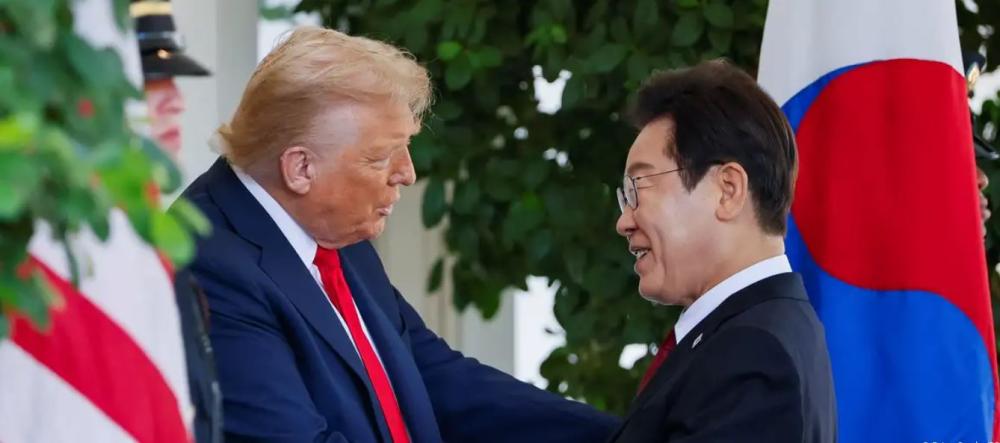
Today's events around the Korean Peninsula are becoming another marker of a tectonic shift in international relations – Washington's departure from the position of a "global defender" and the transition of the entire system of Western alliance to the rails of tough commercial pragmatism.
Previous international agreements and security guarantees are no longer inviolable if they do not bring direct, measurable benefits to the stronger guarantor powers.
Under the pressure of Donald Trump's unpredictable policies, not only is Europe increasingly entering a phase of "strategic loneliness," but key Asian allies of the United States are also beginning to feel acutely aware of this new reality. We can observe the development of this process in the example of South Korea.
On August 15, 2026, on Korea's National Liberation Day, center-left Lee Jae-myung, who became president last year, launched a large-scale peace initiative. He called on the DPRK to return to the negotiating table without preconditions, offering Pyongyang broad economic assistance in exchange for steps to de-scientificize and reduce military tensions.
North and South Korea are formally at war. The Korean War of 1950-1953 ended with the signing of an armistice agreement, not a full-fledged peace treaty. All these decades, Seoul's security was guaranteed by a military alliance with the United States. The North Korean leadership has not yet responded to the calls of Lee and his team. But recall that back in March 2026, the head of the DPRK, Kim Jong-un, officially proclaimed South Korea the "most hostile state", thus confirming the course that was launched in October 2024 with amendments to the constitution of the DPRK, which recorded the refusal to reunite peacefully. At the same time, North Korea is demonstratively increasing arms supplies.
At the same time, South Korea is getting a tough political "click" from its main ally and security guarantor.
On the eve of the start of the annual joint exercises between the United States and South Korea Ulchi Freedom Shield (UFS) (August 17-27, 2026), US President Donald Trump publishes a post in Truth Social, where he states that he is dissatisfied with the participation of the United States in the maneuvers due to good relations with the head of the DPRK, Kim Jong-un. He also chided Seoul for refusing to join the U.S. in the war against Iran. Trump publicly instructs Pentagon chief Pete Hegseth to curtail U.S. involvement.
"Based on my very good relationship with North Korea's Kim Jong Un, I am unhappy with the fact that the United States has long agreed to participate in joint military exercises with South Korea. Not only are these exercises costly, with most of the costs paid by the United States of America (as usual!), but they also send a completely inappropriate and hostile message to a country that, while Donald J. Trump was president, behaved innocuously and respectfully. Therefore, since it is too late to cancel them, I have instructed Secretary of Defense Pete Hegseth to significantly reduce the volume of joint military exercises! Although it is somewhat unrelated to the topic (?), I recently asked the President of South Korea if they would like to join us in the denuclearization of the Islamic Republic of Iran, and they replied, "No thanks!" - Trump said in a statement.
In fact, after such statements by Trump, South Korea found itself in a weak and vulnerable position. In fact, Washington deprived its ally of political support at the moment of its withdrawal with peace proposals.
Trump's public rebukes of South Korea over Iran, the reduction in participation in the exercises, demonstrate to the DPRK that there are deep cracks in the defense alliance between Washington and Seoul, which Pyongyang can now successfully exploit.
But why did South Korea need to revive peace initiatives now? Peace is usually asked for by the weaker party. And now – despite its military capabilities, developed economy and the presence of American bases, even despite a direct agreement with the United States on security guarantees – South Korea feels weaker.
This feeling is not least due to the fact that the strategic balance on the peninsula has gradually changed and North Korea has become stronger. This nuclear state, which gained access to new military technologies thanks to the Russian-Ukrainian war, has the support of China and Russia, and has a more motivated and militarized army. But the main trigger here may be the position of the United States, South Korea can no longer hope for the support of its main ally, as before.
Trump, based on his official statement, is already openly flirting with his potential enemy (the DPRK) in defiance of his official ally (South Korea). And here the logic of the American President may turn out to be cynical and simple: the DPRK has real power and nuclear weapons, which means that it is necessary to negotiate with it and be friends directly. At the same time, the interests of a weaker or dependent player (in this case, according to the US President, South Korea) can be ignored.
In addition, Trump's policy towards allies is increasingly being translated into a "fee for services" format. Security has become transactional: Washington demands from its partners either colossal financial payments for the maintenance of American bases, or unconditional military support for American campaigns.
At the same time, the White House additionally imposes on the allies participation in conflicts, the beginning of which was not coordinated with them at all. Trump did not ask anyone when making unilateral decisions on Iran, for example, but now he is firmly demanding that his partners obey and participate in the campaign. Similar claims that Trump makes to South Korea have already been voiced to European partners before.
In fact, traditional defense alliances are being replaced by vassal relations, where refusal to follow someone else's course is punished by deprivation of political (at least) or military support.
Trump's new isolationist approach is forcing countries around the world, from Asia to Europe, to recognize the new reality of "global strategic loneliness," where old security agreements may no longer work, and cannot be relied upon at a critical time.
And allies on both sides of the ocean now have to frantically search for ways to defend themselves in an environment where American security guarantees have become a subject of commercial bargaining.
The situation around South Korea is very indicative for other countries and, in particular, for Ukraine, where they continue to insist on reliable security guarantees from the United States.
It seems that we are rapidly entering an era where international law is increasingly ignored, and the new truth is exclusively on the side of the strong. Weak or dependent partners can no longer count on automatic protection. If you do not have your own powerful weapons, there is a high probability that your national interests will be sacrificed at the right time for the sake of a big deal between truly powerful players.
The Ukrainian Institute of Politics has already written in detail about the development of these international processes in the article: "Global Strategic Loneliness as a New Factor in International Politics: Lessons of Ukraine and Challenges for Europe in US Foreign Policy". In it, the concept of global strategic loneliness is presented as a defining feature of modern international politics.
Ruslan Bortnik and Oksana Krasovskaya
for the Ukrainian Institute of Politics