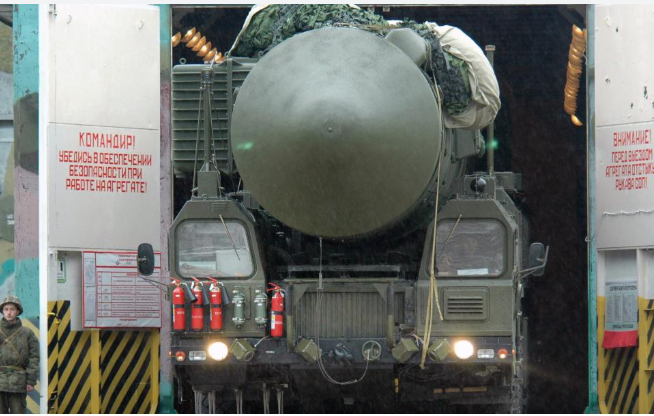
On Feb. 5, 2026, the last remaining nuclear arms treaty between Russia and the United States, the New START Treaty, will expire.1
The treaty, signed in 2010 by Barack Obama and Dmitry Medvedev, the respective presidents of the U.S. and Russia at that time, provided limits on the numbers of strategic delivery systems and nuclear warheads assigned to them in both countries’ nuclear arsenals.2 The treaty's original duration was 10 years (until Feb. 5, 2021), with the option for the parties to agree to extend it for up to an additional five years. The United States and Russian Federation agreed on the five-year extension until Feb. 5, 2026, but failed to replace the expiring treaty with any kind of deal.
Below you will find a compilation of views on the New START Treaty’s imminent demise from American,3 Russian, European, Indian and Chinese officials and/or experts, including exclusive interviews by RM staff, arranged alphabetically. The majority of experts featured in this compilation supported the extension of New START’s central tenets for another year. When asked by RM whether the U.S. or Russia stood to lose more from the expiration of New START, former Soviet diplomat Nikolai Sokov and exiled Russian arms control expert Pavel Podvig described the outcome as lose-lose, with U.K. expert Georgia Cole concurring. Most experts—regardless of country—stress that New START’s value was less in numerical limits than the transparency, verification and mutual predictability it provided. In addition, some Russian officials and experts argued that maintaining New START caps costs Russia little, helps avoid an arms race it cannot economically benefit from and allows Moscow to signal responsibility and parity with the U.S.
American views
Don Beyer, U.S. Representative; John Garamendi, U.S. Representative; Edward J. Markey, U.S. Senator; and Jeff Merkley, U.S. Senator: “With time running short, we urge the Administration to continue adhering to New START’s central limits on deployed warheads and to actively engage with Russia on a successor treaty. Russia’s recent offer to continue adhering to New START limits presents an opportunity for an interim understanding that would allow time to reach a new agreement and help to prevent a dangerous and costly arms race between the United States and Russia.” (Sen. Markey’s website, 10.17.25)
Mariana Budjeryn, Associate at Project on Managing the Atom Project at Harvard’s Belfer Center: “The expiration of the New START treaty ushers in a world bereft of any formal, mutually agreed restraints on strategic nuclear arsenals of the two nuclear superpowers. … Among other things, the demise of arms control will put even greater pressure on the already stressed nonproliferation regime, within which the bulk of non-nuclear weapon states have been perennially dissatisfied with the progress of arms reductions to which the nuclear powers have committed. The old global nuclear order is rapidly crumbling, but the new one is yet to emerge. Dangerous times.” (Belfer Center, 02.04.26)
Matthew Bunn, James R. Schlesinger Professor of the Practice of Energy, National Security and Foreign Policy at Harvard Kennedy School: “For decades, nuclear arms control has improved U.S., Russian and global security and reduced the risk of nuclear war by reducing tensions, increasing predictability and transparency, and limiting nuclear forces of particular concern. … Achieving nuclear restraint in the future will be far more complex, in a more multi-polar nuclear world, with evolving technologies from precision conventional weapons to artificial intelligence complicating nuclear balances — but it remains possible, with the right mix of determination and creativity.” (Belfer Center, 02.04.26)
Rose Gottemoeller, Lead New START negotiator on the U.S. side:
- Said for decades the treaty provided “really strong, mutual predictability about what's going on in each other's nuclear force postures.” (Axios, 02.04.26)
- Said Russia will be able to adapt to a post-treaty world far faster than the United States. Moscow never stopped fielding MIRVed missiles. “They can sprint away from us in an upload campaign while we’re still struggling to get the technical wherewithal in place to begin uploading existing missiles,” Gottemoeller said. (The New York Times, 01.30.26)
Nicole Grajewski, Fellow in the Nuclear Policy Program at the Carnegie Endowment for International Peace: “With the expiration of New START, Russia regains formal freedom to expand its strategic nuclear forces beyond treaty limits. But Moscow’s likely response should not be understood as a rush toward numerical arms racing. Russian behavior will instead reflect a familiar pattern: preserve strategic deterrence at relatively stable levels while shifting competition into domains that are cheaper, less regulated, and more politically useful.” (Belfer Center, 02.04.26)
William Hartung, Senior Research Fellow at the Quincy Institute for Responsible Statecraft: Letting the treaty expire increases “the risk of nuclear conflict and open the door to an accelerated nuclear arms race.” “Keeping New START limits and negotiating new deals to limit nuclear arsenals and deployments is in the interests of every nation, and should supersede disagreement on other issues,” he wrote. (Responsible Statecraft, 01.29.26)
W.J. Hennigan, writer at the Opinion section at The New York Times: “There’s been almost no sign of life in Washington or Moscow over arms control since Russia invaded Ukraine in 2022.... Past treaties, especially New START, have helped Moscow and Washington to avoid ... dangerous face-offs. The agreements didn’t bring about world peace, but they did provide each side with critical insight into what the other was up to. These kinds of restraints are why the world no longer faces the mountain of warheads built up during the Cold War. In a few days, the last restraint will be gone.” (The New York Times, 01.30.26)
Stephen Herzog, Visiting Scholar at Project on Managing the Atom at Harvard’s Belfer Center: “The consequences [of New START’s expiration] will reverberate far beyond Washington and Moscow. U.S. allies may well be dragged into an arms race. Many non-nuclear-weapon states––particularly across the Global South––will also see this as a confirmation that the United States and Russia have abandoned their Article VI disarmament commitments in the Nuclear Non-Proliferation Treaty. The result will be to send a strong signal about the value of the bomb, just as dual-use civilian nuclear energy is poised for a global revival driven by climate goals and the AI data center boom.” (Belfer Center, 02.04.26)
John P. Holdren, Teresa and John Heinz Research Professor of Environmental Policy at Harvard Kennedy School: "New START’s imminent expiration, which would quite likely be followed before long by the collapse of the Non-Proliferation Treaty of 1968, could well launch an era of unbridled, multipolar, nuclear-arms racing that ends in total disaster. Driving the world toward this outcome at the moment is that neither President Trump nor President Putin appears to recognize the surpassing importance of mutual restraint, mutually agreed upon (in the nuclear domain or any other, it seems). The world can only hope they come to their senses and extend New START…as a start on the road to more sensible nuclear restraint everywhere." (Belfer Center, 02.04.26)
Jonathan Hunt, Assistant Professor in the Strategic and Operational Research Department at the U.S. Naval War College: “The demise of New START is … less tied to deteriorating U.S.-Russian relations since Moscow’s seizure of Crimea in 2014 and invasion of Ukraine in 2022. The decline of arms control is instead bound up in the rise of a new great-power competitor—the People’s Republic of China and its expanding People’s Liberation Army Rocket Forces.” (Belfer Center, 02.04.26)
Jennifer Kavanagh, Senior Fellow and Director of Military Analysis at Defense Priorities; Adjunct Professor at Georgetown University: It is “too late to prevent the agreement’s demise, but the Trump administration could still take steps to mitigate some of the more serious potential consequences by sticking to New START’s caps and limitations, at least in the short term.” She urged the administration at least to “signal its intention to stick to the treaty’s current caps. “The world has come too far to allow the progress of the past half-century to slip away. Without a new agreement, each side's military is forced to plan for the worst. There’s a window of time to act. It might be closing fast, but it’s worth trying,” she wrote. (The American Conservative, 01.30.26)
Barack Obama, former president of the United States, wrote on X that "If Congress doesn’t act, the last nuclear arms control treaty between the U.S. and Russia will expire” in what “would pointlessly wipe out decades of diplomacy, and could spark another arms race that makes the world less safe." (Reuters, 02.04.26)
Ankit Panda of the Carnegie Endowment: “In the post-New START environment, the United States will have to learn—and we're not going to like it—to live in a world with more nuclear risk facing the United States, regardless of the choices we make about the composition of our nuclear forces.” (Axios, 02.04.26)
Kingston Reif, a former U.S. deputy assistant secretary of defense for threat reduction and arms control: New START has been “a huge net benefit for U.S. national security” because it capped and verified U.S. and Russian deployed arsenals that hold “some 85% of the world’s warheads.” (Axios, 02.04.26)
Marco Rubio, U.S. Secretary of State: “Obviously, the President’s been clear in the past that in order to have true arms control in the 21st century, it’s impossible to do something that doesn’t include China because of their vast and rapidly growing stockpile.” (U.S. State Department, 02.04.26)
Gary Samore, Senior Fellow at Harvard’s Belfer Center: “Unfortunately, prospects are not good for additional arms control agreements to constrain nuclear expansion by the U.S., Russia and China. While President Putin would likely agree to another bilateral U.S.-Russia treaty to replace New START - in order to limit the U.S. nuclear threat to Russia - President Trump has insisted that any new treaty include both Russia and China. China, however, rejects any treaty that would not give it nuclear equivalence with the U.S. and Russia, which the U.S. (and probably Russia) are not prepared to accept. So, for the time being, nuclear buildup seems like the most likely path.” (Belfer Center, 02.04.26)
Nikolai Sokov, Senior Fellow at the Vienna Center for Disarmament and Non-Proliferation (VCDNP)
- “Russia values predictability—pretty consistently—but the preference is far from overwhelming: Russia will not go a very long way to ensure it and will not make concessions to get it. It appears Russia is still very much into the traditional framework of arms control, but emphasizes reciprocity more than was the case in the late 80s or 90s.” (Exclusively interviewed via e-mail by RM staff on 02.03.26)
- “The expiration of New START is a lose-lose because in the end, everyone loses from the loss of predictability, which was ensured by the Treaty. This loss started many years ago, however, during the last decade when the two countries failed to start negotiations on a new treaty. After all, New START was a transparency tool to keep the relationship predictable while they negotiate a comprehensive treaty. These negotiations never started, hence the treaty, which was supposed to be a temporary fix, became the cornerstone, a role for which it was ill-suited. (Exclusively interviewed via e-mail by RM staff on 02.03.26)
Donald Trump, U.S. President: “If it expires, it expires. We’ll just do a better agreement. You probably want to get a couple of other players involved also.” (New York Times, 01.11.26)
Chinese views
Lin Jian, Chinese Foreign Ministry Spokesperson: “China noted the constructive proposal Russia put forward regarding the arrangement after New START expires. We hope the U.S. will actively respond to the proposal and truly uphold global strategic stability.” “China’s position on a trilateral negotiation with the U.S. and Russia on nuclear arms control is clear. China’s nuclear strength is by no means at the same level with that of the U.S. It is neither fair nor reasonable to ask China to join the nuclear disarmament negotiations at this stage,” Lin said. (Chinese Foreign Ministry, 02.03.26)
Xinhua / People’s Daily: “China hopes that the United States will respond positively to Russia's constructive proposal on the follow‑up arrangements of the New Strategic Arms Reduction Treaty (New START) and truly maintain global strategic stability. … At this stage, requesting China to participate in nuclear disarmament negotiations is neither fair nor reasonable.” (english.news.cn, 02.03.26))
Zhang Hong, Chinese Academy of Social Sciences, wrote that although China is not a party to the New START Treaty, it has consistently supported its continuation and renewal, viewing the treaty as a key mechanism to enhance global security and prevent miscalculations among major powers. "China seeks to gradually advance broader global arms control negotiations on the basis of equality and mutual respect, rather than passively joining a bilateral framework," Zhang Hong, a research fellow at the Institute of Russian, Eastern European and Central Asian Studies under the Chinese Academy of Social Sciences, told the Global Times. (Global Times, 02.03.26)
European views
French Foreign Minister Jean‑Noël Barrot said the world is “facing the risk of nuclear proliferation because of the erosion of the legal framework for arms control” and, with the coming expiration of New START, “the world will be in a more dangerous situation than before... The expiration of New START is a bad signal for international security. It comes in a broader context of erosion of the nuclear arms‑control regime… We are moving from a legally binding framework of reductions and limits on arsenals to a more unstable and competitive management of deterrence.” (TF1Info, 02.04.26, machine-translated)
Georgia Cole, Research Associate in the International Security Program at Chatham House; Associate Editor for the Journal of Cyber Policy, warned that when New START expires, “it will mark the first time since the early 1970s that there will be no legally binding limits on U.S. and Russian strategic nuclear forces,” removing “the last agreed framework governing the size of the two largest nuclear arsenals worldwide.” Even in weakened form—after Putin suspended participation in 2023—“both sides have continued to signal that they are adhering to the treaty’s core numerical limits,” which she says “still reinforce strategic stability.” Cole argued that without New START, “strategic planning on both sides is more likely to be driven by uncertainty and worst-case assessments,” increasing “the risk of a new arms race.” (Chatham House, 01.26.26)
The Economist: “Whatever the pace of the new nuclear competition, the 40-year process of shrinking nuclear stockpiles is going into reverse.” (The Economist, 02.03.26)
Karim Haggag, Director of the Stockholm International Peace Research Institute (SIPRI) wrote: “Rather than an interregnum, the passing of New START is likely to mark a prolonged, perhaps indefinite, suspension of bilateral nuclear arms control with profound implications for global nuclear politics… All of this should prompt serious consideration in European capitals of an arms control approach that would begin to address these challenges. The approach should prioritize devising a risk-reduction regime for Europe to mitigate the prospects for escalation along the contact zones between NATO and Russia; pressing the USA to return to a renewed arms control process, which is clearly in European interests; and encouraging France and the U.K.—NATO Europe’s two nuclear powers—to signal their readiness to engage in future strategic arms control processes that would also include China and Russia. A European-led approach along these lines would not be a substitute for strategic nuclear arms control involving China, Russia and the USA; however, it would partly mitigate the effects of the collapse of New START and potentially hasten the resumption of negotiations on nuclear reductions.” (SIPRI, 02.04.26)
Andreas Kluth,4 Columnist for Bloomberg Opinion: “The expiry of New START is yet another step out of a world in which the great powers restrained themselves with rules, and into a brave new world of anarchy, in which the only rules are the whims of strongmen.” “The only way to reduce th[e] existential threat is to return to negotiations, ideally three-way talks among Washington, Moscow and Beijing which then include other nuclear powers over time,” he wrote. (Bloomberg Opinion, 01.30.26)
Ulrich Kühn, Head of Arms Control and Emerging Technologies at the Institute for Peace Research and Security Policy at the University of Hamburg (IFSH): “The relative silence from Washington’s lawmakers on New START’s demise is the writing on the wall. Over several years, a consensus developed in the military-industrial complex of the capital: China is already racing with nuclear weapons. China and Russia are in cahoots. America is therewith facing a two-peer problem. America needs more nukes. This logic, which denounces diplomacy at the expense of unilateral militarism, will become the main driver behind the arms race of the 21st century.” (Belfer Center, 02.04.26)
Lynn Rusten, Center for European Policy Analysis: “A historic moment, and not in a good way—on Feb. 5, the last remaining bilateral treaty between the United States and Russia limiting strategic nuclear arms… will expire, and the path to unconstrained nuclear competition will be unimpeded.” (cepa.org, 02.03.26)
Indian views
Simantik Dowera, Indian journalist, frames the collapse of New START as a China problem for India. “On Feb. 5, the New Strategic Arms Reduction Treaty (New START) is on the verge of collapsing. This agreement is the final tether holding back the world’s two largest nuclear powers, who together control 90% of the global atomic arsenal,” Dowera wrote. “However, more than the U.S. and Russia, from India's perspective, the sheer absence of a treaty—despite China not being a signatory—will give Beijing the perfect pretext to explosively multiply its nuclear arsenal.” (The Free Press Journal, 02.02.26)
International views
Pope Leo XIV said New START represents an important step in limiting the proliferation of nuclear weapons. Pope Leo reaffirmed his encouragement for all constructive efforts in support of disarmament and mutual trust. “I issue an urgent appeal that this instrument not be allowed to lapse without seeking to ensure a concrete and effective follow-up,” he said. (Vatican News, 02.02.26)
Russian views
Sergey Karaganov, honorary chairman of Russia’s Council for Foreign and Defense Policyis skeptical about the possibility of any new arms control agreements. He has urged the Russian government not to reduce its nuclear arsenal “under any circumstances.” (Meduza, 04.30.25)
Dmitry Medvedev, the ex-president of Russia who signed the New START deal in 2010:
- “In September of last year, our country proposed going even further. The President of Russia put forward a constructive initiative: that both sides voluntarily maintain their commitment to the New START limits for at least one more year after the end of its life cycle. The head of our state emphasized that this measure can only be viable if the United States acts in the same way and does not take steps that would undermine the current parity. Implementation of the Russian initiative could make a significant contribution to global security and to expanding the strategic dialogue with the United States. However, we have yet to receive a substantive official response to our proposal from Washington.” (Kommersant, 01.26.26)
- Asked what arms control regime would look like after Feb. 5, Medvedev warned, “Russia is ready for any development of events. New threats to our security will be suppressed in a timely and tough manner. There should be no illusions about this. All the more so because, in addition to traditional strategic offensive weapons, new, very powerful types of weapons are appearing. All countries are working on this. We are, of course, as well. You don’t have to look far for examples: it is enough to recall the ‘Burevestnik,’ ‘Oreshnik’ and ‘Poseidon’ systems,” Medvedev said. “I am sure that the nuclear club will expand. A number of states possess the technical capabilities to create a military nuclear program; some of them are already conducting research in this area,” Medvedev stated. (Kommersant, 01.26.26)
- “For almost 60 years, we haven't had a situation where strategic nuclear capabilities were not limited by something. But now such a situation is possible... [When asked: ‘will there be a global world war?’] I don’t want to dramatize things, but the situation is very dangerous… overall the situation is very dangerous... the pain threshold is being lowered… a global conflict, unfortunately, cannot be ruled out. I believe the danger is very great.” (TASS.ru, Reuters, War Gonzo, 02.02.26)
Dmitry Peskov, Vladimir Putin’s spokesman:
- With New START expiring “replacing it “takes a lot of time and is complicated” and that letting it lapse would create a “serious deficit” in the legal framework on nuclear arms, “undermine global stability, and serve neither Russian nor U.S. interests.” “In September, President Vladimir Putin offered a stopgap, saying Moscow was ready to continue observing New START’s central limits “for one year after Feb. 5, provided the U.S. did the same.” Washington has not formally responded; Trump has also floated a broader framework including China, which Beijing has rejected as “neither reasonable nor realistic” given its far smaller arsenal. Speaking to reporters on Thursday, Peskov said Moscow’s stance on the issue was “consistent,” adding: “We continue to wait, but the deadline is close. There has been no response from the United States.” “Peskov warned that negotiating a replacement “takes a lot of time and is complicated.” Letting the treaty lapse, he said, would create a “serious deficit” in the legal framework governing nuclear arms, undermine global stability, and serve neither Russian nor U.S. interests.” (RT, 01.29.26)
- He warned with expiration of New START, “the world will probably be in a more dangerous position than it has been until now.” (Washington Post, 02.04.26)
Pavel Podvig, Senior Researcher at UNIDIR’s Weapons of Mass Destruction Program; Director of the Russian Nuclear Forces Project:
- “Arms control treaties related to strategic nuclear weapons are traditionally important for Moscow because they help show Russia's status as a power that is on par with the United States. This was the case during the Cold War; this is the case today. Another point is that these treaties served as a barometer of the general status of the relationship. Signals about readiness to talk about nuclear weapons and about compliance with existing treaties play an important role in the overall communication between the United States and Russia. In that regard, Russia's offer to stay within the treaty limits shows that Russia hopes to keep the overall relationship with the United States on a certain level. But in terms of numbers, I don't think Russia would worry too much whether the U.S. arsenal is 1550 warheads or, say, 3550.” (Exclusively interviewed via e-mail by RM staff on 02.03.26)
- “It's fair to say that both parties will be worse off [after the treaty’s expiration], primarily because the lack of obligations, transparency and verification is likely to contribute to further deterioration of their relationship. I don't think that one is losing more than the other. One "win" that the United States will get is the ability to increase the number of deployed weapons by uploading reserve warheads on existing missiles and to present it as a response to China's alleged buildup. But I don't think it's a real win in the sense that the U.S. is unlikely to get any benefits from this and will only make the confrontation with China worse. Sometimes it is good not to have certain options.” (Exclusively interviewed via e-mail by RM staff on 02.03.26)
- Podvig argues that “the U.S. expert and political community has essentially reached consensus on the need to expand the U.S. strategic arsenal,” and that “the momentum to ditch New START limits is very much unstoppable.” On the pessimistic scenario, “the United States will declare that it is free from any constraints and proceed with what is known as ‘upload’—returning reserve warheads to its missiles,” potentially increasing “the number of deployed warheads from the New START 1550 to about 3500.” (RussianForces.org, 01.28.26)
- On Russia’s likely course, he writes: “I would expect that it will confirm its offer and pledge to adhere to the treaty limits for at least one year no matter what the United States does. There is really no downside for Russia in doing so. It would get to show itself ‘a responsible nuclear power’… Then, in February 2027 Moscow would reluctantly say that it has no choice but to follow the United States. But it's not like Russia needs more warheads.” (RussianForces.org, 01.28.26)
Sergei Ryabkov, Deputy Foreign Minister of Russia: "This [the expiration of New START] is a new moment, a new reality—we are ready for it.” Commenting on Donald Trump’s reported decision not to formally respond to a Russian proposal to keep observing the treaty's missile and warhead limits for one more year, Ryabkov said: "The lack of an answer is also an answer.” Ryabkov said China had a clear position on arms control and that Moscow respected it. (Reuters, 02.04.26)
Vladimir Putin, Russian President:
- “The New START Treaty will expire on Feb. 5, 2026, signaling the imminent end of the last international accord directly limiting nuclear missile capabilities. A complete renunciation of this treaty’s legacy would, from many points, be a grave and short-sighted mistake. It would also have adverse implications for the objectives of the Treaty on the Non-Proliferation of Nuclear Weapons. In order to prevent the emergence of a new strategic arms race and to preserve an acceptable degree of predictability and restraint, we consider it reasonable to maintain at this turbulent time the status quo established under New START. Accordingly, Russia is prepared to continue observing the treaty’s central quantitative restrictions for one year after Feb. 5, 2026.” (Kremlin, 09.22.25)
- “All of this [nuclear testing] is currently simulated on computers. Specialists believe this is sufficient, but some of those same experts think that full-scale tests should still be conducted. As far as we know, some countries are considering this and even making preparations. So I said that if they do it, we will do the same. Is that good or bad? From the standpoint of ensuring security, it is good; from the overall perspective of deterrence and efforts aimed at – if not reducing, then at least containing – the arms race, it is probably not bad either. But our proposal to extend the New START Treaty for at least one year is in the same context. Let everyone think about it.” (Kremlin, 10.20.25)
Boris Rozhin, Expert at the Center for Military-Political Journalism:
- Describing the end of New START, Rozhin wrote: “In February 2026 the document will finally lose force due to the expiration of its term, which will lead to the disappearance of one of the basic mechanisms that for a long time restrained the race of nuclear‑missile armaments.” He argued that “there is little point in adhering to agreements that the main counterparty does not observe,” and that the remaining arms‑control accords increasingly “look like a rudiment of a bygone era.” (TASS, 01.27.26, machine-translated)
- Looking ahead, Rozhin insisted: “Russia, of course, cannot and will not ignore attempts by the United States to destroy nuclear‑missile parity and will also actively develop its nuclear triad,” stressing that “the technological groundwork of the Russian Federation for this exists,” and that “in the event of the complete exhaustion of New START, Moscow will have something to answer to attempts by Washington to tilt the scales of strategic nuclear superiority in its favor.” (TASS, 01.27.26, machine-translated)
Maxim Starchak, Fellow at the Center for International and Defense Policy of the Queen’s University:
- “Putin wants to maintain the advantage he gains by developing nuclear-powered systems—Poseidon and Burevestnik. Preservation of the New START Treaty guarantees him that the United States will not increase its nuclear potential. This is what experts supporting the Republican Party and Donald Trump want. These weapons are not covered by the New START Treaty. Thus, Putin gets additional time to complete these nuclear developments smoothly. And if any U.S. administration in the future wants to conduct new talks on strategic weapons, Putin will have an advantage and set [his] own terms.” (Exclusively interviewed via e-mail by RM staff on 02.03.26)
- “The absence of a New START Treaty is just completing the long overdue breakdown of the arms control system. So far, this is a political crisis, but whether there will be a military collapse after the end of the New START treaty, when the parties build up weapons, we need to find out. I think there will be an increase in nuclear weapons. The question is about the scale of this process.” (Exclusively interviewed via e-mail by RM staff on 02.03.26)
- “At a time when Russia is not only not bound by any agreements, but is also increasing its nuclear forces with new nuclear-powered weapons, the United States will have to respond. I think that, at the first stage, Russia will not be interested in the growth of nuclear warheads, since, by that time, it will already have an advantage due to new nuclear weapons. Russia will closely monitor the U.S. policy and development of its arsenal. If the United States begins implementing the Heritage Foundation's plan to bring the number of strategic nuclear weapons to 3,500 by 2050, Russia may feel that it is at risk of losing the arms race and begin to increase its own nuclear arsenal.” (Exclusively interviewed via e-mail by RM staff on 02.03.26)
Dmitri Trenin, Academic Supervisor of the Institute of World Military Economy and Strategy at Moscow’s Higher School of Economics University; Member of Russian International Affairs Council:
- “The problem of maintaining strategic stability between Washington and Moscow, which for more than half a century served as the basis of bilateral relations of the leading nuclear powers of the world, did not find reflection in the National Defense Strategy,” Dmitri Trenin wrote, noting that the term “strategic stability” appears there only once, “applied to U.S.–China relations.” He added that “the history of the arms control process between Washington and Moscow ends on Feb. 5, when the term of the New START Treaty expires.” (Profile, 01.29.26)
- Trenin argued that the United States “prefers to have freedom of hands in the matter of developing its arsenal of strategic weapons,” and that this, combined with the lapse of New START, means Russia must assume that “the basis of our policy in relation to the United States remains nuclear deterrence–intimidation, the credibility of which must be increased.” (Profile, 01.29.26)
- Looking ahead, Trenin warned that even if a Ukraine settlement is reached, “the United States will remain, for the entire foreseeable future, a geopolitical opponent of Russia,” and that Moscow must therefore focus on “strengthening the foundations of the country’s political, economic and ideological systems” and on deepening “military‑strategic and military‑technical partnership with China” as “the most important element of Russia’s security system in Eurasia” in a post–arms control world. (Profile, 01.29.26)
Dmitri Trenin and Andrey Rusakovich, Professor at Belarusian State University:
- In December 1991, Belarus undertook to join the NPT as a non-nuclear state and export Soviet tactical nuclear weapons to Russia. Belarus signed the Lisbon Protocol to START-1 in May 1992 and joined the NPT as a non-nuclear state in July 1993. The last ICBM was removed from Belarus in November 1996. During the 1990s, Belarusian leadership promoted creating a nuclear-free zone in Central and Eastern Europe. (Russia in Global Affairs, 01.01.26, machine-translated)
- By late 2021, President Lukashenko indicated Minsk was considering deploying Russian nuclear weapons as a response to possible NATO actions, particularly U.S. nuclear weapons deployment in Poland. On Feb. 27, 2022, a referendum excluded the provision on neutral and nuclear-free status from Belarus's Constitution. (Russia in Global Affairs, 01.01.26, machine-translated)
- In March 2023, President Putin announced deployment of Russia's non-strategic nuclear weapons (NSAO) in Belarus. By early 2024, two divisions of Iskander-M missile systems were deployed, capable of delivering nuclear warheads up to 480 km—covering almost all of Poland, the Baltic States, and Ukraine. Moscow also helped re-equip Belarusian Su-25 aircraft for nuclear weapons use. (Russia in Global Affairs, 01.01.26, machine-translated)
- This marked the first deployment of Russian nuclear weapons outside Russia since the USSR's collapse… Belarus participates in nuclear planning and has carriers capable of delivering nuclear weapons, though authorization remains with Russia… Russia maintains control and decision-making authority over the weapons. (Russia in Global Affairs, 01.01.26, machine-translated)
- In November 2024, Russia's nuclear doctrine—"Basic Provisions of State Policy in the Field of Nuclear Deterrence"—was updated to indicate Russia's readiness to defend Belarus with nuclear weapons if necessary. Paragraph 18 states Russia "reserves the right to use nuclear weapons in response to… aggression against the Russian Federation and (or) the Republic of Belarus as members of the Union State with the use of conventional weapons, posing a critical threat to their sovereignty and (or) territorial integrity." (Russia in Global Affairs, 01.01.26, machine-translated)
- Belarus is the only ally directly named in the document—such clear nuclear guarantees distinguish Belarus from Russia's other allies… effectively equating Belarus's security with Russia's own security. "The security of Union State members is indivisible." (Russia in Global Affairs, 01.01.26, machine-translated)
- For the first time in the post-Soviet period, "Russian nuclear deterrence is doctrinally, legally, and operationally spreading to another state…" (Russia in Global Affairs, 01.01.26, machine-translated)
Yury Ushakov, aide to Russian President Vladimir Putin: During his Feb. 4 conversation with Xi Jinping, Vladimir Putin “drew attention to the fact that tomorrow, Feb. 5, the term of the Treaty on the Limitation of Strategic Offensive Arms expires. As you know, on Sept. 22, 2025, we proposed to the Americans that the central numerical limits be extended for one year as voluntary self-restraints, but an official response from the Americans has still not been received. Vladimir Putin stressed that in this situation we will act in a balanced and responsible manner, on the basis of a thorough analysis of the overall security situation. We remain open to exploring negotiating avenues for ensuring strategic stability." “The leaders are aware of the ongoing contacts between our countries and the administration of Donald Trump, and they see opportunities emerging in this,” he said. (Kremlin, 02.04.26)
Ukrainian views
Ruslan Bortnik of Ukrainian Institute of Politics wrote that if New START lapses without any follow‑on or informal limits, this would: “…leave the strategic forces of the United States and Russia completely unhindered for the first time in more than half a century… [and] would certainly provoke a new nuclear arms race.” (Ukrainian Institute of Politics, February 2026)
Responses to questions by RM have been lightly edited for clarity.
Footnotes
- 02.05.26 10:00 AM update: Axios reported on Feb. 5, 2026, that “the U.S. and Russia agree to observe New START nuclear pact after expiration.” According to this media outlet’s sources, as of Feb. 5, 2026, the U.S. and Russia were closing in on a deal to continue to observe the treaty. President Trump's envoys Steve Witkoff and Jared Kushner negotiated on the treaty with Russian officials on the sidelines of Russia-Ukraine talks in Abu Dhabi, according to Axios.
- The treaty limited deployed intercontinental ballistic missiles (ICBMs), submarine-launched ballistic missiles (SLBMs) and heavy bombers assigned to nuclear missions to 700, according to Arms Control Association. Deployed and non-deployed ICBM launchers, SLBM launchers and bombers were limited to 800. The treaty limited nuclear warheads on deployed systems to 1,150, according to the U.S. Department of State.
- While some may not recognize the treaty by name, an overwhelming majority of American respondents to a recent YouGov poll—91%—said “the United States should negotiate a new agreement with Russia to either maintain current limits on nuclear weapons or further reduce both countries’ arsenals.”
- Andreas Kluth is a Bloomberg Opinion columnist covering U.S. diplomacy, national security and geopolitics. Previously, he was editor-in-chief of Handelsblatt Global and a writer for the Economist.