Авторы публикации
WEEKLY SUMMARY:
THE UKRAINIAN DIMENSION.
(16–23 November 2026)
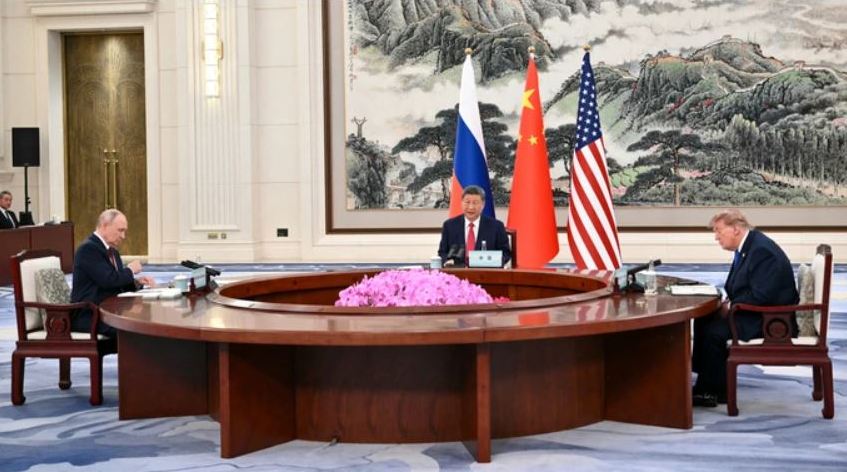
The trilateral meeting between US President D. Trump, Chinese President Xi Jinping and Russian President V. Putin in Shenzhen on the sidelines of the APEC Summit (19 November 2026) did not lead to a breakthrough on Ukraine, Iran or Taiwan, and therefore can hardly claim the title of “Yalta 2.0”. On each of these major issues, the parties have different interests and are not yet prepared to make concessions. The meeting resulted in the “Declaration of the Heads of State of Russia, China and the United States on Peace”, comprising four points. The content of the four points of the declaration reflects the convergence of certain interests of the participants. UN reform is consistent with China's traditional agenda. Expanding the production and supply of petroleum products serves Russian and Chinese economic interests while leaving opportunities for American producers. The provision on the immunities of government officials and criticism of the ICC is close to the position of the D. Trump Administration and directly benefits Moscow. The nuclear provision is consistent with China's desire to reduce the risks of escalation without accepting restrictions on its own arsenal. However, the document did not establish any specific decisions on the major international conflicts.
From the perspective of expectations for a peaceful settlement in Ukraine, the summit also proved largely unproductive. Ukraine was discussed both during the trilateral talks and at V. Putin's bilateral meetings with Xi Jinping and D. Trump, but no reference to Ukraine was included in the declaration. Presumably, Moscow was counting on an agreement with D. Trump, following which Washington would intensify pressure on Ukraine and its European partners to secure acceptance of Russian terms. However, no such agreement is evident from the outcome of the meeting. Nor are there any indications that Russia secured substantially greater support from China. Shenzhen did not become a platform where Xi Jinping's mediation would enable V. Putin and D. Trump to agree on a way out of the Ukrainian crisis. The Chinese leader is himself a participant in strategic rivalry with the United States, so his role is not limited to the neutral moderation of Russian-American disagreements. Behind the display of unity among the superpowers, their actual disunity persists: each fears an alignment between the other two. A settlement of the war in Ukraine could facilitate a rapprochement between the United States and Russia, in which China has no interest, as this would reduce Moscow's dependence on Beijing and expand its room for independent manoeuvre. Overall, a balance of mutual concessions has not been found, and the three main areas of confrontation — the Middle East, East Asia and Eastern Europe — remain unresolved.
The lack of diplomatic results may have heightened the frustration of the Russian leadership. Ukrainian attacks on the Crimean Bridge during the summit further contributed to an unfavourable negotiating environment for Russia.
For the Ukrainian government, the absence of the Ukrainian issue from the declaration is a rather favourable outcome. Given the composition of the participants in the trilateral talks, a compromise between Washington and Moscow could have been sought primarily at the expense of concessions by the more dependent party — Ukraine. Therefore, for Kyiv, the absence of a specific decision is preferable to a major deal concluded without its participation.
The parallel meetings in Shenzhen and Berlin highlighted the divergence of political priorities within the former Western coalition. Formal allied relations remain intact, but there is still no common understanding of the conditions for ending the war or the subsequent European security architecture. The United States continues to participate in European formats and remains an indispensable provider of weapons, intelligence and technological capabilities, but seeks to agree on the terms of a settlement directly with Moscow. Ukraine and the leading European states, by contrast, are seeking to secure long-term support and prevent restrictions on their own security within the framework of a Russian-American compromise. At the same time, Kyiv is returning to its previous, tougher negotiating positions, once again putting forward NATO membership as the preferred security guarantee and questioning the adequacy of the alternatives proposed by Washington.
In this situation, the prospects for a swift end to the war are becoming increasingly remote. In particular, the time available for the D. Trump Administration to achieve a diplomatic result is shrinking. Following the Republicans' defeat in the midterm elections, the White House has a limited period until 3 January 2027, when control of both chambers of Congress will pass to the Democrats, strengthening congressional oversight and complicating the implementation of any agreements with Moscow. The Administration is therefore seeking to achieve at least interim results: Steve Witkoff and Jared Kushner warned the Russian and Ukrainian sides about the narrowing “window of opportunity” for reaching an agreement before the political balance in Washington changes. At the same time, Republicans aligned with the D. Trump Administration are using support for Ukraine as an instrument of domestic political bargaining with the Democrats, seeking to weaken congressional oversight of the White House and the Pentagon. In particular, House Speaker Mike Johnson and Chairman of the House Foreign Affairs Committee Brian Mast insist on removing provisions concerning intelligence sharing with Ukraine, the expansion of military assistance to Kyiv and sanctions against Russia from the National Defense Authorization Act (NDAA) currently under consideration by Congress. In exchange, they expect to secure the removal of provisions strengthening oversight of President D. Trump and Secretary of Defense Pete Hegseth. This bargaining is likely aimed, among other things, at reducing the Democrats' ability to initiate impeachment proceedings. In fact, the issue is not yet about adopting a ban on all forms of assistance to Ukraine, but the situation nevertheless increases political pressure on Kyiv.
However, the Ukrainian leadership shows no willingness to soften its positions: Ukrainian President V. Zelensky continues to criticise D. Trump's approaches in interviews with Western media, while Ukrainian forces have carried out a series of strikes on the Crimean Bridge, resulting in the collapse of the road arch and span, as well as the temporary suspension of railway traffic, which has significantly restricted the bridge's operation. These attacks further complicate the negotiation process, given the symbolic significance of the Crimean Bridge for V. Putin. They also give Moscow an additional formal pretext for rejecting the sector-specific ceasefires proposed by Kyiv, which it had previously refused to accept, and presenting intensified strikes on Ukrainian rear-area infrastructure as retaliatory actions. Thus, Washington's efforts to accelerate negotiations are so far accompanied by the parties maintaining their tough positions and increasing mutual military pressure.
If Russia's expectation of coercing Ukraine through agreements with Washington has not been fulfilled, Moscow may now attempt to secure concessions by intensifying strikes on Ukrainian rear-area infrastructure and increasing pressure on the front line. At the same time, diplomatic contacts between the parties, with American and European partners acting as mediators, may continue, but without an agreed political foundation, they will merely serve as a backdrop to a new wave of escalation, during which the parties will attempt to alter the terms of future bargaining.
Therefore, one of the likely consequences is the continuation of an intense phase of the war of attrition, rather than a transition towards a swift and constructive settlement. Its duration will depend on changes in the balance of power and political decisions. However, the war is most likely to continue in one form or another until the end of D. Trump's presidential term.
At the same time, the nature of the war is becoming increasingly total: Russian strikes on Ukrainian rear-area infrastructure are becoming increasingly indiscriminate, resulting in civilian deaths and injuries, the destruction of housing and the disruption of essential life-support systems. Strikes on bridges across the Dnipro pose a serious threat to Kyiv: damage to these bridges could significantly restrict transport links between the two banks, disrupt logistics and utility networks, effectively dividing the capital's economic and social life into two increasingly isolated parts. The authorities are attempting to find alternative solutions, considering the establishment of pontoon crossings and the construction of tunnels, but the implementation of these options requires time, complex engineering work and additional financial resources.
Meanwhile, the Russian-Ukrainian war is increasingly extending beyond the main theatre of military operations, heightening the threat of direct escalation between Russia and European countries. Following the crash of three Russian Kh-101 cruise missiles on Polish territory on 20 November, Polish Prime Minister Donald Tusk described the incident as a deliberate provocation by Russia. The incident prompted discussions at a meeting of NATO's North Atlantic Council on 23 November.
Tensions are also rising in the Baltic region. An air raid alert was declared in the Kaliningrad region on 21 November, while reports emerged of explosions and air defence activity in Baltiysk, although there is no confirmed information about any facilities being hit. Governor Alexey Besprozvannykh linked the alert to the appearance of a suspicious object approaching from Lithuania. In response, Lithuanian Foreign Minister Kęstutis Budrys denied the country's involvement and stressed that its airspace had not been made available for strikes against Russia. On the same day, the Russian dry cargo ship “Sparta II”, en route to Kaliningrad, was attacked in the Gulf of Finland. Finland also reported an alleged violation of its airspace by a Russian helicopter involved in the operation near the vessel.
The geographical scope of attacks is also expanding into the Mediterranean. On 22 November, the Russian corvette “Mercury” was attacked in the Libyan port of Benghazi. Ukrainian President V. Zelensky confirmed that the operation had been carried out using seven Ukrainian naval drones and stated that the ship had been sunk. Unconfirmed claims emerged in the Russian information space alleging that the unmanned boats had been launched from Albania and that European intelligence services had been involved, effectively assigning part of the responsibility to European states. Other reports, however, indicate a possible launch from Libyan territory.
Military incidents near NATO's borders and mutual accusations create additional grounds for military action. In the longer term, the continuation of such dynamics could lead to a direct confrontation between Russia and European countries.
__________________________________
Trilateral meeting of the US, Chinese and Russian leaders in Shenzhen: implications for negotiations on Ukraine.
On 19 November 2026, the first trilateral meeting between US President D. Trump, Chinese President Xi Jinping and Russian President V. Putin took place in Shenzhen on the sidelines of the APEC Summit. The talks lasted approximately an hour and a half and concluded without a joint statement to the press. The outcome was the “Declaration of the Heads of State of Russia, China and the United States on Peace”, consisting of four points. Ukraine is not mentioned in the document.
The historic nature of the meeting's format did not translate into substantive results of comparable significance. Expectations of “Yalta 2.0”, a division of spheres of influence or a comprehensive agreement on major international conflicts were not fulfilled. The published outcomes indicate no breakthrough on Ukraine, Iran or Taiwan. On each of these issues, the participants seek to maintain their own positions, and no mutually acceptable balance of concessions was achieved.
Ukraine was discussed both at the trilateral meeting and during V. Putin's bilateral talks with Xi Jinping and D. Trump. Moscow did not secure publicly documented support for its demands from either the United States or China. There was no indication that Washington would abandon its existing forms of support for Ukraine or that Beijing was prepared to significantly expand its assistance to Russia. The absence of the Ukrainian issue from the declaration primarily indicates the inability to formalise a common position that the three powers could subsequently use to exert pressure on Kyiv and its European partners.
The four points of the final declaration establish the convergence of certain interests but do not constitute a common strategy for resolving conflicts. The call for UN reform is consistent with China's traditional agenda of strengthening its influence over international institutions. The intention to expand the production and supply of petroleum products serves the interests of Russia as an exporter, China as a major consumer, and American producers. The provision on the immunities of government officials and the inadmissibility of abuse of powers by the International Criminal Court is close to the position of the D. Trump Administration and directly benefits the Russian leadership. Thus, the participants attempted to agree on protecting their own freedom of action without reaching specific agreements on issues where their interests directly clash.
The nuclear provision also establishes a minimal level of agreement while fundamental disagreements persist. The heads of state reaffirmed that a nuclear war cannot be won and must never be fought, and also declared their intention to engage in dialogue on reducing nuclear risks and preventing the proliferation of nuclear weapons. For the United States and China, this is also related to preserving the global economic and technological system on which a substantial part of their power depends. With regard to Moscow, such wording may be regarded as a signal discouraging the use of nuclear threats to compensate for the limitations of other instruments of influence.
At the same time, Washington is interested in bringing China into a system of nuclear arms limitations, whereas Beijing is unwilling to institutionalise its disadvantage relative to the American and Russian arsenals. By proposing a formula for the complete prohibition and elimination of nuclear weapons, Xi Jinping shifts the discussion from restricting China's capabilities to eliminating the accumulated advantage of the United States and Russia. For Moscow, this would mean losing one of the principal foundations of its status as a global power; for Washington, it would mean losing a major instrument of strategic deterrence. Therefore, the joint declaration does not resolve disagreements over the future development of nuclear forces.
For Ukraine, this provision does not create additional security guarantees: it contains no specific commitment not to use nuclear weapons against non-nuclear states and provides no mechanisms for protecting Kyiv. Its significance lies in reaffirming the participants' common interest in preventing uncontrolled escalation, although the limits of acceptable pressure and the means of restricting it remain unagreed.
For the Russian leadership, the meeting represented an opportunity to convert recognition of its international status into practical agreements on Ukraine. Presumably, Moscow hoped to secure stronger pressure from D. Trump on Kyiv and Europe to ensure acceptance of Russian terms for ending the war. However, no such agreement is evident from the outcome of the talks. The reactions of V. Putin and Russian Foreign Minister S. Lavrov may have indicated dissatisfaction with the results, although they do not in themselves establish the substance of the closed-door discussions.
The limited results reflect the differences in the participants' strategic calculations. For D. Trump, the weakening of his domestic political position reduces the scope for decisions requiring sustained support from Congress and American political elites. Russia lacks sufficient economic and political resources to impose its own agenda on the United States and China. Beijing, in turn, shows no interest in a drastic change in the existing balance: the continuation of the confrontation drains its competitors and increases Moscow's dependence on the Chinese market, technology and diplomatic support.
A potential settlement of the war in Ukraine could pave the way for a rapprochement between the United States and Russia, reducing Moscow's dependence on Beijing. Therefore, China's publicly demonstrated interest in reducing the risks of escalation does not imply a willingness to facilitate a Russian-American deal that would weaken its own position. Xi Jinping acts as an independent participant in strategic rivalry with Washington, and his role in the negotiations extends far beyond mediation between the United States and Russia. A settlement of the war in Ukraine could facilitate a rapprochement between the United States and Russia, in which China has no interest, as this would reduce Moscow's dependence on Beijing and expand its room for independent manoeuvre. Overall, a balance of mutual concessions has not been found, and the three main areas of confrontation — the Middle East, East Asia and Eastern Europe — remain unresolved.
The European Quartet and the “Coalition of the Willing”: disagreements over support for Ukraine and security guarantees.
On 19 November 2026, Ukrainian President V. Zelensky held talks in Berlin with German Chancellor Friedrich Merz, French President Emmanuel Macron and British Prime Minister Andy Burnham. This was followed by a meeting of the “Coalition of the Willing”, attended by more than 30 heads of state and government, NATO Secretary General Mark Rutte and US presidential representatives Steve Witkoff and Jared Kushner. The main topics were strengthening air defence, protecting energy infrastructure, financing Ukraine and post-war security guarantees. The meeting took place simultaneously with the talks between the US, Chinese and Russian leaders in Shenzhen and reaffirmed the demand by Kyiv and its European partners to participate in agreeing on the terms for ending the war.
The Coalition reaffirmed the commitments of NATO allies to provide Ukraine with €70 billion worth of military equipment, assistance and training in 2026 and to ensure at least a comparable level of support in 2027. Ballistic missile interception capabilities and the protection of infrastructure during the winter remain priorities. The participants also supported increased sanctions pressure on Russian oil and gas revenues and the military-industrial complex, an energy ceasefire and ensuring safe navigation in the Black Sea. Earlier, on 13 November in Dublin, European Commission President Ursula von der Leyen outlined European priorities: a ceasefire, security guarantees and financing for Ukraine in 2027.
This approach differs from that of the D. Trump Administration, which views additional expenditure primarily through the prospect of a swift agreement with Moscow. During a telephone conversation with European leaders following the Shenzhen Summit, the American President, according to reports from participants, expressed scepticism about allocating an additional €70 billion to Ukraine: “Putin wants peace, so the emphasis should be on peace efforts rather than allocating additional funds to Ukraine”. However, the Élysée Palace denied that Trump had directly demanded an end to military support for Kyiv.
Jared Kushner, responding to a question about the benefits of European purchases for the American defence industry, stated: “Nothing would make Trump happier than for this industry to cease to exist for the sake of world peace”. At the same time, he acknowledged the need for balance, as Europe had been allocating resources to other needs for too long. Thus, European financing of American weapons does not eliminate the political dependence of supplies on Washington: US commercial interests remain subordinate to the White House's negotiating strategy.
The main disagreement concerns the substance of security guarantees. The Berlin statement provides for their legally binding nature once a ceasefire enters into force. Possible mechanisms include long-term support for the Armed Forces of Ukraine, US-led ceasefire monitoring, a European-led multinational force with American support, and commitments to respond to a renewed Russian attack. The composition of the forces, the procedures for their deployment and the specific involvement of the United States remain subject to agreement.
V. Zelensky stated that the Coalition participants consider Ukraine's membership in NATO and the EU to be the best security guarantee: “This is precisely the answer to how to ensure that there is no more war in Europe for decades to come”. Commenting on the American alternative modelled on Article 5 of the North Atlantic Treaty, he stressed: “For me, this is part of Article 5: the armed forces of the United States and European partners, bases. Without this, I am not sure that we are talking about Article 4, Article 5 and so on”. Kyiv demands that not only the form of the commitments but also the specific response of its allies to renewed aggression be defined.
Statements by American negotiators about progress have not yet resolved these disagreements. On 19 November, Kushner reported a “significant breakthrough”, claiming that Moscow had agreed to consider guarantees modelled on Article 5. However, the Russian side continues to reject the deployment of foreign troops, while Russian Deputy Foreign Minister Sergei Ryabkov described any form of Ukraine's “quasi-membership” in NATO as unacceptable. D. Trump himself did not specify the American commitments, stating that an agreement must first be concluded. Kyiv seeks a military presence and predefined protection, Washington is discussing conditional commitments, and Moscow seeks to exclude mechanisms that would consolidate Ukraine's military integration with the West.
Against this backdrop, reports emerged about the French mission Volia, which has been operating in Ukraine since the summer of 2026. Small groups of French military personnel carry out short-term tasks involving personnel training and equipment maintenance. According to published information, the mission is headed by a French general, while the Gerfaut unit in Poland facilitates the deployment of specialists to Ukraine. French parliamentarians were not informed about the mission. A source who confirmed the presence of instructors stressed that there was no intention to participate in combat operations. Europe's practical presence is expanding, but commitments to the direct defence of Ukraine remain unagreed.
The parallel talks in Berlin and Shenzhen highlighted a divergence of strategies despite the preservation of formal allied relations. Washington seeks to accelerate an agreement with Moscow, while Kyiv and the leading European states are securing resources to continue resistance and demanding guarantees that would limit the possibility of renewed Russian aggression. The European Coalition is becoming a more independent centre of support for Ukraine, although its military plans remain dependent on US participation.
On 23 November, Jared Kushner further made security guarantees for Ukraine conditional on agreement over the broader post-war European security architecture. According to him, Trump could approve commitments modelled on Article 5, in compliance with constitutional and congressional procedures, only if they were consistent with US interests and agreements were in place that made the invocation of these guarantees highly unlikely. Consultations with Ukraine, European partners and Russia are expected in the coming weeks. The issue of Ukraine's protection is thus becoming part of a broader bargain with Moscow. However, specific American commitments and procedures for responding to a renewed attack have not yet been agreed with either European partners or Ukraine. Ukrainian President V. Zelensky, in his address to the NATO Parliamentary Assembly on 23 November, questioned the expediency of developing alternative guarantees “modelled on Article 5”, proposing instead that Ukraine be admitted to the Alliance: “Would it not be more effective simply to admit Ukraine to NATO?” According to him, such a decision would be less costly to implement and more reliable in terms of actually ensuring security.
Intensification of the infrastructure war between Ukraine and Russia.
During 16–23 November 2026, Russia intensified its aerial attacks on Ukrainian rear-area infrastructure. Russia seeks to create a full-scale humanitarian crisis in Ukraine, in which major cities are simultaneously left without electricity, heating and water. The war is increasingly taking the form of systematic destruction of infrastructure that supports not only the functioning of the state and the Armed Forces, but also the basic needs of the civilian population. Repeated strikes on power grids, power generation facilities and associated utility infrastructure often create a cascading effect: the lack of electricity disrupts pumping stations and water pressure systems in multi-storey buildings, the operation of boiler plants, electric public transport, communications and parts of the social infrastructure.
Massive Russian attacks are now accompanied by frequent strikes on bridges across the Dnipro, energy infrastructure and residential buildings. Major combined Russian attacks took place on 17 and 20 November. Over the course of the week, four of Kyiv's six major road bridges sustained damage — the Northern, Southern, Podilskyi and Darnytskyi bridges. According to Ukrainian President V. Zelensky, on 17 November, four ballistic missiles were launched at the Southern Bridge and three at the Northern Bridge. On 20 November, the Podilskyi and Darnytskyi bridges sustained damage, while the Southern Bridge was hit again. As a result of the attack on 20 November, seven people were killed in the capital, including two employees of Kyivvodokanal, and another 17 were injured. Damage to a water supply facility resulted in reduced water pressure in four districts of the capital.
According to the latest published data available as of 23 November, restrictions on Kyiv's bridges varied according to the direction of travel and type of transport. On the Northern Bridge, only public and special-purpose vehicles are permitted to travel in both directions along the rightmost lane; private passenger cars and transit lorries are not permitted. On the Southern Bridge, vehicles weighing up to ten tonnes and public transport vehicles weighing up to 18 tonnes are permitted to travel at intervals from the left bank to the right bank. In the opposite direction, bus services resumed on 21 November, but the reopening of the bridge to private vehicles travelling in this direction was not confirmed in the latest statement by the Kyiv City State Administration.
As of 23 November, through services on the green metro line between the right and left banks via the Southern Bridge remained suspended. Trains operated separately on the Syrets–Vydubychi and Osokorky–Chervonyi Khutir sections, without connections across the Dnipro or services to Slavutych station. According to the assessment of the Head of the Darnytskyi District Administration, Oleksandr Kovtunov, the full restoration of traffic across the Southern Bridge before the end of 2026 is unlikely. The Northern Bridge is completely closed to private vehicles, while the Southern Bridge is accessible only in the direction from the left bank to the right bank. On the Northern Bridge, public and special-purpose vehicles are permitted to travel in both directions along the rightmost lane. On the Southern Bridge, vehicles weighing up to ten tonnes and public transport vehicles weighing up to 18 tonnes are allowed to travel from the left bank to the right bank at regulated intervals; in the opposite direction, only bus services have been restored since 21 November. Pedestrians continued to use both bridges following the strikes. The Podilskyi and Darnytskyi bridges are open to road traffic in both directions; the Metro and Paton bridges are open to passenger cars and public transport, but not to lorries. Traffic on the Podilskyi Bridge is temporarily suspended for approximately 15 minutes when an air raid alert is announced and lifted. On the Paton Bridge, an additional reversible lane operates from 06:00 to 16:00 towards the right bank and from 16:00 to 24:00 towards the left bank; the remaining operational lanes accommodate traffic in both directions.
To maintain transport links between the two banks, the authorities are planning eight temporary combined crossings across the Dnipro, with construction of two already underway. Kyiv planned to allocate UAH 1 billion for the crossings and access roads; the announced opening date is by the end of winter, approximately February 2027. These are rapidly assembled structures with supports, rather than merely pontoon crossings, with priority expected to be given to vehicles providing essential services to the city.
At the same time, the construction of a tunnel beneath the Dnipro is being discussed; the American company The Robbins Company (Robbins), one of the world's leading manufacturers of tunnel-boring systems, could supply equipment and provide engineering support for these works. The announced timeframes range from 3 to 12 months. In particular, a tunnel between Pozniaky and Telychka in Kyiv, running parallel to the Southern Bridge, is being discussed. According to architects' estimates, pontoon crossings could be ready by spring, while tunnel construction would take approximately one year. Until then, transport links between the two banks will have to be maintained primarily through the protection and repair of existing bridges. If Russian strikes on bridge infrastructure continue, the threat of Kyiv's transport, economic and social division will increase, as will the risk of disruption to connections between the left-bank and right-bank parts of Ukraine.
On 22 November, a Russian drone struck a five-storey residential building in Dymer, Vyshhorod District, Kyiv Region, destroying flats from the first to the fifth floor. By the morning of 23 November, 11 deaths had been reported, and the search and rescue operation was ongoing. Also, on the evening of 22 November, a Russian attack damaged a Novus supermarket in Vyshneve. According to Mayor Illia Dikov, three people were killed and 15 were injured, including three children. Reports concerning the weapon directly responsible for the damage differed: the authorities cited a drone and a missile, while Novus reported UAV debris.
As of 23 November, the situation remains particularly difficult in Odesa and Dnipro. Odesa has been without a stable electricity supply for three days following serious damage to the Ukrenergo transmission network serving the city and surrounding communities. Unscheduled emergency power outages continue throughout the city. Power has been restored to critical infrastructure, but supplying electricity to all consumers simultaneously remains technically impossible. Of the 11 large boiler plants, nine are operating, while another two and the combined heat and power plant are in the process of being restarted; of the smaller boiler plants, 130 are operating, while another 18 are being restarted. Heating has been restored to 186,000 subscribers, while approximately 79,000 remain without heating. Water supplies have formally been restored in all districts, but electricity problems continue to disrupt water pumping in multi-storey buildings, particularly to the upper floors. Due to disruptions in electricity, water and heating supplies, Odesa's schools have switched to distance learning from 23 to 27 November, while tram and trolleybus services have been partially suspended.
Dnipro also experienced a partial blackout following the strikes of 21–22 November. Over two days, Russian attacks targeted four DTEK energy facilities in Dnipro and the surrounding region, damaging equipment and causing fires at some facilities. As of 23 November, approximately 353,000 homes in Dnipropetrovsk Region remained without electricity, with a significant proportion of outages occurring in Dnipro, Samar and surrounding areas. Emergency power outages, under which regular hourly outage schedules do not apply, have been introduced in Dnipro. Electricity disruptions have also affected water and heating supplies in several districts of the city, with some residents reporting a lack of heating, while electric public transport temporarily ceased operating.
Ukrainian forces, in turn, carried out a series of strikes on the Crimean Bridge and Russian oil refining facilities. In particular, Ukraine carried out a series of strikes on the Crimean Bridge on 16, 17 and 19 November. Following the attack during the night of 17 November, the road arch over the Kerch–Yenikale Canal and a section of the roadway collapsed. According to V. Zelensky, the operation had been prepared over several weeks and comprised seven stages. The Ukrainian side reported the use of “Palianytsia” against the road section and “Neptune”, FP-5 “Flamingo” and “Ruta” drones against the railway section. By 23 November, the road section of the Crimean Bridge remained closed, although railway services had been restored following a renewed suspension on 19 November. Russian Deputy Prime Minister Marat Khusnullin confirmed damage to the main beam of the arched span and the arch itself, but no timeframe for the full restoration of road traffic was announced. Road vehicles were redirected to alternative routes and ferry crossings. The strikes significantly complicated Crimea's logistics, but the restoration of railway traffic preserved an important part of the bridge's transport function.
At the same time, Ukrainian attacks on Russian oil infrastructure continued. On 23 November, the General Staff of the Armed Forces of Ukraine confirmed a strike on the Novoshakhtinsk Oil Products Plant in Rostov Region. That same night, reports emerged of attacks on an oil refining facility in Perm and the “Kaleikino” oil pumping station in Tatarstan; the full extent of the damage remained undetermined.
Strikes on transport and energy infrastructure are becoming an increasingly significant instrument of the war of attrition. Russia is intensifying pressure on Ukraine's rear areas and essential life-support systems, while Ukraine seeks to disrupt Russian supplies and increase the costs of fuel refining and transportation. The destruction of transport and energy connections increases the economic cost of continuing the war. For Kyiv in particular, the combination of damage to bridges, utility infrastructure and residential buildings places additional pressure on air defence, the budget and restoration services ahead of winter.
Confrontation between the anti-corruption institutional hierarchy and the security and law enforcement agencies.
The confrontation between Ukraine's anti-corruption institutional hierarchy and the security and law enforcement agencies under presidential authority continues, gradually undermining the stability of the existing system of governance. At the heart of this confrontation lies a struggle for real power and control over economic assets — the banking system, the energy sector and the defence industry.
In particular, as part of the “Carthage” case, SBU General Serhii Duka, who was released on bail, spoke at a meeting of the Verkhovna Rada's Temporary Investigative Commission on 18 November 2026, accusing the anti-corruption agencies and media outlets associated with them, in his assessment, of exerting pressure on Ukrainian President Volodymyr Zelensky. He characterised the actions of NABU and SAPO as costly, carefully organised public campaigns that are not followed by corresponding procedural action, and also spoke about the influence of media resources belonging to businessman Tomáš Fiala on public opinion. Thus, opponents of the anti-corruption institutional hierarchy are building a counter-campaign around the argument that political pressure is being exerted on the President under the guise of fighting corruption. Duka also raised the possibility of issuing a notice of suspicion to Kyrylo Budanov, demanding that NABU Director Semen Kryvonos and SAPO Head Oleksandr Klymenko either take a procedural decision if sufficient grounds exist or publicly refute the corresponding allegations. His statement demonstrates that the confrontation is increasingly affecting the President's inner circle. At the same time, Duka's statement itself does not confirm that a notice of suspicion against Budanov is being prepared. Further developments in the investigation could affect the senior leadership of the SBU, regional heads and mid-level officials, representatives of the Office of the Prosecutor General, the Ministry of Internal Affairs system and the judiciary, if investigators establish their involvement in the alleged schemes or their protection of individuals implicated in the case.
Former Prosecutor General of Ukraine Ruslan Kravchenko has also taken public action: on 16 November, he published another episode of the “Madame de Pompadour” series containing accusations against the circle of SAPO Head Oleksandr Klymenko. Kravchenko claims that Klymenko's associates, including his wife, may have used their connections with the anti-corruption agencies to influence criminal proceedings. He also accuses NABU and SAPO of seizing documents relating to investigations against their leadership during searches at the Office of the Prosecutor General. These accusations constitute a counter-offensive intended to call into question the independence and integrity of the anti-corruption agencies themselves.
These developments are having a destabilising effect on the political system: the presidential power hierarchy continues to weaken, while the anti-corruption institutional hierarchy is strengthening its positions. However, the confrontation is not one-sided. Serhii Duka and Ruslan Kravchenko could potentially form the core of a counterattack against the anti-corruption agencies. A possible combination of their efforts could give the counter-campaign a more organised character. Further expansion of the case could lead to a substantial restructuring of the political system. For now, the anti-corruption institutional hierarchy retains the advantage, although the public statements by Duka and Kravchenko indicate an attempt by its opponents to organise resistance.
The anti-corruption agencies are dealing a serious blow to the credibility of the presidential security and law enforcement hierarchy against the backdrop of discussions on the so-called “Kachka–Kos” plan — reforms agreed with European partners. In political terms, changes to appointment mechanisms could lead to a large-scale replacement of the leadership of security and law enforcement agencies and a transition towards appointing new heads according to the NABU and SAPO model — through competitive selection procedures involving international experts. The scope of their powers, including the possibility of having a decisive vote in the selection of candidates, will depend on the legislative amendments adopted.
To formalise these mechanisms, the relevant amendments must be passed by the Verkhovna Rada. However, the parliamentary majority required for their adoption does not yet exist. Therefore, the struggle over changes to appointment mechanisms will most likely continue, while efforts to discredit the presidential security and law enforcement hierarchy will continue to be used as an instrument of pressure.
New order by the Commander-in-Chief of the Armed Forces of Ukraine restricts the practice of forced mobilisation by territorial recruitment centres.
This week, the contents of Order No. 423 of 6 October 2026, issued by the Commander-in-Chief of the Armed Forces of Ukraine, Mykhailo Drapatyi, became known. The order approves the “Instruction on the Organisation of Proper Conditions for Citizens Called Up for Military Service during Mobilisation, for the Special Period”. The document regulates the procedures for transporting persons liable for military service to territorial recruitment and social support centres (TCCs), their registration and stay there, communication with relatives and lawyers, the handling of personal belongings, video surveillance and the provision of basic amenities. The order does not change the grounds for mobilisation, deferment or military registration, but establishes specific operational requirements for TCC personnel and compliance with the basic rights of persons liable for military service.
One of the most significant provisions concerns so-called “busification”. TCC personnel must not independently carry out administrative detention or forcibly transport citizens: where legal grounds exist, this must be done by the National Police using official police vehicles. Upon a person's arrival, their identity and the grounds for their transportation must be established, and the time of arrival and relevant information must be recorded in a register. Thus, the order is aimed, among other things, at preventing the practice of TCC personnel forcibly placing citizens in vehicles without police involvement.
TCC premises must be subject to continuous video surveillance, with recordings retained for at least 30 days. Personnel are required to provide individuals with an opportunity to contact a relative, lawyer or another designated person and to record the attempt to make contact. Mobile phones and personal belongings cannot be confiscated solely on the grounds that a person is present at a TCC: their transfer for safekeeping must be formally documented, while compulsory seizure requires separate legal grounds. Waiting areas must provide seating, lighting, ventilation, drinking water and access to toilet facilities. Citizens who have already been called up and are awaiting transfer to a military unit must be provided with meals according to a pre-approved weekly menu with an energy value of at least 3,500 kcal per day.
The main question now concerns the practical implementation of the order. Following its signing, reports and video recordings continued to emerge of confrontational incidents involving the forced transportation of citizens without visible police involvement. While the document establishes internal rules, it does not create a separate new accountability mechanism for violations of these rules. Therefore, the gap between the established procedure and the practices of individual TCCs persists.
For M. Drapatyi, the order also has social and political significance. Against the backdrop of mounting public dissatisfaction with the work of TCCs, the new Commander-in-Chief is effectively distancing himself from the most contentious mobilisation methods and demonstrating an attempt to bring mobilisation within a more formalised and controlled framework. This could increase trust in him among the civilian population. However, its further impact will depend not on the contents of the document, but on the command's ability to ensure its actual implementation on the ground: otherwise, the problem will merely shift from the absence of clear rules to the inability to ensure compliance with them.
The course of the war and the situation on the front line.
Overall, the Russian offensive continues to advance slowly, while Ukrainian forces retain the ability to launch local counterattacks. Over the past week, Russian forces have captured approximately another 20 km², and Russia now controls 117,177 km², or 19.41% of Ukraine's territory.
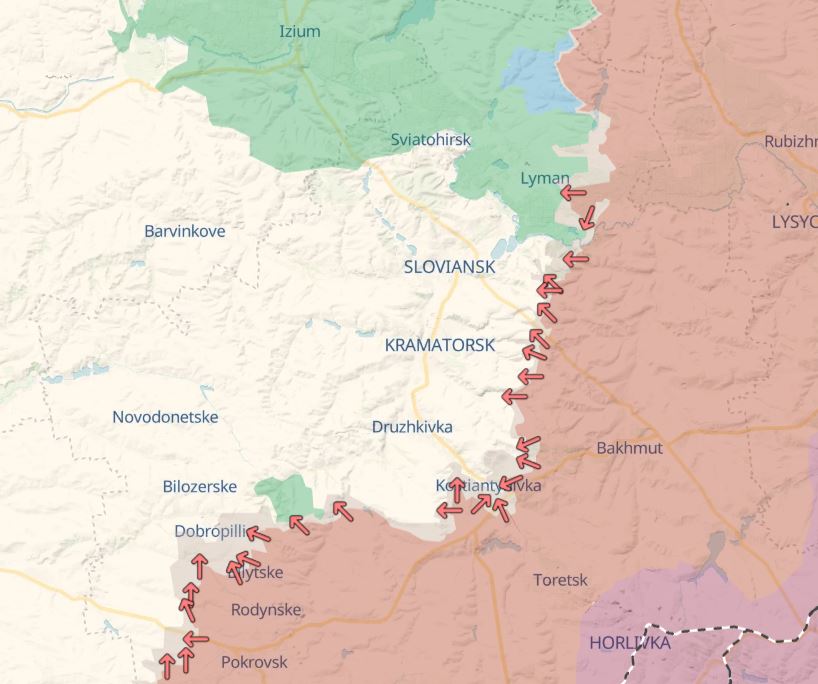
In the Pokrovsk–Dobropillia sector, Russian units advanced near Vasylivka and Hryshyne, while an expansion of the Russian-controlled area near Shakhove was also recorded.
In the Sloviansk–Kramatorsk sector, Russian forces advanced near Rai-Oleksandrivka during the week, with changes also recorded near Novomarkove and in Mykolaivka, located close to Chasiv Yar. Advances in these areas are gradually worsening the position of Ukrainian defences on the approaches to the urban agglomeration.
In the Zaporizhzhia sector, Russian forces expanded the territory under their control near Verkhnia Tersa, west of Huliaipole. The Russian advance in this area continues to exert pressure on the territory between Huliaipole and Orikhiv.
In the Kostiantynivka sector of Donetsk Region, Russian units were reported to have advanced in the vicinity of Vilne.
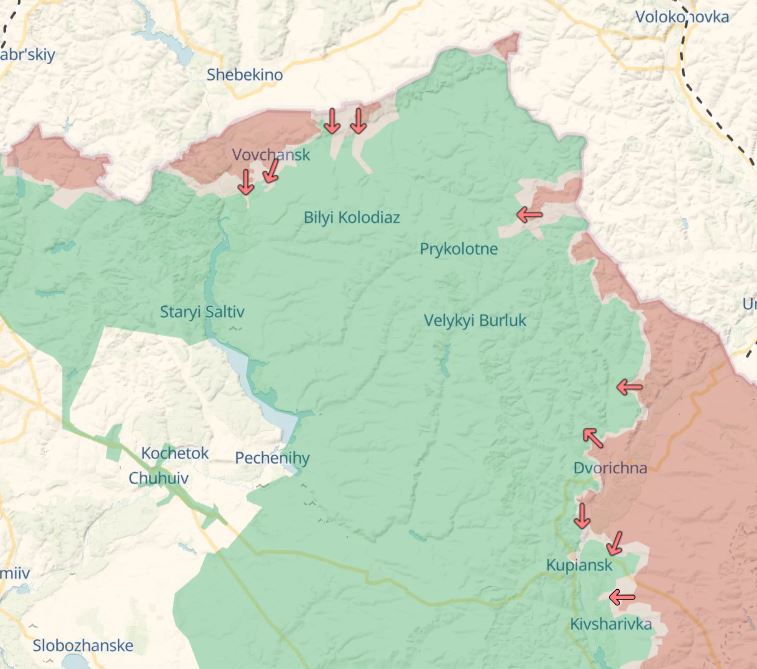
In the Kupiansk sector of Kharkiv Region, advances by Russian units were recorded in the vicinity of Petropavlivka.
In the north-east of Kharkiv Region, the main development was the announcement of the Ukrainian operation “Bear Trap”. On 20 November, the 475th Separate Assault Regiment of the Armed Forces of Ukraine reported the restoration of control over 204 km² and 14 settlements north and north-east of Velykyi Burluk. The published list included Komisarove, Shyroke, Chorne, Nefedivka, Sheviakivka, Vodiane, Dovhenke, Zarubynka, Ustynivka, Ivashkyne, Anyskyne, Vilkhuvatka, Dovzhanka and Chuhunivka. According to the Ukrainian account, the operation thwarted Russia's plan to encircle Ukrainian units in the north-east of Kharkiv Region, north and north-east of Velykyi Burluk. In the same sector of the front line, Russian forces were pushed back near Ustynivka, and their presence between the settlements of Ustynivka and Artilne was reduced.
Maps of military operations.
(According to Deep State map)
Donetsk Region.
Kharkiv Region.
Ruslan Bortnik, Oksana Krasovskaya
for the Ukrainian Institute of Politics
Dear friends, we would like to remind you that additional analytical products of the Ukrainian Institute of Politics are available to organisations, businesses and private clients: Weekly Intelligence Brief, Geopolitical Risk Reports, Executive Briefings, as well as special analytical materials and forecasts upon individual request. For further information, please contact us by email at uiamp2012@gmail.com or by phone at +38 (093) 757-75-65.