Авторы публикации
WEEKLY SUMMARY:
UKRAINIAN DIMENSION.
(November 4–11, 2026)
The trilateral negotiations between Ukraine, the United States, and Russia, held on November 10–11, 2026, in Abu Dhabi (UAE), demonstrated the persistence of substantial disagreements between the parties and a lack of readiness to reach strategic agreements. Achieving a comprehensive peace agreement requires serious mutual political concessions that the parties are not yet prepared to make. At the same time, the main achievement of the negotiations was the beginning of discussions on the future security architecture in Europe, marking a shift from addressing individual issues of the Russian-Ukrainian conflict to a broader dialogue on strategic relations between Russia, the United States, and Europe. The remaining results are still predominantly tactical: the resumption of direct trilateral dialogue, discussions of the territorial issue, security guarantees, and prisoner exchanges.
The parties returned to the trilateral negotiation format primarily under pressure from the United States. This is the first round of negotiations following the U.S. congressional midterm elections on November 3 and, at the same time, a stage of preparation for a possible meeting between D. Trump and V. Putin at the APEC summit on November 18–19. The D. Trump administration seeks to take advantage of the narrowing window of political opportunity before the end of 2026, while Republicans still retain control of both the White House and Congress. On January 3, 2027, the new Congress, with Democratic majorities in both chambers, will begin its work, significantly limiting D. Trump's ability to pursue his foreign policy agenda without coordinating with political opponents. Therefore, the White House is interested in accelerating the negotiation process and reaching at least preliminary agreements before the balance of power changes.
Furthermore, under the new political circumstances, the approaches of the negotiating parties may subsequently be adjusted. In particular, Ukraine may adopt a tougher position, counting on additional support from the new U.S. Congress. The Republican Party's defeat in the congressional midterm elections does not in itself yet mean a fundamental change in Washington's policy toward Ukraine, although Kyiv and European capitals may have viewed this outcome as a prerequisite for President D. Trump to reconsider certain approaches to resolving the conflict in Ukraine. The formation of an anti-Trump Congress currently creates only additional opportunities for political support for Ukraine, but at the same time increases the risk of the Ukrainian issue becoming a subject of domestic political confrontation in the United States. Meanwhile, the new Congress, in which Democrats will hold majorities in both chambers, will not begin its work for almost another two months. Even after that, however, D. Trump will retain his principal powers in foreign policy, international negotiations, and relations with allies, as well as his presidential veto power.
The D. Trump administration may already be shaping its policies with an eye toward the next U.S. presidential election on November 7, 2028, seeking to achieve foreign policy results that can be presented to voters as accomplishments of the Republican administration. Under these circumstances, the Republicans' defeat in the congressional midterm elections may prompt the U.S. President to increase pressure on Kyiv and European governments, primarily on issues of peace settlement, security guarantees, and the distribution of financial obligations.
D. Trump also remains the principal mediator in the negotiation process between Ukraine and Russia. Representatives of European countries were once again not directly present at the trilateral negotiating table. However, European partners continue to play an active behind-the-scenes role, holding consultations with the Ukrainian and American sides and coordinating positions on major issues. Notably, the traditional European “troika” has effectively become a “quartet”: Italy has joined the United Kingdom, France, and Germany, expanding the group of leading European countries directly involved in coordinating the negotiation process.
In fact, one of the main problems of the negotiation process persists — the absence of a unified, coordinated position among Kyiv, its European allies, and the U.S. administration, not to mention the fundamental disagreements with Moscow over the conditions for ending the war. Ukraine and its European partners insist on legally binding security guarantees and oppose a settlement that would require relinquishing territories not captured by Russia (particularly in Donbas) or formalizing Russian territorial gains. Ukraine and Europe are also promoting a ceasefire (general or sector-specific) and a meeting of the heads of state. Washington seeks to incorporate the settlement of the war in Ukraine into broader agreements with Russia on a new European security architecture, involving the restoration of mechanisms for Russia–NATO interaction and the establishment of new security rules that take Russian interests into account. At the same time, specific Western commitments to Ukraine's defense have not yet been defined. Russia also insists on comprehensive agreements with the United States and Europe and the formation of a new security architecture. However, its positions diverge from those of the United States primarily over Ukraine's future. The unresolved issues include whether Ukraine belongs within the Western or Russian sphere of influence, the acceptability of various forms of Western security guarantees, and territorial disputes.
Overall, it remains unlikely that the resumed trilateral negotiation format will resolve the fundamental disagreements over the conditions for ending the war in the near future. Nevertheless, maintaining dialogue is undoubtedly a positive outcome, as it allows the parties to at least partially contain further escalation. Progress toward peace remains very slow, and the prospects for reaching strategic agreements are limited. The most logical path toward a settlement today lies in reaching a comprehensive strategic security agreement involving the United States, Russia, Ukraine, and Europe, which could subsequently provide the basis for resolving the remaining issues — from mutual security guarantees and territorial disagreements to economic relations.
At the same time, the practical results achieved on certain humanitarian issues should be noted, primarily regarding the exchange of prisoners of war, the return of the bodies of those killed, and the organization of local ceasefires.
A notable example in this regard was the nearly six-day humanitarian ceasefire in Oleshky, Kherson region, which lasted from 03:00 on October 27 until 22:59 on November 1, 2026. With the mediation of U.S. First Lady Melania Trump, Ukraine and Russia agreed on a temporary ceasefire, the delivery of humanitarian aid, and the evacuation of, according to U.S. data, nearly 800 civilians. The operation was coordinated by Ukrainian Ombudsman Dmytro Lubinets and Russian Human Rights Commissioner Yana Lantratova. This experience demonstrated the parties' ability not only to reach agreements but also to implement local arrangements when political will and external mediation are present. Moreover, direct interaction between Ukrainian and Russian representatives did not provoke noticeable public protests, indicating the possibility of public acceptance of limited compromises when they produce concrete humanitarian results.
However, the main strategy of the parties remains the continuation of the war until at least spring 2027. At the same time, the overall course of the confrontation is characterized by a gradual shift in the balance in Russia's favor, due to its superiority in resources, stronger industrial base, and the instability of Western military assistance to Ukraine. Nevertheless, the situation directly on the front line remains manageable for now. A far more serious threat to Ukraine comes from Russian strikes against rear-area infrastructure and the prospect of a humanitarian crisis during the winter. If Russia succeeds in causing prolonged blackouts lasting three days or more, combined with severe frosts, infrastructure destruction, and a mass exodus of the population, including from Kyiv, this could significantly weaken Ukraine's ability to continue the war and worsen the position of its army by spring 2027.
For Ukraine, the continuation of the war is accompanied by rising costs, accelerating destruction, and the gradual degradation of its economic and social potential. The country's dependence on external financing is also increasing. According to European Commission estimates, Ukraine's external financing gap in 2027 will amount to approximately €70 billion. To cover this gap, the European Union plans to allocate €45 billion, of which one-third is expected to be directed toward direct budget support and two-thirds toward financing Ukraine's defense-industrial complex. Kyiv and Brussels expect to attract the remaining €25 billion from other G7 partners. Meanwhile, financing needs for the current year, 2026, are considered covered by the already agreed financial assistance schedule, including a €4.36 billion tranche transferred on November 5. Thus, the immediate threat of a budget financing gap before the end of the year has been removed, but Ukraine's financial stability in 2027 still depends on decisions by Western partners, made against the backdrop of rising military expenditures and political disagreements between the United States and Europe.
At the same time, domestic social tensions are increasing, one manifestation of which was the incident on November 2 in Petropavlivska Borshchahivka near Kyiv. The scandal surrounding the alleged unlawful detention of mobilized personnel and servicemen, the injuries they sustained, and the subsequent clashes with security forces caused widespread public concern, exposing accumulated distrust of state institutions and dissatisfaction with mobilization policies. The authorities' main concern is the gradual legitimization of street protests against forced mobilization methods and the treatment of military personnel. Therefore, the state is relying on the forceful suppression of such demonstrations and the criminal prosecution of their participants, while simultaneously shifting public discussion away from alleged violations of servicemen's rights toward identifying the organizers of the unrest and allegations of Russian information operations. Although the incident itself is not yet capable of triggering mass protests, it indicates deepening contradictions between society and the state. Against the backdrop of deteriorating socioeconomic conditions and the continuation of the war, the recurrence of similar conflicts, in the absence of an adequate response from the authorities, could create the conditions for local demonstrations to escalate into larger-scale protests threatening the country's internal stability. Various political forces could exploit the accumulated discontent — from parliamentary and extra-parliamentary opposition groups to Russian intelligence services.
___________________________
Trilateral Negotiations in Abu Dhabi.
On November 10–11, 2026, the fourth round of trilateral negotiations between Ukraine, the United States, and Russia this year took place in Abu Dhabi after a prolonged break of almost nine months. The previous rounds were held on January 23–24 and February 4–5 in Abu Dhabi, as well as on February 17–18 in Geneva.
The main mediating role in the negotiations was played by the American side, represented by U.S. Presidential Special Envoy Steve Witkoff and Donald Trump's special representative, adviser, and son-in-law Jared Kushner.
The Ukrainian delegation was headed by Foreign Intelligence Service Chief Rustem Umerov. It also included Head of the Presidential Office Kyrylo Budanov, his First Deputy Serhiy Kyslytsya, head of the Servant of the People parliamentary faction Davyd Arakhamia, Deputy Chief of the Main Intelligence Directorate of the Ministry of Defense Vadym Skibitskyi, and a representative of the analytical division of Ukraine's Foreign Intelligence Service.
The Russian delegation was headed by Russian Presidential Aide Vladimir Medinsky. It included Presidential Aide for International Affairs Yuri Ushakov, Deputy Foreign Ministers Sergei Ryabkov, responsible for relations with the United States and arms control, and Mikhail Galuzin, Chief of the Main Directorate of the General Staff of the Russian Armed Forces Igor Kostyukov, Deputy Chief of the Main Operations Directorate of the General Staff Yuri Zhigarlovsky, FSB representatives Alexei Komkov and Dmitry Minaev, and Russian Foreign Ministry Department Director Oleg Postnikov.
Ahead of the negotiations, Ukrainian President Volodymyr Zelenskyy announced that Kyiv intended to propose steps to reduce the intensity of hostilities in Abu Dhabi and reach an agreement on the procedure for organizing a trilateral meeting between the presidents of Ukraine, Russia, and the United States. "At the meetings in Abu Dhabi, our team will propose de-escalation steps, and there must be an understanding of how to organize a trilateral meeting at the leaders' level to bring this war to a just and genuine end," V. Zelenskyy wrote on the social media platform X. In essence, Kyiv is maintaining its previously stated approaches without proposing fundamentally new conditions for a settlement. The current common Ukrainian and European position is to establish a ceasefire first (general or sector-specific), followed by political negotiations. Ukraine and Europe are also promoting a meeting between the heads of state.
Moscow's demands also remain unchanged. Russia insists on comprehensive agreements with the United States and Europe and the formation of a new security architecture. As a precondition for a general military ceasefire, it demands the withdrawal of Ukrainian troops from the entire territory of Donbas, including areas that the Russian army has not occupied. Kyiv and its European partners reject these demands.
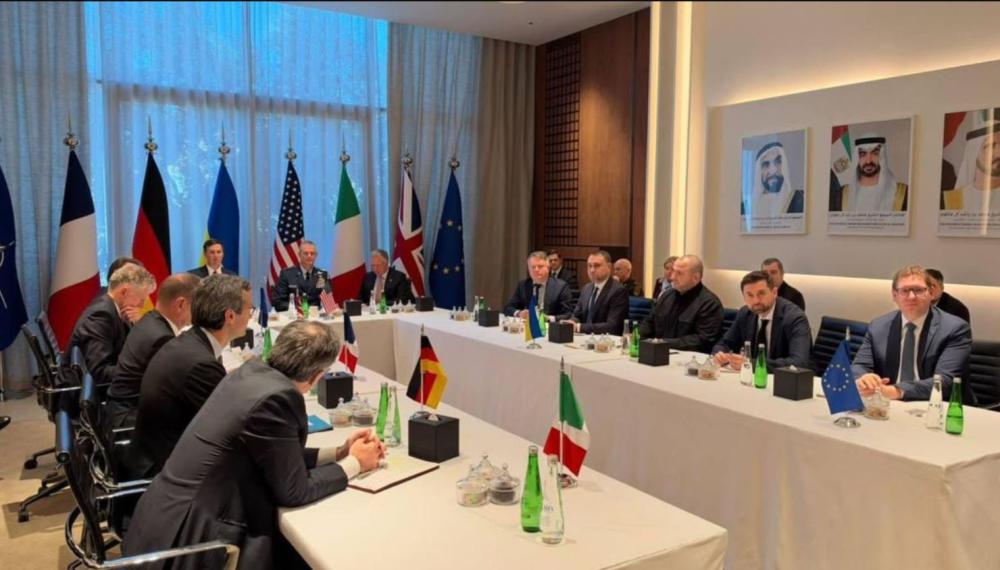
The negotiations began with a coordination meeting between the Ukrainian delegation and American and European representatives, preceding the main trilateral round involving Moscow. The meeting was attended by representatives of the United Kingdom, France, Germany, Italy, NATO, and the European Commission, as well as U.S. Special Envoys S. Witkoff and J. Kushner.
The European side was represented by seven senior advisers: from the United Kingdom, National Security Adviser Jonathan Powell; from Germany, the Chancellor's Foreign Policy Adviser Günter Sautter; from France, the President's Diplomatic Adviser Emmanuel Bonne; from Italy, the Prime Minister's Diplomatic Adviser Fabrizio Saggio; from the European Commission, Head of the Commission President's Cabinet Bjoern Seibert; from the European Council, Adviser to the President Anna-Maria Boura; and from NATO, Chief of Staff to the Secretary General Geoffrey van Leeuwen. While formally remaining outside the direct Russian-Ukrainian-American negotiations, European partners continue to influence the formation of Ukraine's position and discussions of possible agreements with the United States. European leaders are seeking a more significant role in the U.S.-led diplomatic process, particularly against the backdrop of Washington's discussions of agreements that could change the continent's security system.
Ahead of the negotiations, European Commission President Ursula von der Leyen stated that the EU would oppose discussing this issue before a ceasefire agreement is concluded in Ukraine. Ukrainian President V. Zelenskyy also supported the position of European partners, calling the idea of beginning discussions on a peace settlement with a new pan-European security architecture "dangerous," since such a step carries serious risks of dividing Europe and ignores the primary task of ending the war and providing direct security guarantees for Ukraine.
On the first day of negotiations, November 10, which lasted approximately four hours, the main focus was on security guarantees for Ukraine, Europe, and Russia, the formation of a new European security architecture, and Ukraine's postwar reconstruction. At the same time, a large-scale exchange of prisoners of war under the "1,000 for 1,000" or "1,500 for 1,500" formulas, reported by V. Zelenskyy, was discussed. The Russian delegation also raised the territorial issue, which on November 11, the second day of negotiations, lasting approximately two hours, became the central topic of discussion and the main obstacle to reaching agreements.
Head of the Servant of the People parliamentary faction Davyd Arakhamia, who participated in the negotiations, described them as among the most difficult, noting that the Russian delegation had arrived with extremely rigid instructions. At the same time, according to him, the American side managed to shift the discussion toward issues of the postwar order, making the dialogue more productive. Arakhamia acknowledged the possibility of reaching agreements before the end of 2026 and advocated involving European representatives in subsequent rounds. For his part, Jared Kushner stated that significant progress had been made in discussing security guarantees, while acknowledging that the territorial issue remained the main obstacle. Head of the Russian delegation Vladimir Medinsky also confirmed an agreement in principle on a prisoner exchange and described the revision of the European security system as the central topic of the negotiations. According to him, mutual understanding was reached on certain issues, but Moscow continues to insist on a comprehensive revision of existing security mechanisms.
Ukrainian President Volodymyr Zelenskyy highlighted the discussion of security guarantees and the prospect of expanding the negotiation format to include Europe as the main outcomes of the meetings.
The next stage of the negotiations will involve separate consultations between American representatives and the leadership of Russia and Ukraine. According to Jared Kushner, on November 12, he and Steve Witkoff intend to meet with Vladimir Putin in Moscow, after which both negotiators will travel to Dublin for a meeting with Volodymyr Zelenskyy to discuss the results of the Abu Dhabi negotiations and further opportunities for reaching agreements.
Lack of a Unified, Coordinated Position Between Kyiv and Its Western Allies.
At the start of the negotiations in the UAE, Ukraine and its Western allies had not reached a unified position on the conditions for ending the war. In fact, Kyiv, its European partners, and Washington had different approaches to the settlement and the future security architecture in Europe. These disagreements had already become evident during the consultations in Brussels on November 4–5, initially announced by Ukrainian President V. Zelenskyy as a joint meeting with Western partners, but which effectively turned into a series of separate negotiations between representatives of Ukraine, the European Commission, NATO, the United States, Germany, France, the United Kingdom, and the World Bank.
The main differences persist between the approaches of the European allies and Kyiv, on the one hand, and the D. Trump administration, on the other. Ukraine and its European partners insist on legally binding security guarantees and oppose a settlement that would formalize Russian territorial gains without reliable mechanisms for protecting Ukraine. Washington, by contrast, seeks to incorporate the settlement of the war in Ukraine into a broader framework of agreements with Russia on European security.
On November 5, following a meeting with Russian presidential representative K. Dmitriev, D. Trump announced preparations for a "magnificent agreement" that, according to him, would concern not only Ukraine and Russia but Europe as a whole. In an interview with CBS's 60 Minutes, when asked whether he expected the peace settlement to result in Ukraine remaining free and independent, Trump said: "I think we're going to have a deal, and I think it's going to happen. Ultimately, Ukraine will have a little bit different shape."
On November 6, Jared Kushner presented five areas for future agreements: regular security consultations, reliable crisis communication channels, mutual military transparency, measures to reduce the risk of escalation, and the establishment of a long-term European security system. At the same time, the American side declares its commitment to preserving the sovereign right of states to choose their alliances and NATO's central role in Europe's collective defense.
In terms of its substance, J. Kushner's initiative represents an attempt to supplement traditional military security mechanisms with a system of diplomatic safeguards and rules for coexistence with Moscow. The first three areas envisage establishing permanent channels for consultations and operational communication, including directly with Russia, exchanging information on military activities, and providing notifications of major exercises and troop movements. The final two involve agreeing on mutual measures to prevent escalation and principles of long-term stability. Within this framework, potential discussions could include demilitarized zones, restrictions on the deployment of certain types of weapons near borders, and other measures of mutual deterrence.
As a further development of this approach, the possibility of resuming the work of the NATO–Russia Council is being considered. Established in 2002 to facilitate cooperation and coordination of military-political activities between Russia and NATO member states, the Council's activities were suspended in 2022. At the same time, the introduction of a snapback sanctions mechanism is being discussed, providing for the reinstatement of restrictions against Moscow if Russia violates the ceasefire. The principles proposed by Washington currently resemble an attempt to establish general rules for coexistence between Russia and the West rather than a concrete mechanism for ensuring Ukraine's security. They do not define the obligations of the United States and European countries in the event of another Russian attack, the scale of military assistance, or the procedures for implementing security guarantees. The American administration is effectively proposing a broader compromise between Russia and NATO countries, while Kyiv and European capitals seek, above all, to formalize commitments to ensuring Ukraine's security.
Thus, it is unlikely that the resumption of the trilateral negotiation format involving Ukraine, the United States, and Russia will lead to a diplomatic breakthrough or the conclusion of a comprehensive peace agreement, since the parties' fundamental disagreements over the conditions for ending the war remain unresolved, and there is still no indication of readiness to make substantial mutual concessions. Moreover, under circumstances in which Western allies lack a unified, coordinated position, Moscow may exploit these disagreements by selectively engaging with Washington while continuing to exert military pressure on Ukraine. At the same time, the positions of Washington and Moscow have moved noticeably closer on certain issues, partly due to the American administration's willingness to discuss compromises affecting the interests of Ukraine and Europe. However, even a potential bilateral agreement between the United States and Russia would not ensure a comprehensive settlement of the war without the participation of European countries, which remain part of the broader Western security system, provide a significant share of Ukraine's military and financial support, and independently control a substantial portion of the sanctions imposed on Russia. Therefore, Washington cannot guarantee Moscow the implementation of all the terms of a potential agreement, particularly regarding the lifting of European sanctions and the establishment of a new security architecture, without the consent of its European allies. At the same time, maintaining the negotiation process has practical significance, as it allows the parties to reach specific agreements on humanitarian issues, primarily the exchange of prisoners of war, the return of the bodies of those killed, and temporary local ceasefires.
Incident in Petropavlivska Borshchahivka near Kyiv.
The conflict in Petropavlivska Borshchahivka, Kyiv region, began on November 2, 2026, after relatives of one of the detained servicemen (who was among those injured) attempted to remove him from a private house where approximately 40 people were allegedly being held illegally. For this purpose, the relatives hired a private medical service, which was supposed to arrive, collect the mobilized serviceman, and transport him away from the premises. The arriving medical team was headed by Valentyna Moloda, who subsequently became one of the most active participants in the conflict. However, the medical personnel were denied entry, after which they contacted the police. The police officers who responded to the call were initially unable to gain access to the building but effectively did not intervene until the situation escalated into an open confrontation. Later, after the conflict had already begun, a doctor accompanied by a police officer was allowed inside the building.
As reports of the incident spread, relatives of servicemen and local residents began gathering outside the house, demanding explanations and access to the people inside. As subsequently emerged, the building was being used as a temporary deployment facility for Military Unit No. 3121, part of the 1st Corps of the National Guard of Ukraine, "Azov," where mobilized servicemen and military personnel detained after unauthorized absence from their units (AWOL) were being held. According to available information, the private house was owned by the state-owned Sense Bank and may have been transferred to the bank following the foreclosure of collateral due to unpaid debts.
As the number of people gathered increased, the conflict escalated into clashes between civilians and National Guard servicemen, accompanied by attempts to enter the premises and the use of physical force. Pyrotechnic devices were used during the confrontation, participants threw stones, and vehicles were damaged. Later, reports emerged that fighters from the 413th "Raid" Regiment of the Unmanned Systems Forces and units of the National Guard's "Azov" had arrived to disperse the protesters, some of whom allegedly operated in civilian clothing and were armed with bats. Commander of the National Guard of Ukraine Oleksandr Pivnenko and the leadership of the Main Directorate of the National Police in Kyiv region arrived at the scene. Pivnenko confirmed that National Guard servicemen who had returned after unauthorized absence from their units (AWOL) were being held in the building. He also reported that four servicemen required medical assistance and had been hospitalized. The Commander stated that improper treatment of servicemen was unacceptable and promised to investigate the relevant reports and subsequently publish the findings. On the evening of November 2, Head of the Presidential Office Kyrylo Budanov also arrived at the scene. His presence in itself became further evidence of the seriousness of the situation and its particular political sensitivity for the country's senior leadership. Kyrylo Budanov, in his statement, described what had happened as unacceptable and announced that decisions were being prepared to respond to the incident and prevent similar situations.
The Security Service of Ukraine (SBU) and the National Police are investigating the events under three articles of the Criminal Code of Ukraine: Article 114-1 (obstruction of the lawful activities of the Armed Forces of Ukraine and other military formations), Article 114-2 (unauthorized dissemination of information about the locations of the Defense Forces), and Article 294 (mass riots). The SBU has identified more than 100 participants in the clashes; searches are being conducted, and decisions regarding detentions and the notification of criminal suspicions are under consideration. The female medical worker who was the first to arrive at the house near Kyiv was detained and added to the "Myrotvorets" database. The website describes Valentyna Moloda as a "professional provocateur (a so-called torpedo)," accusing her of "participation in Russian information special operations against Ukraine" and "obstruction of the lawful activities of the Defense Forces of Ukraine." It is known that V. Moloda and her private medical team were hired by relatives of one of the detained mobilized servicemen, who had also been injured, to collect him from the building and transport him away from the premises. Subsequently, reports of alleged torture and unlawful detention of servicemen spread on social media, which, against the backdrop of growing public dissatisfaction with forced mobilization methods, contributed to the rapid expansion of the conflict and its escalation into clashes.
At the same time, the State Bureau of Investigation (SBI) opened a separate criminal investigation under Part 5 of Article 426-1 of the Criminal Code of Ukraine concerning the abuse of official authority by military personnel. Meanwhile, the authorities' public response increasingly emphasizes an interpretation of the incident as a planned provocation with possible external involvement. The country's leadership's main fear is the legitimization of street protests against mobilization methods.
The narrative of Russian involvement also began to be actively promoted by certain media outlets aligned with Western political circles advocating the continuation of military support for Ukraine. Thus, the discussion of alleged violations of servicemen's rights is gradually shifting toward identifying the organizers of the unrest and countering information operations.
The conflict in Petropavlivska Borshchahivka is unlikely to escalate into a large-scale uprising, but it has demonstrated the explosive nature of public sentiment. Against the backdrop of a prolonged war, deteriorating living standards, power outages, heating problems, and the loss of positive expectations, even localized manifestations of lawlessness can provoke partly organized, partly spontaneous protests with unpredictable consequences. The incident once again raised the issue of the practice of unofficially detaining servicemen in so-called "pits" — secret, informal detention facilities where servicemen are placed on the orders of their commanders following unauthorized absence from their units (AWOL) or disciplinary violations. Such a practice is unequivocally illegal. Legally established procedures and authorized institutions exist to investigate offenses, including unauthorized absence from military units (AWOL): the SBI, the Prosecutor's Office, military law enforcement bodies, and the penitentiary system.
If the state does not begin to address such problems systematically, internal destabilization could become one of the main threats to Ukraine alongside the Russian offensive, accompanied by the spread of arbitrary actions, informal armed formations, and further discrediting of state authority. Ukraine already experienced similar processes of armed anarchy and the destruction of state institutions approximately a century ago.
A New Round of Confrontation Between Anti-Corruption Institutions and Security Agencies.
Within Ukraine, the confrontation between the anti-corruption system of NABU–SAPO–HACC and the security agencies of the presidential administration continues, gradually undermining the cohesion of the existing system of governance. In early November 2026, the conflict intensified on several fronts simultaneously: large-scale searches targeting senior SBU officials, investigations into links between law enforcement officers and organized crime, the completion of the investigation into the "Midas" case, and attempts to initiate criminal proceedings against the head of the Servant of the People parliamentary faction, Davyd Arakhamia. The struggle revolves around control over law enforcement agencies, the parliamentary majority, state financial flows, and mechanisms of political influence.
One of the most high-profile episodes was the continuation of NABU and SAPO's Operation "Carthage," accompanied by approximately 70 searches across Ukraine. The investigative actions targeted senior SBU officers, including General Serhiy Duka, Head of the Main Directorate of Internal Security Anton Kravchuk, and First Deputy Head of Directorate "D" of the Department for the Protection of National Statehood Oleksandr Kovalchuk. The investigation concerns alleged protection of fraudulent call centers and organized criminal groups by employees of the SBU, the National Police, and the Prosecutor General's Office. According to NABU, law enforcement officers provided protection to the "Mexican" criminal group, which was involved in kidnappings, beatings, and torture in Ukraine and abroad, including in Vienna. Members of the group obtained information from restricted police databases, access to surveillance cameras, and search records, allowing them to track victims' movements in real time. The published materials mention an officer of the SBU Department for the Protection of National Statehood who provided access to cameras; a deputy head of a criminal investigation division in Kyiv region, operating under the alias "Consultant," who promised to obstruct the investigation; and an SBU major general under the alias "Akim," who referred to members of the group as "brothers." According to investigators, the criminals even obtained photographs from closed meetings of European law enforcement officials, while one payment for protection amounted to $1.3 million in cryptocurrency.
The political nature of the confrontation is reinforced by the fact that searches were conducted against the heads of SBU units that had previously participated in investigations targeting NABU Director Semen Kryvonos and the circle of SAPO Head Oleksandr Klymenko, including members of his family. On this basis, opponents have already publicly characterized the actions of NABU and SAPO as political revenge and an attempt to destabilize the situation in the country. Thus, the investigation into alleged criminal connections involving security officials is simultaneously becoming an instrument of mutual pressure between competing law enforcement agencies.
The investigative actions also intersect with the case of Andriy Osypov, whom NABU and SAPO suspect of extorting $1 million from a Russian citizen in exchange for assistance in resolving issues related to criminal prosecution and extradition to Russia. According to law enforcement sources, Osypov is being held in NABU's temporary detention facility.
In parallel, NABU and SAPO announced the completion of the pre-trial investigation into the "Midas" case, involving corruption schemes in the energy sector and implicating members of President Volodymyr Zelenskyy's inner circle. Those involved in the case include businessman Timur Mindich, former Energy Minister Herman Halushchenko, former Deputy Prime Minister Oleksiy Chernyshov, former adviser to the Energy Minister Ihor Myroniuk ("Rocket"), former Executive Director for Physical Protection and Security at Energoatom Dmytro Basov ("Tenor"), as well as members of the financial back office Oleksandr Tsukerman ("Sugarman"), Ihor Fursenko ("Ryoshik"), Lesia Ustymenko, and Liudmyla Zorina.
According to investigators, participants in the scheme systematically received kickbacks amounting to 10–15% of contract values from contractors of Energoatom and enterprises under the management of the Ministry of Energy. Between 2020 and 2025, according to NABU, more than $111 million and €12 million were laundered through a controlled financial back office. The investigation concerns not only alleged corruption in public procurement but also the system for distributing financial flows in a strategic sector directly responsible for supplying the country with electricity during wartime.
A separate dimension of the conflict involves attempts by anti-corruption institutions to secure the possibility of criminal prosecution against the head of the Servant of the People parliamentary faction, Davyd Arakhamia. The High Anti-Corruption Court upheld a complaint filed by the Anti-Corruption Action Center and ordered Acting Prosecutor General Anton Kovalskyi to enter information into the Unified Register of Pre-Trial Investigations concerning a possible system of unofficial payments to members of parliament in exchange for votes in the Verkhovna Rada. On October 19, the Anti-Corruption Action Center demanded that a corresponding investigation be launched, but A. Kovalskyi refused to register the proceedings, arguing that NABU was already examining the circumstances described, and forwarded the complaint to the agency. Former Prosecutor General Ruslan Kravchenko had previously taken a similar position. At the same time, the procedural decision to register criminal proceedings against a member of parliament falls within the powers of the Prosecutor General, meaning that anti-corruption agencies cannot fully proceed with the investigation without such a decision. Control over the Prosecutor General's Office currently allows the presidential power structure to retain influence over procedural decisions concerning members of the parliamentary majority. NABU, SAPO, and the civil society organizations supporting them, by contrast, are seeking to expand their ability to investigate cases involving senior government officials.
Overall, the anti-corruption agencies are delivering a serious blow to the credibility of the security establishment at a time when the so-called "Kachka–Kos" plan (a plan to reform Ukraine's public administration system, agreed with European partners) is under consideration. At the request of Western partners, the plan effectively provides for a complete lustration of the leadership of Ukraine's security agencies and the appointment of new heads following the NABU and SAPO model — through international competitive selection procedures involving foreign experts who have the decisive vote in selecting candidates.
Personnel Changes in the Defense-Industrial Sector.
The Supervisory Board of Ukroboronprom approved the appointment of former First Deputy Minister of Defense, Lieutenant General Ivan Havryliuk, as head of the concern. Previously, I. Havryliuk oversaw defense procurement at the Ministry of Defense and subsequently served as an adviser to Denys Shmyhal on defense-industrial matters. His appointment can be viewed as strengthening the positions of the presidential circle and consolidating control over the defense industry, including the allocation of state defense contracts, budget financing, and cooperation with foreign partners. Against the backdrop of intensifying competition between different centers of influence within the government, the defense-industrial complex remains one of the most significant sources of political and economic influence.
The confrontation between central and local authorities over influence on the governance of Kyiv — one of the country's main political and financial centers — continues.
The latest episode involved searches at the municipal utility company Kyivteploenergo as part of an investigation into the capital's preparations for winter, particularly the implementation of backup electricity supply projects and the construction of distributed cogeneration facilities. The Kyiv City State Administration stated that the relevant work had not yet been paid for and that completion certificates had not been signed, interpreting the investigative actions as possible political pressure. Against the backdrop of the prolonged conflict between the Presidential Office and Mayor Vitali Klitschko, such investigations are becoming part of a broader struggle for control over the capital, in which certain groups of influence remain interested in weakening the position of the current city leadership and potentially redistributing its powers.
At the same time, the confrontation complicates coordination between central and municipal authorities amid continuous Russian strikes against urban infrastructure.
A considerable number of questions have indeed accumulated regarding the performance of V. Klitschko's team, primarily concerning the preparation of municipal services for winter, the organization of transport services, backup electricity supply, and the maintenance of essential city services. At the same time, the capital's resilience depends not only on the effectiveness of the city administration but also on decisions by central government authorities and the military command, whose responsibilities include air defense and a significant share of critical infrastructure protection. As a result, political disagreements between the two levels of government create additional difficulties in allocating responsibility and coordinating measures to maintain essential services in Kyiv.
Escalation of the Energy Crisis in Ukraine.
As of November 10, 2026, the energy situation in Ukraine continues to deteriorate amid successive Russian strikes against power plants and high-voltage transmission networks. In Kyiv, power outages last up to 15–17 hours per day, compared with predominantly 0–6 hours a year earlier. In the hardest-hit regions, restrictions reach 14–24 hours, accompanied by disruptions to heating and water supply. Emergency outages are frequently introduced outside published schedules, further complicating the operations of businesses, municipal services, and urban transport.
The most serious consequences followed the massive strikes on November 3, after which DTEK reported that electricity generation had been halted at three of its thermal power plants. Thermal generation facilities targeted in recent months include the Ladyzhyn, Kryvyi Rih, Prydniprovska, and Trypilska thermal power plants, Kharkiv CHP-5, as well as Kyiv's CHP-4 (Darnytsia), CHP-5, and CHP-6.
Damage to high-voltage substations and transmission lines means that some of the remaining generation capacity is cut off from consumers. As a result, nuclear power plants are also forced to restrict electricity generation despite shortages in certain regions.
The interconnectedness of Ukraine's power system is being disrupted. Due to damage to the main transmission networks, some electricity cannot be transferred from regions with surplus generation to areas experiencing acute shortages. As a result, Ukraine is forced to export part of its electricity: between October 26 and November 1, exports amounted to 43.7 GWh, compared with imports of 21.9 GWh.
Natural gas is also being exported, although the situation in the gas sector differs fundamentally from that in the electricity sector. Following the government's October 7 decision to lift the gas export ban that had been in effect since 2022, approximately 160 million cubic meters of gas were exported from Ukraine in October, including 118 million cubic meters to Hungary and 40 million cubic meters to Poland. This primarily involved gas previously imported into Ukraine, but approximately 60 million cubic meters of domestically produced Ukrainian gas have already been contracted for November–December. Unlike electricity, whose surplus generation cannot always be delivered to domestic consumers because of damage to distribution networks, natural gas can be stored in underground facilities and used during periods of increased demand. The resumption of exports is taking place against the backdrop of growing domestic demand for energy resources and the need to maintain reserves in case of prolonged heating disruptions.
The risks of further deterioration remain due to Russia's substantial missile stockpiles. According to estimates by Ukraine's Main Intelligence Directorate (HUR), Russia has accumulated up to 700 ballistic missiles and several thousand cruise missiles, while continuing to produce more than 100 missiles of each of these classes every month. In particular, Iskander-M stocks are estimated at 115 missiles, with production of approximately 65 missiles per month. At the same time, a modernized missile system with an estimated range of 550–700 km is under development.
The most dangerous scenario is associated with the onset of sustained freezing temperatures, when power outages lasting several days could cause prolonged shutdowns of heating, water supply, and communications systems. In large cities, this creates the risk of damage to district heating networks, disruptions to transport and municipal infrastructure, and the forced displacement of residents. At the same time, the shutdown of businesses and rising emergency restoration costs reduce tax revenues and increase the burden on the state budget. If massive strikes continue, the energy crisis could develop into a large-scale humanitarian crisis, accompanied by increasing social tensions and a further weakening of Ukraine's economic capacity amid the ongoing war.
Course of the War and Situation on the Front Line.
Over the past week, Russian forces have captured another approximately 20 km², and Russia now controls 117,132 km², or 19.40% of Ukraine's territory. At the same time, the Russian offensive is progressing unevenly, with the main efforts concentrated in Donetsk region, on the approaches to Orikhiv in Zaporizhzhia region, and in certain sectors of the Kharkiv direction.
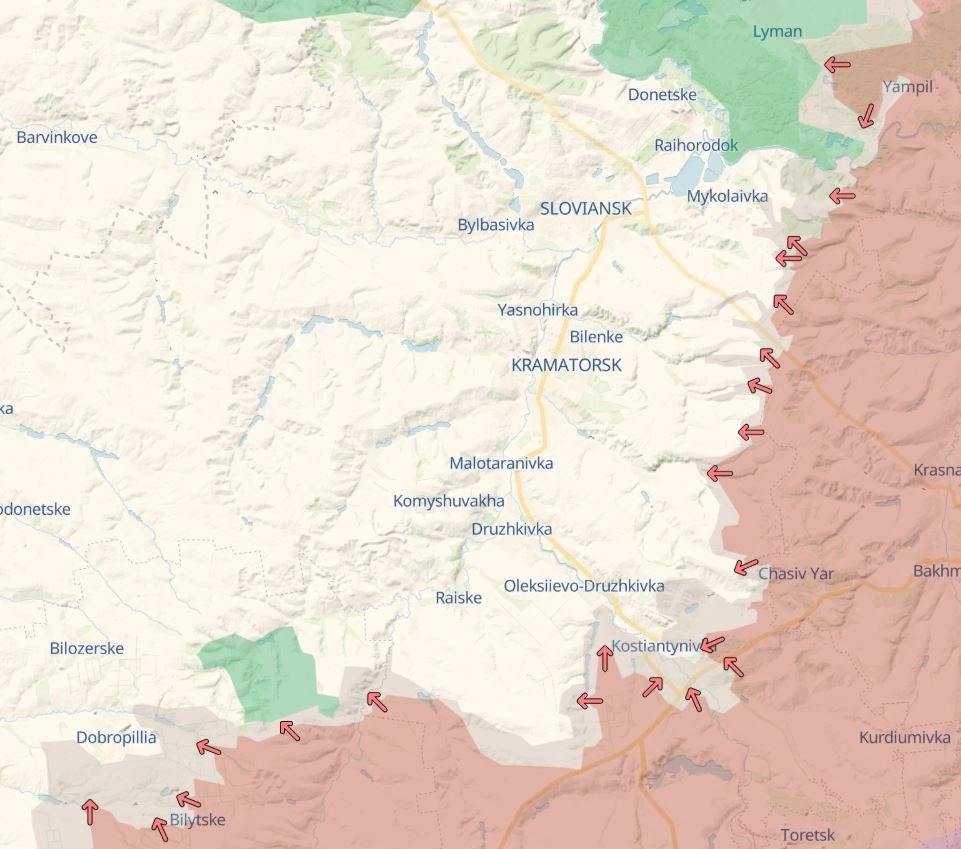
In the Kostiantynivka–Druzhkivka direction, Russian forces continued advancing within Kostiantynivka itself and expanded the territory under their control in the area of Rusyn Yar, between Kostiantynivka and Dobropillia.
In the Lyman–Sloviansk direction, Russian forces continued localized attacks in the areas of Lyman, Zarichne, and Yampil, as well as toward Pyskunivka. In the Kramatorsk sector, assaults were reported near Tykhonivka and toward Vasiutynske.
In the Pokrovsk–Dobropillia direction, Russian units advanced in the areas of Bilytske, Hryshyne, Vasylivka, and Svitле. Their main efforts are focused on bypassing Dobropillia from the northern and southern flanks. The gray zone around the city is expanding, and infiltrations by small Russian infantry groups have been recorded. Fighting also continues in the areas of Serhiivka and Molodetske, where the Russian army is attempting to expand its foothold for further advances westward.
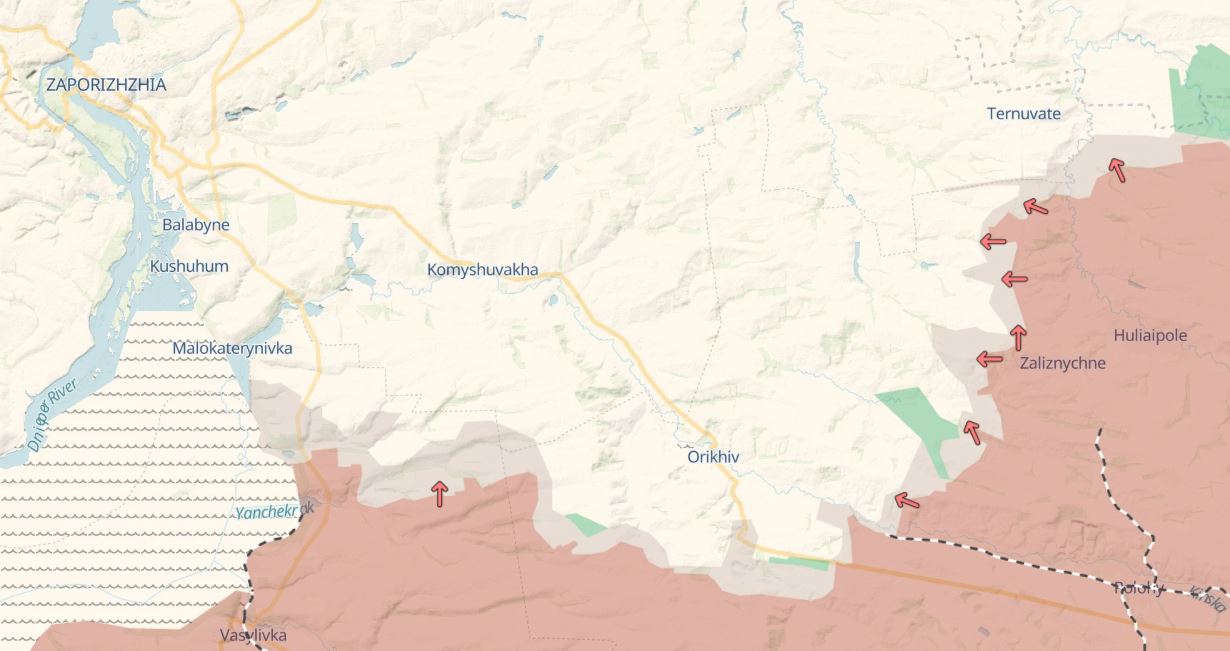
In the Zaporizhzhia direction, Russian forces continued advancing in the area of Luhovske, west of Huliaipole, developing their offensive toward Orikhiv. Instead of directly assaulting fortified positions, the Russian command is attempting to bypass Orikhiv from the flank and gradually disrupt its supply lines. As of November 9, the nearest territory marked by DeepState as being under Russian control was approximately 9.6 km from the city. At the same time, the intensity of direct assaults on Orikhiv remains limited.
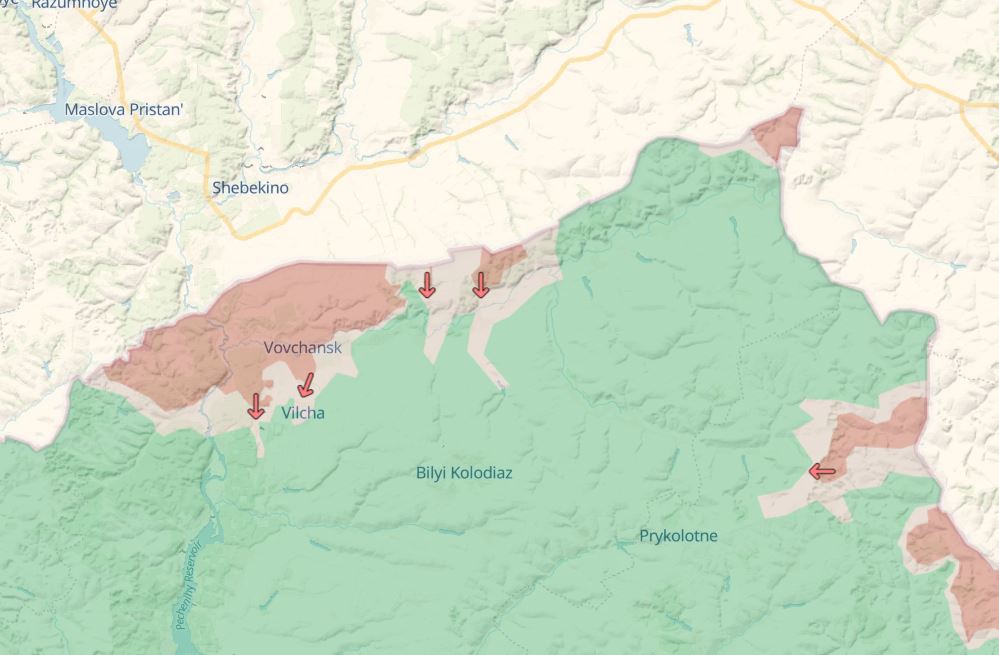
In the Kharkiv direction, Russian units remain active in the areas of Vovchansk and Vovchanski Khutory, attempting to expand the territory under their control southward. On November 8–9, attacks were recorded in the areas of Radkivka, Okhrimivka, Starytsia, Chuhunivka, and Mala Vovcha. The potential threat of further advances toward Bilyi Kolodiaz persists.
Russian forces apparently control almost all of Kostiantynivka in Donetsk region (according to some reports, Ukrainian positions still remain in the northern part of Kostiantynivka). One of the most significant localized threats is emerging in Kharkiv region, where Russia could potentially capture another 500 km² in the area of Vovchansk and Bilyi Kolodiaz — the so-called Kharkiv salient. However, there are no major settlements in this territory, so its potential loss would not have a decisive impact on the overall course of hostilities. By the end of 2026, the Russian army may also capture Dobropillia, advance toward Druzhkivka, and begin full-scale fighting for Orikhiv in the Zaporizhzhia direction, where Russian groups have already infiltrated but have so far been unable to establish a foothold. At the same time, the Russian offensive is progressing slowly, without deep breakthroughs, an immediate risk of defensive collapse, or an overall threat to the existence of the Ukrainian state. Therefore, changes along the line of contact currently have only a limited influence on political decisions.
Maps of Military Operations.
(According to DeepState Map)
Donetsk Region.
Zaporizhzhia Region.
Kharkiv Region.
Ruslan Bortnik, Oksana Krasovskaya
for the Ukrainian Institute of Politics
Dear friends, we would like to remind you that additional analytical products of the Ukrainian Institute of Politics are available to organizations, businesses, and private clients: Weekly Intelligence Brief, Geopolitical Risk Reports, Executive Briefings, as well as special analytical materials and forecasts upon individual request. For further information, please contact us at uiamp2012@gmail.com or by phone at +38 (093) 757-75-65.