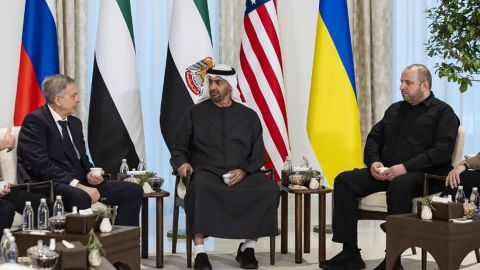
At the start of the new round of talks in Abu Dhabi (February 4-5, 2026), the most problematic issues for reaching a peace agreement on Ukraine remain: territorial issues (the withdrawal of Ukrainian troops from the Donetsk region) and security guarantees for Ukraine. The current diplomatic configuration demonstrates that each side is currently pursuing its own vision of peace, seeking an agreement that will be perceived as a victory. Essentially, Ukraine is insisting on the Ukrainian version of peace, Russia on the Russian version, and the United States is formulating its own—American—form of settlement.
For example, the Ukrainian side still shows no real willingness to accept Russia's terms, despite a number of indirect concessions. Specifically, the topic of joining NATO has effectively disappeared from the political agenda, which is explained not so much by internal decisions as by the position of the new US Administration. Furthermore, Ukraine's abandonment of its military goal of liberating all occupied territories is a step that, just a year ago, was perceived as uncontested in conjunction with NATO. However, even these adjustments do not bring Kyiv's position closer to Moscow's vision, which, in turn, is unlikely to agree to an option in which it retains control over 20% of Ukrainian territory, while the remaining 80% is transferred to the Western zone of influence, as envisaged in the American draft.
The parties still do not have firm and fixed agreements between themselves; their positions remain fluid and largely incompatible. The story of the so-called “energy truce” became illustrative in this context. Politically, US President Donald Trump used the "energy ceasefire" to demonstrate his ability to negotiate with Putin. At the same time, Moscow (possibly with Trump's participation) sought to demonstrate its "readiness for peace," emphasizing that the main obstacle allegedly remained the position of Ukraine and its European allies. However, the lack of a public announcement of the ceasefire terms from the outset suggests a lack of sustainable coordination between the US and Russia and reflects Washington's doubts about Moscow's willingness to implement the agreements. Such caution was necessary for the US President to minimize reputational costs in the event of failure.
Peace talks. The second round of trilateral talks between Ukraine, the United States, and Russia is taking place in Abu Dhabi, UAE, on February 4–5. The delegations in Abu Dhabi will hold the talks behind closed doors.
The Ukrainian delegation will be headed by:
Rustem Umerov is the Secretary of the National Security and Defense Council of Ukraine.
Kirill Budanov, former head of the Main Intelligence Directorate, is now head of the Presidential Office.
The Russian delegation is headed by:
Igor Kostyukov is the head of the Main Intelligence Directorate of the General Staff of the Russian Armed Forces.
Representatives of the US Presidential Administration Donald Trump are participating in the negotiations:
Steven Witkoff is the Special Envoy of the President of the United States.
Jared Kushner is Trump's adviser and son-in-law.
It should be noted in advance that the previous round of talks in the UAE on January 23-24 failed to achieve a political breakthrough, and the parties have yet to reach any concrete agreements. Specifically, Russia insisted on the complete withdrawal of the Ukrainian Armed Forces from the Donetsk region, but the Ukrainian delegation disagreed. It should be understood that this does not imply Ukraine's legal renunciation of its territories or their recognition as Russian territory; neither Moscow nor Washington is yet demanding this.
In the military bloc, Ukraine and Russia discussed possible options for disengaging forces along the line of contact, mechanisms for monitoring the cessation of hostilities, and parameters for a ceasefire, as well as steps to establish a ceasefire control and coordination center and clear criteria for what constitutes a ceasefire and its violation —although key political and territorial issues remained unresolved.
As US Secretary of State Marco Rubio stated, the list of unresolved issues in the Ukrainian settlement has been reduced to one – territorial. He would later add that there are actually two problematic issues: territory and security guarantees. However, in reality, the process is far more multifaceted and complex.
Ukraine as a whole continues to insist on a cessation of hostilities along the front line. Ukrainian President V. Zelenskyy has publicly spoken out against provisions concerning the withdrawal of Ukrainian troops from Donbas and the joint use of the Zaporizhzhia Nuclear Power Plant.
"Ukraine disagrees with two of the 20 points of the American plan." "Ukraine is not prepared for compromises that would violate its territorial integrity. We will not surrender Donbas and the Zaporizhzhia Nuclear Power Plant to the Russians without a fight. The least problematic option is the 'stay where we are' formula. Such complex issues are resolved at the leadership level." He also noted that there is no final decision on territorial issues yet, but allowed for the partial development of compromise options: "The Americans are proposing a compromise solution to create a free economic zone, but the issue of control must be fair —Ukraine controls the territories it currently controls."
Security guarantees for Ukraine from Western countries are also still under discussion.
According to a report in the British newspaper Financial Times published on February 3, 2026, Ukraine, the United States, and key European partners agreed on a preliminary "multi-layered support plan" for a possible peace agreement between Kyiv and Moscow. The plan provides for a coordinated response to Russian ceasefire violations, including both diplomatic and potentially military measures.
According to sources, the mechanism includes three levels:
The first stage is a diplomatic warning, which must be issued within 24 hours of the recorded violation.
In the second stage, if Russia's actions continue, a reaction from the Ukrainian army is expected, as well as the possible involvement of the so-called "coalition of the willing" – EU countries, Great Britain and Turkey.
In the third stage, in the event of a broader offensive by the Russian Federation, a coordinated military intervention involving the US Armed Forces is envisaged – no later than 72 hours after the first recorded violation of the agreement.
However, this is more of a Ukrainian-European approach, and it has not yet been agreed upon with Donald Trump. The United States has not officially confirmed its consent to participate in such operations. On the contrary, it regularly states that Washington is unwilling to promise to support European troops in the event of a conflict with Russia on Ukrainian territory. This is precisely why European countries are not yet ready to deploy their troops, and the guarantees discussed remain declarative.
Recent public statements by Western leaders have failed to clarify the situation. NATO Secretary General Mark Rutte, speaking to the Verkhovna Rada on February 3, did not outline specific guarantee mechanisms, limiting himself to political support for Ukraine. His statement, as well as Western media reports, are being interpreted in Kyiv as an attempt to push Ukraine to accept peace terms in exchange for future guarantees, which contradicts the official position of the Ukrainian leadership.
It is known that the US is allegedly willing to provide security guarantees to Ukraine only if Kyiv first agrees to a peace agreement with Russia and the withdrawal of troops from Donbas. This scheme—peace first, then guarantees— is unacceptable to the Ukrainian side, which insists on the opposite sequence.
Ukrainian President V. Zelenskyy confirmed Ukraine's readiness for a draft bilateral agreement on security guarantees between Kyiv and Washington. "We are awaiting our partners' consent to the date and place where this document will be signed. This document must then be ratified by the US Congress and the Verkhovna Rada," the Ukrainian president stated. Zelensky had previously emphasized that such an agreement could only be signed after the end of the war, which was consistent with the American position.
The second element of the security system, according to Zelensky, should be Ukraine's membership in the EU and help from the outside The "Coalition of the Willing" is an informal group of states discussing the possibility of introducing European troops into Ukraine after the war.
However, at the January 23-24 talks in Abu Dhabi, the US refused to provide military guarantees to European troops should they enter Ukraine after the war. This issue became another major stumbling block in the UAE talks.
The US is not prepared to sign this document until Ukraine makes concessions on Donbas. The US fears that even if it signs both security guarantees for Ukraine and a recovery plan, Ukraine will still refuse to compromise and the war will continue. But now the US will be obligated to directly assist Ukraine in this war, which will increase the risk of a clash with Moscow.
Another important clarification concerns the structure of future peace agreements. The signing will likely be structured similarly to the so-called "grain deal" of 2022, when Ukraine and Russia did not sign documents directly with each other, but used parallel agreements with third parties (in that case, Turkey and the UN). According to Ukrainian Foreign Minister Andriy Sybiha, there will be two peace agreements. Ukraine will sign a 20-point peace plan with the United States, and a separate document will be signed by the United States and Russia. Sybiha added that the European Union is not expected to sign these documents.
Energy truce.
Another important element of the negotiation process was the so-called week-long "energy truce." Its existence was unexpectedly announced by US President Donald Trump on January 29, following a phone call with Russian President Vladimir Putin. "Due to the extreme cold... I personally asked President Putin not to strike Kyiv and other cities for a week, and he agreed to that," Trump said. This information was confirmed by Russian presidential press secretary Dmitry Peskov, who stated that Russia had agreed to refrain from strikes throughout Ukraine until February 1.
It's important to note that on January 22, US Special Presidential Envoy S. Whitkoff met with Russian President Vladimir Putin in Moscow at the initiative of the Russian side. It was likely then S. Whitkoff's turn for Trump to write a request to Putin to refrain from attacking Kyiv for a week.
According to Ukrainian President Volodymyr Zelenskyy, the ceasefire was allegedly discussed on January 27 at the first meeting in Abu Dhabi, and the ceasefire itself, according to the Ukrainian side, began on the night of January 30. However, on January 30 and 31, Russia again launched strikes against Ukrainian energy facilities, albeit at a lower intensity than usual. And on the night of February 2–3, the Kremlin launched another massive strike, including a record number of ballistic missiles and drones. After this, Zelenskyy spent virtually 24 hours publicly appealing to Trump, accusing Putin of violating his promise of a "week-long ceasefire" and awaiting a US response. According to the Ukrainian side, the ceasefire began on the night of Friday (January 30) and was supposed to last until the night of Friday, February 6, that is, until the conclusion of the negotiations in Abu Dhabi. The Kremlin, on the contrary, claims that the agreements between Putin and Trump concerned the period before February 1, and, accordingly, there was no violation on the Russian side. Trump supported the Russian interpretation, stating that the agreements with Putin concerned the period “from Sunday to Sunday,” that is, up to and including February 1, and emphasizing that “Putin kept his word.” "It was Sunday to Sunday, and it all came back, and he hit hard last night," US President Donald Trump said, answering questions from reporters at the White House on February 3. "He kept his word. That's a long time, you know, one week..." "It's very, very cold there, but it was Sunday, and he held out from Sunday to Sunday." Donald Trump's wording suggests that he does not place responsibility for the breakdown of the "energy ceasefire" on Russia, but rather views it as a result of the failure of the negotiation process as a whole, dividing the blame between both sides. This rhetoric indicates Trump's desire to position himself as a neutral mediator, avoiding definitive accusations against Moscow.
It's important to note that, from a military perspective, the ceasefire had virtually no impact on Russia's operational capabilities. The pause between major strikes (the most recent on February 2-3) coincided almost entirely with Russia's normal buildup of missiles and drones (about a week on average), and the resumption of strikes coincided with a sharp cold snap, when strikes on the energy sector traditionally have the greatest impact.
In general, there are a number of questions regarding the so-called energy truce. First, it's unclear why its existence was officially announced only near the end, rather than at the very beginning of the agreements—for example, between January 23 and 25. Before Trump's announcement on January 29, neither the United States, Ukraine, nor Russia publicly announced the ceasefire, raising doubts about the extent of its coordination.
Secondly, Ukraine's position is unclear. If Kyiv was aware of the agreement, why did it officially remain silent about it until Russia's strikes on January 30-31? If it wasn't aware, then how could Ukraine also cease attacks on Russian energy infrastructure (including refineries and tankers) during that same period? This creates the impression that the ceasefire was orchestrated by a third party.
Zelenskyy emphasized in his comments that the agreement was reached with Trump, not Russia, which formally absolves Russia of direct responsibility. However, Zelenskyy's own behavior after the strikes—his appeal to Trump to respond to Putin's "breaking of his promise"—indicates either an unclear timeline or an attempt to extend the agreement amid the escalating tensions.
From a political perspective, it's clear that Trump is using this ceasefire to demonstrate that he can negotiate with Putin and that Russia listens to him. This fits into Trump's overall narrative about his unique ability to "reach agreement" where others fail. At the same time, Putin (and perhaps Trump as well) is using the situation to demonstrate his readiness for peace, with the positions of Kyiv and its European allies allegedly remaining the key obstacle.
However, the fact that the ceasefire parameters were not publicly announced at its inception may indicate a lack of consistent and documented coordination between the US and Russia. Specifically, this indicates a lack of complete confidence in the US in Russia's willingness to comply with the agreement. This uncertainty was justified from Washington's perspective, as Trump, as the party that had publicly vouched for Putin's behavior, would bear the reputational costs if the ceasefire were to collapse.
Finally, it cannot be ruled out that the ceasefire itself is part of a covert pressure on Ukraine, designed to force it to make territorial concessions. In this context, the resumption of strikes on February 2-3, before a new round of talks in Abu Dhabi, may indicate that the parties have once again failed to reach behind-the-scenes agreements. Consequently, it is highly likely that this round of talks on February 4-5 will again end with rhetoric about a "constructive approach" without any concrete provisions of the peace plan being approved.
Shelling of critical infrastructure.
On the night of February 3, 2026, Russian forces resumed massive strikes on Ukraine's power grid. Power generation and distribution facilities in eight regions, including Kyiv, Kharkiv, Odesa, Dnipropetrovsk, Sumy, Vinnytsia, and other regions, came under renewed attack. The Russian Armed Forces used more than 70 missiles and approximately 450 attack drones. The Ukrainian Air Force recorded 27 missile and 31 drone strikes at 27 locations. The targets were combined heat and power plants (CHPs and TPPs) operating to heat residential areas. DTEK's [a large private Ukrainian energy company, – translator’s note] TPP equipment suffered particularly severe damage.
Kyiv: Thermal power facilities were damaged; 1,170 multi-story buildings were left without power, especially in the Darnytsia and Dniprovskyi districts. Fires were reported in residential buildings and a kindergarten. Emergency power outages were implemented on the left bank. The Darnytsia Thermal Power Plant (TPP) was critically damaged after the shelling and will not be restored for a long time, stated Stanislav Ignatiev, Chairman of the Board of the Ukrainian Association of Renewable Energy. He also reported that TPP-6 in Troyeshchyna was previously destroyed.
Kharkiv: The attack lasted more than three hours, targeting energy infrastructure, Mayor Ihor Terekhov reported. City authorities announced the need to drain heating systems in 820 apartment buildings to prevent the system from freezing.
Dnipro: An infrastructure facility was damaged, two private homes, a three-story building, and a dormitory were destroyed. Russia carried out a massive attack on Kryvyi Rih and Dnipro. In Dnipro, a drone struck a high-rise building, injuring 14 people.
Odesa Oblast: Energy infrastructure is under attack again. DTEK reported significant damage, and restoration will take time.
Sumy Oblast: In the Konotop and Sumy communities, strikes on private and apartment buildings were recorded, with civilians injured.
Vinnytsia Oblast: Around 50 settlements were left without power as a result of strikes on critical infrastructure facilities.
As of the morning of February 4, consumers in the Donetsk, Sumy, Dnipropetrovsk, Kherson, Chernihiv and Zaporizhia regions were without power. Due to difficult weather conditions, 16 settlements in the Odessa region remain without electricity.
The situation in Ukraine's energy sector remains extremely challenging. Large-scale attacks on critical infrastructure, including combined heat and power plants and distribution hubs, coincided with a sharp cold snap, with temperatures dropping below -25°C in several regions, which became an additional aggravating factor. The most difficult situation in the energy system currently remains in Kyiv and the surrounding region, Kharkiv and the surrounding region, as well as in the Sumy and Poltava regions.
The situation in Kyiv remains extremely dire: according to Mayor Vitali Klitschko, about 2 600 houses remain without heat supply, when this V some residential houses absent heating already some weeks — For example, in Obolon and Troyeshchyna there has been no heating since January 9, no cold water since January 13, and elevators and sewerage are out of order. Kyiv residents are reporting on social media that they only have three hours of power outage per day; residential complexes in Mykilska Borshchahivka, where everything relies on electricity, are without heat, water, and gas, while apartments are without power for 10–12 hours, the air temperature in offices — up to 4 – 5 °C. There are complaints from people that DTEK and emergency services ignore emergency requests from the population. There are signs that small business shut down. The Ministry of Internal Affairs of Ukraine urged residents to prepare in advance supplies of water, food, and medication for 3-5 days, as well as a suitcase with essential items and documents in case of an emergency departure. Earlier, Kyiv Mayor Vitali Klitschko urged residents to temporarily leave the city for areas with alternative sources of heat and energy.
On January 16, 2026 the Cabinet of Ministers adopted a set of additional measures to overcome the energy crisis caused by the Russian strikes and freezing temperatures. These include increasing electricity imports.
-
Simplifying the connection of backup power supplies.
-
Possible revision of curfew to ensure uninterrupted operation of emergency services.
-
State-owned companies (Ukrzaliznytsia, NAK Naftogaz) are instructed to purchase at least 50% of their total consumption volume through imported electricity during the 2025/2026 heating season.
Since 2022, authorities estimate that more than 60–70% of the energy system, including generation and heating facilities, has been destroyed. Restoring the energy sector to pre-war levels will require significant resources— at least $20 billion, according to preliminary estimates.
Amid widespread power outages, authorities nearly doubled electricity prices for Ukrainian industry.
According to the National Electricity Regulatory Commission of Ukraine (NERC) Resolution No. 70 As of January 16, 2026, the authorities raised the maximum prices for electricity on the day-ahead market to 15 000 hryvnias for Megawatt - hour, and these prices are now in effect not only during peak hours, as before, but also around the clock. This has been a serious blow to businesses, especially given the ongoing widespread power outages, which affect not only households but also industry, utilities, and institutions. For comparison: the average monthly price of electricity in November–December 2025 was 6.4–6.65 UAH per kWh (excluding VAT). However, in the period from January 21 to 25, 2026, the tariff reached 11 159.8 UAH for MWh (or 11.16 UAH for kW h without VAT), which represents a nearly twofold increase. This seriously exacerbates the situation for Ukrainian businesses operating in the energy crisis.
The price hike will also indirectly impact the population through higher inflation and more expensive services. A jump in electric vehicle charging prices has already been recorded. Officially, the authorities explain the tariff hikes by the need to purchase expensive imported electricity, but energy market insiders note that this may be part of a broader strategy: meeting IMF requirements and lobbying pressure from energy companies. According to market sources, the population is not yet directly affected, but the tariff burden on industry has been increased in full.
Military operations.
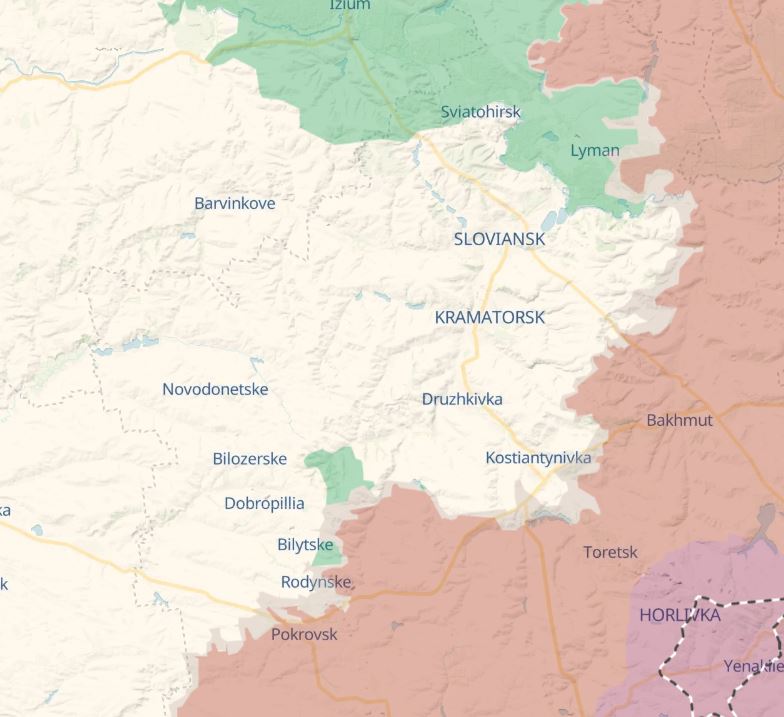
In January 2026, according to open estimates from Ukrainian sources, Russian troops captured approximately 245 square kilometers of Ukrainian territory, almost half the amount in December 2025, when the gain was approximately 445 square kilometers. The most active assault operations were conducted in the areas of Pokrovsk, Kostyantynivka, Lyman (Donetsk Oblast), Hulyaipole (Zaporizhzhia direction), and Novopavlivka (Dnipropetrovsk Oblast). The most rapid advance of Russian forces was in the direction of Slovyansk in Donetsk Oblast: this area became a relative "anti-record," since, with 3% of the total number of attacks, it accounted for almost 20% of Ukraine's total territorial losses in January.
Russia claimed to have gained more than 500 square kilometers of territorial control and captured 17 settlements in January. However, these claims have not been confirmed by Ukrainian sources: some of the settlements mentioned have not been recognized as lost, and fighting continues in some areas.
This week, Russia has made particularly significant advances near Myrnohrad in the Pokrovske direction, as well as in the area of Dorozhnyanka, south of Hulyaipole. At the same time, some tactical successes by the Ukrainian Armed Forces have been reported, including the liberation of the village of Sukhetske north of Myrnohrad, which was previously in the "gray zone."
Map of military operations.
Donetsk region.
Sociology.
According to the results of a study conducted by the Kyiv International Institute of Sociology (KIIS) from January 23 to 29, 2026, Ukrainian society demonstrates somewhat contradictory attitudes towards issues of territory, democracy, and power. Which, in general, indicates a complex psychological background within the country.
Willingness to make concessions and perception of the prospects of war.
52% of respondents stated that they categorically reject the transfer of Donbas to Russian control in exchange for security guarantees. However, 40% are willing to accept such a concession, recognizing it as a "difficult but necessary condition." This is a fairly high figure, indicating growing public fatigue with the protracted war as a whole. This dynamic is likely influenced by a combination of factors, including constant losses, a prolonged lack of prospects for ending the conflict, and Russia's systematic energy terrorism, which has sharply worsened living conditions during the winter.
The most rigid positions are observed among Kyiv residents: 59% are against ceding territory in Donbas, and only 31% allow for such a possibility. In the West, 57% are against, in the Center and North – 49%, in the South – 49%, and in the East – 50%. Thus, opinions are divided by region, but the majority everywhere lean toward rejecting territorial concessions.
Regarding the prospects for ending the war, only 20% of Ukrainians believe it will end in the coming months, 18% expect it to end by the end of 2026, and 43% are confident the war will last until 2027 and beyond. Despite this, 65% said they are prepared to endure the war as long as necessary, up from 62% in December 2025. The main difficulties cited by Ukrainians were: casualties and fear for loved ones (29%), shelling and destruction (17%), economic difficulties (17%), energy supply problems (15%), and psychological fatigue (10%).
Energy sector shelling and attitudes towards strikes on Russian territory.
The overwhelming majority of citizens— 88%—believe that Russia is deliberately attacking Ukraine's energy sector to cut off heat and force the population to capitulate. Only 3% believe the strikes are retaliatory, and another 3% believe they are aimed solely at military targets. Against this backdrop, Ukrainians support retaliatory strikes against Russian territory: both in 2023 and in January 2026, 90% of respondents consider such actions necessary. Moreover, the structure of support has changed: while in 2023, 38% supported only strikes against military targets, now only 10% do. Eighty percent believe that strikes should also be carried out against other targets, including energy (48%), oil and gas infrastructure (7%), and even civilians (25%) —the latter figure has increased significantly compared to 13% in February 2023.
Assessing the level of democracy and trust in government.
According to the second KIIS poll, only 36% of Ukrainians consider the level of democracy in the country sufficient for wartime conditions, another 35% say there is a shortage, and 16% say there is too much democracy. The most common associations for the lack of democracy include restrictions on freedom of speech (19%), the work of the conscription centers “TCK” (17%), the lack of consideration for the interests of ordinary people (16%), and the abuse of power by the authorities (5%). Only 1% mentioned the lack of elections.
Nevertheless, trust in the President remains high — 61% trust him, while 33% distrust him (a balance of +28%). These figures remain stable compared to mid-January. Opinions are divided on the current government's prospects: 48% believe there are professionals among the current officials who could remain in power after the war, while 42% believe all current government officials should leave after the conflict ends.
Ruslan Bortnik, Oksana Krasovskaya, Andrey Timchenko
for the Ukrainian Institute of Politics