The constructive peace process regarding Ukraine is currently in a state of stagnation, primarily due to the absence of any real positive negotiating dynamics and any convergence of the parties’ positions. Various statements by political leaders about the allegedly “imminent end of the war” (both from Russian President V. Putin and Ukrainian President V. Zelenskyy) or the emergence of a negotiating “window of opportunity” (from Estonian President Alar Karis) have no practical basis and are largely informational in nature, aimed at demonstrating control over the situation.
The transition to open diplomacy, in particular the open letters from Ukrainian President V. Zelenskyy to U.S. President D. Trump and Russian President V. Putin, is a marker that the negotiations have finally reached a deadlock. In a situation where standard, closed and confidential diplomacy has failed, Ukraine is forced to move communication into the public sphere, creating informational pressure on the main actors — the United States and the Russian Federation.
After it became clear that the Kremlin rejected V. Zelenskyy’s proposal for a personal meeting and a ceasefire along the front line, while the United States, concerned about the war in the Middle East, is reducing its involvement in the Russian-Ukrainian war, Ukraine has turned to its European partners for political support and the formation of a common position.
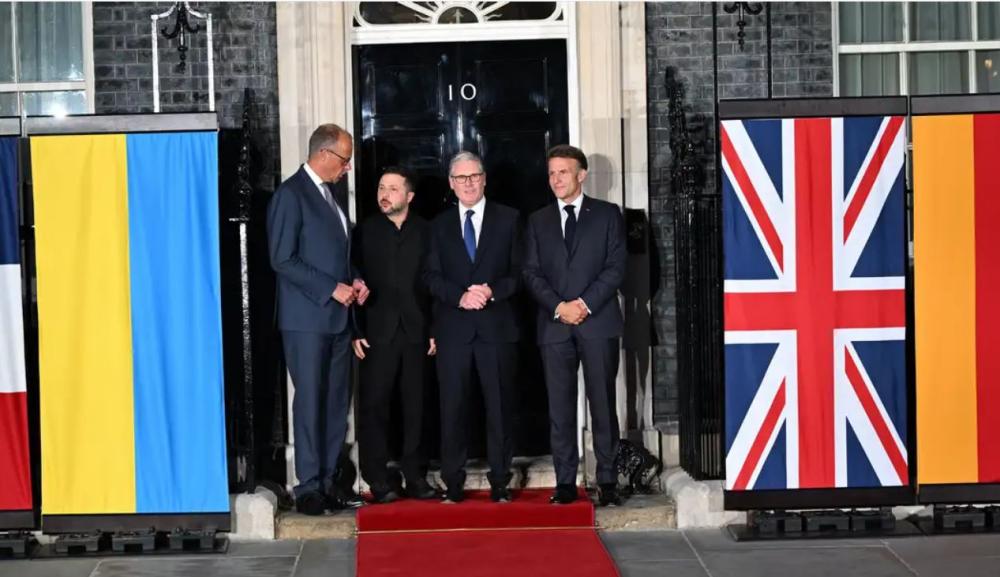
On 7 June, the leaders of the United Kingdom, France, Germany and Ukraine, during a meeting in London, outlined five conditions for peace. Thus, Europe, while claiming a place as a full-fledged negotiator, is in fact putting forward its own conditions to Russia for ending the war.
Of course, these conditions are unlikely to be acceptable to Moscow, especially regarding reparations payments to Ukraine and other demands, but they have finally outlined the E3’s opening negotiating position. In particular, Moscow consistently opposes the deployment of foreign troops on Ukrainian territory and continues to demand the withdrawal of Ukrainian forces from the territory of Donbas.
Control over the Donetsk region is viewed by Moscow as the key political outcome of the war that it would like to achieve by the autumn of this year (which appears unlikely). In the current situation, Russia intends to continue the war even if it does not produce significant territorial gains (according to DeepState data, Russia managed to occupy only about 14 square kilometres in May), since this allows it, through information policy, to demonstrate to its domestic audience those developments are moving in the desired direction. At the same time, Moscow continues behind-the-scenes negotiations with the United States, attempting to secure concessions on Ukraine by appealing to the so-called “spirit of Anchorage.” The Kremlin is clearly dissatisfied with the political development of the situation and had expected the United States to exert pressure on Ukraine, which it has not done so far.
For its part, Ukraine is relying on an asymmetric war of attrition, combining stubborn defence with tactical counteroffensives at the front. As long as the Armed Forces of Ukraine hold the cities of Donbas, Russian forces are gradually being worn down, while pressure is simultaneously increasing through sanctions and information operations.
Western allies are prepared to support such a model for at least another two years. In addition to the €90 billion already allocated by the European Union, discussions are underway regarding an additional €40 billion in military assistance, which should ensure frontline stability and Ukraine’s internal political resilience.
At the same time, Ukraine will await the completion of the U.S. congressional elections and may revise its strategy afterwards, although for now it remains unchanged. Russia is also looking to the results of the American elections, understanding that a stronger Democratic presence in Congress could limit D. Trump’s ability to implement a potential deal on Ukraine.
Against this backdrop, Washington is demonstrating reduced involvement, since there is no result that could be presented as a political achievement. The United States is effectively taking the position of an observer and is not seeking to actively bring the negotiation process to a practical outcome.
However, given that the war in Ukraine remains an important factor both for the U.S. elections and for the political future of the Russian president, the risk of escalation scenarios and attempts to fundamentally alter the course of the war is increasing.
At the same time, Ukraine is rapidly strengthening the trend toward the fiscalisation of the economy. As part of this course, the Verkhovna Rada of Ukraine adopted the so-called “OLX tax law” (Bill No. 15111-d), which became a direct fulfilment of an IMF structural benchmark required for the continuation of external financing. This decision leads to the institutional transformation of the digital market: marketplaces and service platforms have become tax agents of the state, obliged to automatically withhold 10% of citizens’ income and transfer data to the State Tax Service. This step clearly demonstrates that the state is consistently narrowing the grey zones of self-employment and informal trade, completely eliminating the possibility of conducting uncontrolled microbusiness activities in the digital space.
Ukraine and Hungary agreed on 10 out of 11 demands put forward by Budapest regarding the rights of the Hungarian minority, which made it possible to lift the veto on opening the first cluster of accession negotiations with the European Union. The official opening of the first negotiation cluster (“Fundamentals”) for Ukraine’s accession to the EU is scheduled for 15 June 2026 in Luxembourg, and this cluster is both the first to be opened and the last to be closed. The concessions made to Hungary regarding national minorities create a precedent for the use of veto rights. For example, Bulgaria may now put forward similar demands to Ukraine.
________________________
Letter from Ukrainian President V. Zelenskyy to Russian President V. Putin.
Ukrainian President V. Zelenskyy, in an open letter (dated 4 June 2026) addressed to Russian President V. Putin, called on him to hold a personal meeting in order to end the war against Ukraine.
The letter sets out Zelenskyy’s view of the four-year conflict and states that although the resilience of Ukrainians remains unchanged, most Russians are tired of its consequences and are ready for peace.
This letter is Zelenskyy’s first public appeal addressed directly to Putin since the beginning of the full-scale invasion, although he had previously called for a meeting with him on numerous occasions, stating that such a meeting was necessary to achieve any agreement regarding territory.
In his letter, Zelenskyy stated that the proposed talks could take place in a neutral third country, excluding Moscow and Kyiv as possible venues, and suggested Switzerland, Turkey, or Arab states as possible locations.
U.S. President D. Trump reacted to Zelenskyy’s letter and stated that it would be “wonderful” if Zelenskyy met with Putin, but added that both sides would have to make compromises, without providing details. “I’m glad that they may be discussing a meeting. I think we played a big role in that,” Trump told reporters in the Oval Office. “I think it would be great if they met. They should — do it.” “They will both make compromises, I suggested those compromises, and, you know, we made a major contribution to this.”
In response to Zelenskyy’s letter, Kremlin spokesman D. Peskov reiterated that Zelenskyy could come to Moscow “if he wants negotiations.” Putin himself stated the following day that he still “does not see the point” of such a meeting. Putin said that the letter contained “elements of rudeness” and “creates obstacles to a possible meeting.” He also stated that military operations would eventually end with Russia achieving its stated objectives.
Zelenskyy’s open letter to Putin can be described as a tactic of shifting toward public diplomacy (it should be recalled that it was preceded by a similar open letter to U.S. President D. Trump).
The purpose of this letter is clearly not to launch a real negotiation process at this stage, but rather to keep Ukraine at the centre of the international negotiating agenda — publicly reaffirming Ukraine’s position and demonstrating commitment to dialogue while simultaneously projecting an image of strength.
In addition, the letter creates informational pressure on external actors — both Russia and Ukraine’s allies (the United States and Europe) — in order to prevent Ukraine from being ignored in the negotiation process.
For Ukraine, this letter is quite useful from the perspective of managing information flows and communication technologies. However, from a practical standpoint, it is unlikely to have any tangible effect. There remains only a very small chance that Putin will begin conducting dialogue in a similar spirit.
In this context, Donald Trump’s reaction is particularly illustrative. While Russia has adopted a wait-and-see approach and, through Peskov, has essentially repeated its previous position — inviting Zelenskyy to Moscow, which appears more like veiled political trolling than a genuine offer of dialogue — Trump, by contrast, demonstratively takes Zelenskyy’s letter at face value. His rhetoric along the lines of “yes, let them meet, that would be good” appears to support the idea itself, but without any deeper engagement with its substance or implementation conditions.
At the same time, Trump most likely fully understands the political and communication technology behind such a move by Ukraine, yet consciously plays along with the formal logic of the process. In effect, this is another indication that the United States is acting from the position of an outside observer.
Trump does not delve into the substance of the negotiation process, thereby showing no willingness to bring it to a practical result through his own efforts, and effectively shifts responsibility onto the parties to the conflict themselves — Ukraine and Russia.
The Leaders of Ukraine, the United Kingdom, France and Germany Defined Five Conditions for Peace.
On 7 June, the leaders of the United Kingdom, France, Germany and Ukraine, during a meeting in London, stated the need for the “active participation” of European countries in potential peace negotiations with Russia.
During the talks, they also discussed the conditions necessary for a just and lasting peace. The joint statement was published on the website of the British government.
First, it calls for the cessation of hostilities. They urged President Putin to agree to an immediate and full ceasefire.
Second, the existing line of contact should serve as the starting point for negotiations. International borders must not be changed by force, and Ukraine’s sovereign right to choose its own security arrangements and alliances must be fully respected.
Third, once a ceasefire comes into effect, Ukraine must have reliable and legally binding security guarantees based on the commitments undertaken in Berlin in December 2025 and in Paris in January 2026. This includes the deployment of the Multinational Force – Ukraine.
Fourth, Russian assets will remain frozen until Russia ends its war of aggression and pays compensation to Ukraine for the damage caused by the war.
Fifth, European security interests must be protected in any agreement. Any negotiations concerning the EU and NATO will require the consent of the EU and its member states, as well as NATO allies.
After Russia rejected the Ukrainian President’s proposals for a meeting and a ceasefire along the frontline, and the United States effectively assumed the role of an observer, Ukraine turned to its European partners to formulate a common position. As a result, ending the war along the current frontline is no longer merely Kyiv’s initiative but a joint Ukrainian-European position. These five conditions reflect a strategy of drawing Europe into the negotiation process and transforming it into a full-fledged negotiating party.
General Dynamics of Peace Negotiations.
On Monday, 8 June, President of Ukraine Volodymyr Zelenskyy held a phone conversation with the special envoys of the U.S. President — Steve Witkoff and Jared Kushner. During the conversation, Zelenskyy, in particular, informed Witkoff and Kushner about the available data on “what Moscow is inclined toward.”
“Today, during a stop at Chisinau Airport, I spoke with representatives of the President of the United States, Steve Witkoff and Jared Kushner. It was a very positive conversation. I am grateful for the readiness to work as actively as possible already in these weeks in order to give diplomacy an impetus to end Russia’s war against Ukraine. We understand how much attention the world is paying to the situation around Iran. But our common goal — peace in Europe — remains on the agenda. We discussed prospects in the context of the G7 summit and other events in June. I informed them about the data we have regarding the moods in Moscow,” V. Zelenskyy stated.
Later, Zelenskyy made it clear that he had received a certain response from the United States to his appeal requesting the transfer of missiles for air defence systems, but that he could not disclose it. “By writing to the United States, I wanted to do everything possible to shift their attention at least somewhat from the Middle East to the situation in Ukraine. I cannot share all the details with you, but my state needs a very significant number of anti-missile systems. I received a result, but I cannot now share what that result was, but I did it. And I had a goal when I sent the letter to Putin, and I think I achieved the necessary result. Ukraine demonstrates that it is ready for peace, and we are taking various diplomatic steps to show our allies who is ready for peace and who is not. I received a result,” Zelenskyy stated.
It should be recalled that there are still no exact dates for the visit of U.S. presidential special envoy Steve Witkoff and businessman Jared Kushner to Kyiv and Moscow.
Russian presidential press secretary Dmitry Peskov stated that although there is no specific date for their arrival in Moscow, the Kremlin is “ready to receive” American representatives “at any moment,” adding that at the moment the mediation process is on pause.
At the same time, Russia is complaining that the United States is showing no interest in returning to the agreements reached in Alaska.
“I very much hope that the experience of previous failures, when the West refused to implement the agreements it itself had supported, that this experience will not be repeated with regard to the agreements in Alaska. But so far, to our great regret, our American partners are showing no interest in this,” Russian Foreign Minister S. Lavrov stated.
Putin stated that Russia is ready to make compromises on the Ukrainian settlement, which were “discussed” at the summit in Anchorage. “We are certainly ready and want to reach an agreement with Ukraine by peaceful means on the basis of what we discussed with Trump in Anchorage. We are ready to make the compromises that were discussed in Anchorage. Ukraine must also be ready to make compromises,” he said.
That is, from Russia’s point of view, the situation around Ukraine was settled in Anchorage in August 2025.
U.S. President Donald Trump supported the idea of involving Patriarch Theophilos III of Jerusalem as a mediator in negotiations between Ukraine and Russia. According to Israeli media, this initiative was discussed at a meeting in the White House. The main advantages of Patriarch Theophilos III as a negotiator are his status as an apolitical figure of religious trust and his unique weight in the Orthodox world. Donald Trump’s administration views him as a rare neutral instrument for creating an alternative communication channel between Kyiv and Moscow.
But in Ukraine, they make it clear that the main problem lies not in the absence of an effective mediator, but in Russia’s unwillingness to cease hostilities. Government sources added that no one has yet officially approached Kyiv with a proposal for such mediation.
The EU Presented the 21st Package of Sanctions Against Russia.
In Brussels on 9 June, European Commission President Ursula von der Leyen presented the 21st package of sanctions against Russia. The main goal of the package is to block loopholes for circumventing previous restrictions and to increase economic pressure.
The new sanctions package focuses on five key areas: energy, financial services and cryptocurrency, trade, fisheries, and visa restrictions for military personnel.
Restrictions in energy and the “shadow fleet.”
The sanctions list is being expanded by another 30 tankers of the “shadow fleet.” For the first time, restrictions are being introduced against auxiliary vessels that provide bunkering and refuelling for sanctioned ships. Infrastructure is also being targeted — ports, airports and oil refineries involved in the transportation and processing of Russian oil. A ban is also being introduced on the sale to Russia of tankers for transporting LNG. The mechanism for adjusting the oil “price cap” is temporarily frozen until January of next year in order to stabilize the market.
Financial and cryptocurrency sector.
A full ban on transactions is being introduced for another 31 Russian banks. Sanctions against third countries are being expanded: 20 foreign banks, crypto firms and oil traders (including China, Turkey, the UAE, Kazakhstan, Kyrgyzstan and India) involved in sanctions circumvention will fall under restrictions. For the first time, the EU is introducing a full ban on the provision of cryptocurrency services for platforms from third countries working with Russia.
Trade and the military-industrial complex (MIC).
Supplies to Russia of metals, high-tech alloys, as well as equipment for supporting ground infrastructure, launch systems and electronic warfare systems, including those for drones, are prohibited. More than 30 companies linked to drone production are being sanctioned, and export control measures are being introduced against 50 foreign legal entities. Imports from Russia of goods worth around €60 million are being restricted (metals, ores, chemicals, auto parts). At the same time, the restrictions are being synchronized with Belarusian ones in order to close re-export channels.
Fisheries sector (for the first time in EU practice).
Strict quotas and restrictions are being introduced on imports of Russian seafood. A separate full ban has been established on imports of a number of fish species, primarily cod.
Visa and personal restrictions.
For the first time, a full ban on entry into the EU is being introduced for all persons (both Russian citizens and foreigners) who have served in the Russian armed forces or pro-Russian formations since the beginning of the full-scale war. The sanctions lists are also planned to be expanded by approximately another 170 individuals and legal entities.
The 21st sanctions package announced by the European Commission is an official proposal. It must now be reviewed and unanimously approved by all 27 member states in the Council of the EU. Final adoption of the package is planned to be completed by 15 July.
Ukraine and Hungary Agreed on 10 out of 11 Requirements for EU Accession.
Ukraine and Hungary reached a pragmatic compromise, agreeing on 10 out of 11 of Budapest’s demands, which made it possible to lift the 17-month veto on negotiations on Ukraine’s accession to the EU. The only unresolved issue remains guaranteed representation of national minorities in the Verkhovna Rada.
The parties reached a compromise on expanding the linguistic, educational, cultural and political rights of the Hungarian community in Zakarpattia. Ukraine undertook to make adjustments to the law on secondary education and to expand the socio-political rights of minorities.
Budapest insists on allocating fixed parliamentary quotas for national minorities following the example of some EU countries (for example, Croatia or Romania). Ukrainian legislation currently does not provide for such a mechanism.
The problem of quotas was temporarily “set aside” so as not to block the European integration process. Kyiv and Budapest agreed to jointly appeal to the Venice Commission (Council of Europe) and the OSCE for official clarifications on how this point could be implemented.
Thus, Budapest agreed to the official opening of the first negotiation cluster, which concerns fundamental reforms and human rights. Although the issue of minority representation in parliament may be raised again already within the framework of the EU’s negotiation process with Ukraine. In addition, according to diplomatic sources, Bulgaria now plans to put forward its own additional demands on the protection of national minority rights (in the fields of education and language).
The Verkhovna Rada of Ukraine Adopted the So-Called “OLX Tax”.
The Verkhovna Rada of Ukraine adopted Bill No. 15111-d, which introduces taxation of income received through digital platforms (known as the “OLX tax law”). The law will take effect on 1 January 2027, and the platforms themselves will become tax agents and will transmit information about users’ income.
The main provisions of the law are based on the following rules:
• Sales limit: income of individuals from the sale of goods through platforms in the amount of up to €2,000 per year is not taxed. If the amount exceeds €2,000, a 10% tax rate applies (of which 5% is personal income tax, 5% is military levy without unified social contribution).
• Automation: users will not have to calculate and pay taxes themselves. Digital platforms (such as OLX, Uber, Bolt, Uklon, etc.) will do this automatically.
Bill No. 15111-d radically changes the architecture of income administration in Ukrainian e-commerce, transforming digital platforms (OLX, Rozetka, Uber) from simple technological intermediaries into full-fledged tax agents of the state. The economic essence of the reform lies in the institutional transfer of the fiscal burden: instead of ineffective control over millions of individual sellers and service providers, the State Tax Service (STS) centralizes the collection of data and taxes through a limited pool of large operators. Platforms undertake to automatically withhold 10% from transactions of individuals exceeding the annual limit of €2,000 or 30 transactions, and to directly transmit detailed reports with user identifiers to the STS. This allows the state to effectively legalize the shadow microbusiness and gig economy market without creating excessive bureaucratic pressure on citizens, while simultaneously encouraging regular merchants to switch to the official status of individual entrepreneur in order to retain more favourable tax rates.
The adoption of Bill No. 15111-d is a direct structural benchmark of the International Monetary Fund (IMF), the fulfilment of which is a critical condition for the continuation of macro-financial assistance to Ukraine. The law marks a transition from targeted control to end-to-end total fiscalisation of the digital space.
This reform clearly shows that the state is consistently narrowing the grey zones of self-employment and informal trade. Any regular commercial activity by citizens within the country will now be strictly monitored through automated Big Data algorithms with inevitable tax withholding.
Situation at the Front. Course of Hostilities.
Despite the high intensity of hostilities and the increasing number of assaults, Russian troops are still unable to restore their previous pace of advance.
DeepState confirms that in May 2026 Russian troops occupied about 14 sq. km of Ukrainian territory. This is the lowest monthly advance of the Russian army since 2023.
At the same time, over the past week Russia occupied 15 sq. km and now controls 116.871 thousand sq. km, or 19.36% of Ukrainian territory.
The slowdown in the pace of advance is linked to the blocking of Starlink terminals, as well as to the growing losses of the Russian army and Ukraine’s successful implementation of the “Logistics Lockdown” strategy — the destruction of Russian rear bases, warehouses and logistics routes at operational depth.
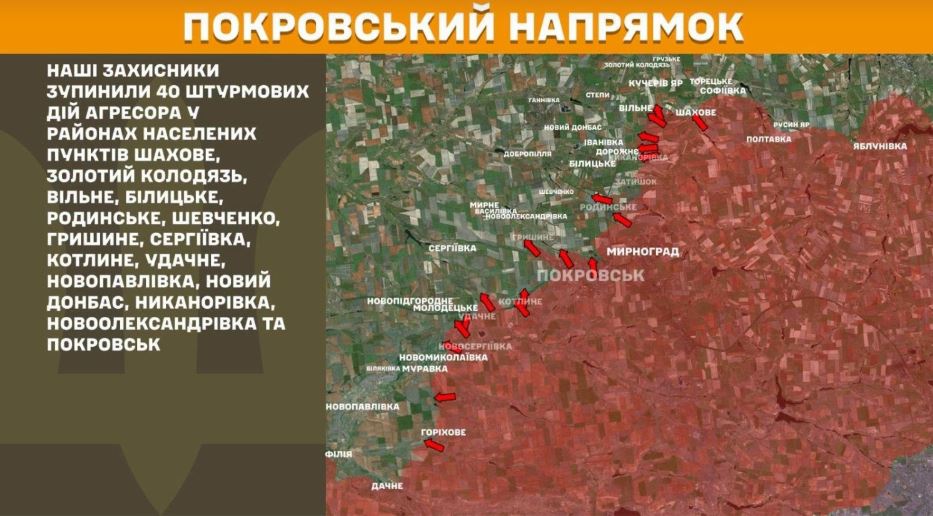
In Donetsk region. The highest intensity of fighting is recorded here, with the most difficult situation for the Armed Forces of Ukraine on the Pokrovsk axis. The affected settlements are: Rodynske, Hryshyne, Kotlyne, Udachne, Serhiivka, Shevchenko, Novooleksandrivka.
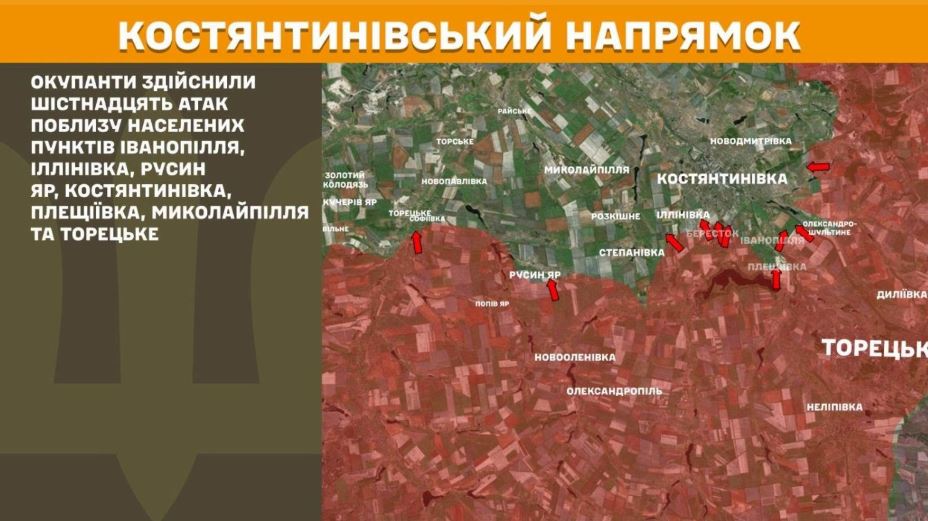
Kostiantynivka and Kramatorsk axes: fierce clashes are taking place near Ivanopillia, Pleshchiivka, Illinivka, Rusyn Yar and Kostiantynivka. Russian troops use massive strikes with guided aerial bombs (FAB and KAB) before assault attempts.
On the Sloviansk axis, Russian troops attempted assaults in the areas of Zakotne, Reznykivka and toward Kryva Luka and Rai-Oleksandrivka.
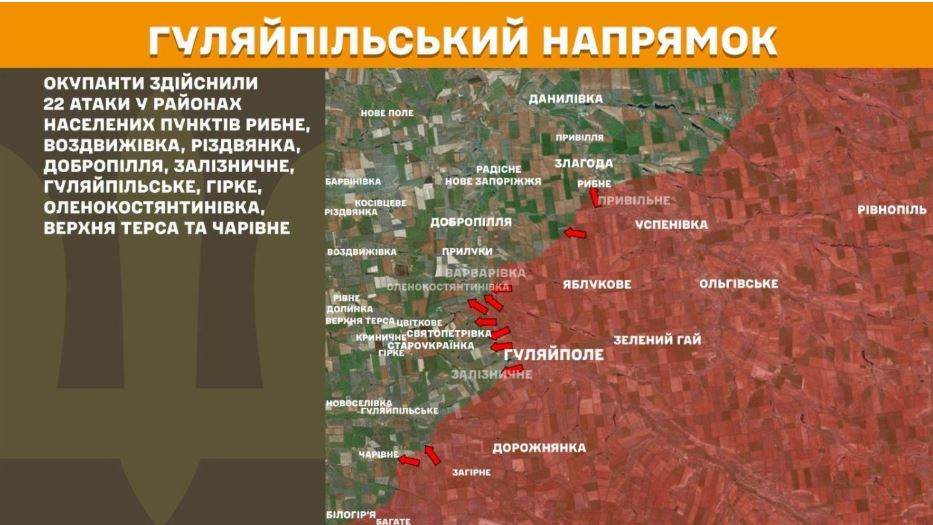
Zaporizhzhia region. The southern front is showing a strong escalation. Russia is trying to cut off salients and pressure the logistics of the Armed Forces of Ukraine. Huliaipole axis (extremely difficult): Russia sharply increased its activity, carrying out up to 34 attacks per day in the areas of the settlements of Dobropillia, Yelenokostiantynivka, Zaliznychne, trying to break through toward Vozdvyzhivka, Kosovtseve and Tsvitkove. Orikhiv axis: meeting engagements are taking place in the areas of Bilohiria, Shcherbaky and Plavni.
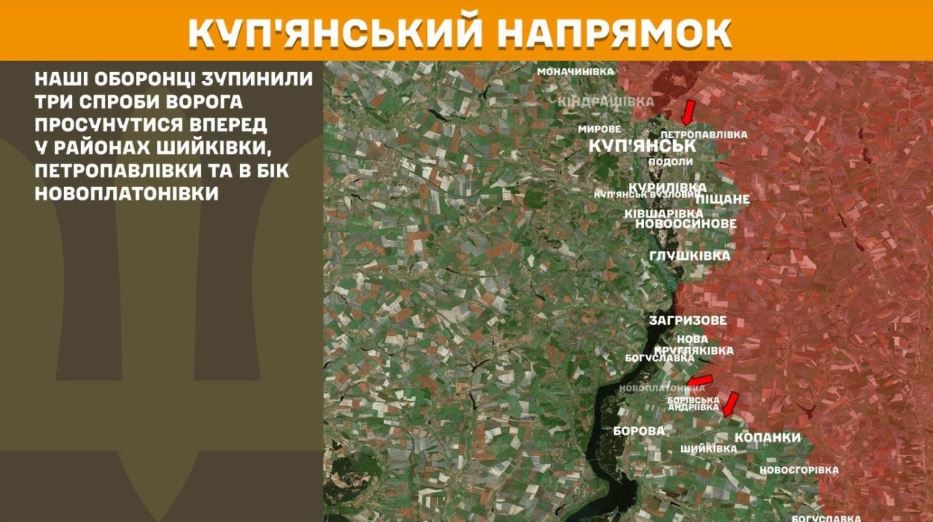
In Kharkiv region. On the Kupiansk axis, high-intensity meeting engagements continue, where Russian troops are trying to regain lost positions on the left bank of the Oskil River, while the Armed Forces of Ukraine hold back enemy assaults and eliminate groups that have broken through. Attempts to break into the city of Kupiansk: earlier, Russian units had already tried to establish themselves directly within the city limits, but the Armed Forces of Ukraine conducted a clearing operation. They are now pressing the city from the north and northeast (through Holubivka and Synkivka), and are also trying to infiltrate in small infantry assault groups toward the southeastern outskirts of the left-bank part.
In Sumy region. Attempts by small Russian assault and sabotage-reconnaissance groups (DRGs) to infiltrate across the border are being recorded. Cities and villages in the border zone (including Konotop, Okhtyrka and Sumy districts) are subjected daily to attacks by kamikaze drones and KAB strikes. Fighting is taking place on the Kupiansk axis (in the areas of Petropavlivka, Sheikivka and Novoplatonivka), and Russia has begun actively attacking the key civilian and military Kharkiv — Sumy highway with drones and artillery.
Dnipropetrovsk region — there are no direct combat clashes, but massive shelling terror continues. The region serves as the main frontline logistics and medical hub of the Armed Forces of Ukraine, which is why it is struck daily. On the Nikopol and Synelnykove axes, the enemy shells with artillery and attacks with drones the civilian and military infrastructure of the cities of Nikopol, Marhanets, Pokrovske and Myrove communities. Dnipro, Pavlohrad and Kryvyi Rih are also under regular missile strikes.
Maps of hostilities.
(According to the General Staff of the Armed Forces of Ukraine)
Public Opinion.
According to a survey conducted by the Kyiv International Institute of Sociology (KIIS) from 7 May to 3 June 2026, 53%–60% of Ukrainians support ending the war along the current frontline, but only with enhanced support from Western allies.
Respondents were offered four scenarios for ending hostilities. In all cases, a ceasefire along the current frontline was assumed without official recognition of Russia’s territorial gains.
Scenario No. 1 – “Without Security Guarantees.”
Hostilities cease, but Ukraine receives neither security guarantees nor increased supplies of money and weapons. This option is supported by 31% of respondents, while 61% oppose it.
Scenario No. 2 – “Symbolic Presence of European Troops.”
European troops are deployed in Ukraine, but far from the frontline and would not participate in combat if Russia attacks again. This option is supported by 41%, while 49% oppose it.
Scenario No. 3 – “Own Forces + Allied Resources.”
Allies provide Ukraine with enhanced support in the form of funding and weapons, including missiles and other military assistance. This option is supported by 53%, while 37% oppose it.
Scenario No. 4 – “European Shield.”
European troops are deployed near the frontline and would participate in combat if Russia attacks again. This option is supported by 60%, while 33% oppose it.
Thus, 53%–60% of Ukrainians are prepared to support a ceasefire along the current frontline, but only if the country’s security is guaranteed by Western troops or by large-scale supplies of weapons and financial assistance. Ukrainian society is prepared to accept a compromise based on the current frontline, but is not willing to accept an “empty ceasefire” without military backing. Any models without guarantees (31%) or with merely symbolic guarantees (41%) remain in the minority, making them politically vulnerable to implementation.
It is noteworthy that this survey directly correlates with the five peace conditions announced by Zelenskyy and the “European Three,” where the current line of contact was also defined as the starting point for negotiations. Thus, public opinion effectively legitimizes this negotiation framework, demonstrating that it has domestic support within Ukrainian society.
Ruslan Bortnik, Oksana Krasovskaya
for the Ukrainian Institute of Politics
Friends, we would like to remind you that additional analytical products of the Ukrainian Institute of Politics are available for organizations, businesses, and private clients, including Weekly Intelligence Briefs, Geopolitical Risk Reports, Executive Briefings, as well as special analytical materials and forecasts prepared upon individual request. For additional information, please contact us at: uiamp2012@gmail.com or by phone: +38 (093) 757-75-65.