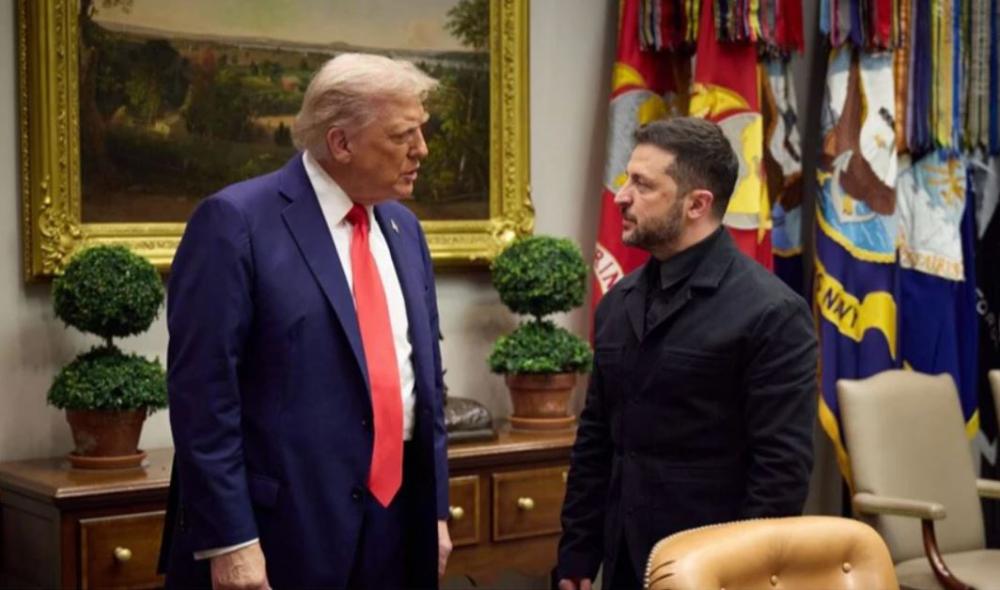
The events of the past week demonstrate that the situation surrounding peace negotiations on Ukraine can be described as an escalatory deadlock. On the one hand, formal negotiation activity continues; on the other hand, it is producing no results and is increasingly being replaced by the logic of pressure.
The main ally and mediator — the United States — is effectively shifting into the role of an outside observer, distancing itself from direct political pressure and harsh assessments. In particular, recent statements by Secretary of State Marco Rubio suggest that Washington is avoiding a clear position on Russia’s actions and limiting itself to general rhetoric about the need to end the war.
Against this backdrop, Russia, on the contrary, is changing its negotiating tactics toward pressure and escalation.
The so-called “retaliatory” strike on Kyiv on May 24 by Russia only raised the overall level of escalation and became a marker showing that the war is moving ever deeper into a prolonged and effectively deadlocked phase. At the current stage, any military pressure available to Russia in terms of scale is unable to achieve its political goals — namely, to impose a strategic defeat on Ukraine or change its foreign policy course. At the same time, such attacks provide the Ukrainian leadership with additional grounds to pressure Western allies in order to increase arms supplies, strengthen air defense systems, and intensify political and sanctions pressure on Russia.
New threats of strikes against Kyiv are being put forward by Russia not simply to create panic among the population, embassies, and international organizations, but as part of a broader logic of pressure. This may involve attempts to force Ukraine into political concessions through escalation — including decisions on sensitive issues such as Donbas.
It is notable that such signals are accompanied by diplomatic activity. In particular, the recent phone conversation between Russian Foreign Minister Sergey Lavrov and U.S. Secretary of State Marco Rubio coincided with the announcement of a three-day ceasefire for May 9–11. This suggests an attempt by the Kremlin to reproduce a working pressure scheme: public escalation and threats — signaling Washington — and then attempting to activate the American channel of pressure on Kyiv.
An additional element is the linkage of these threats with the “Belarusian factor,” against the backdrop of earlier statements by Ukraine regarding the possibility of escalation from Belarus. As a result, a comprehensive pressure framework is being formed, combining tensions around the northern direction with parallel threats of massive strikes on Kyiv, thereby amplifying the overall effect of escalation and political pressure.
The very logic of the conflict today points rather toward the consolidation of a scenario of long-term confrontation. Any discussions about the possible end of the war within the next year run into the necessity of serious mutual concessions, for which neither Kyiv nor Moscow is currently prepared. As a result, the negotiation track remains secondary to the military dynamic. At the same time, the Russian offensive is not demonstrating a return to its previous pace: Kyiv has managed to stabilize the front line and contain Russia’s spring escalation. However, this stabilization does not alter the strategic balance and is largely linked to restrictions on Russia’s use of Starlink, which reduces its tactical capabilities on the battlefield. Ukraine itself, meanwhile, is unable to launch a counteroffensive.
Overall, the current dynamics only confirm that the war has definitively entered a prolonged phase in which it may continue for years and, under certain conditions, even decades.
Against the backdrop of the massive shelling of Kyiv, growing threats from Russia, and de facto signals of readiness for regular strikes against the capital, domestic corruption scandals are naturally fading into the background in the information space. At the same time, on May 18, former Head of the Office of the President of Ukraine Andriy Yermak, a suspect in the so-called “Mindichgate” case, was released from pretrial detention. The High Anti-Corruption Court set bail at 140 million hryvnias, which was collected by approximately 300 individuals and legal entities. After the bail was posted, Yermak was released under procedural obligations, including surrendering his passports and wearing an electronic bracelet.
Ukrainian President Volodymyr Zelensky rejected German Chancellor Friedrich Merz’s proposal to grant Ukraine the status of an “associated member” of the EU without voting rights, insisting that Ukraine had earned full membership in the European Union. In Ukraine, there are fears that such a format could turn into a long-term “anchor,” under which the country would be formally integrated into the European system but would never receive full membership, remaining stuck in an intermediate status indefinitely. Moreover, such a format is significantly inferior to full membership in terms of political weight, external perception, and domestic legitimacy, including the electoral aspect. In many ways, it overlaps with already existing forms of cooperation — such as the free trade zone and other previously implemented mechanisms of interaction with the EU — without offering a qualitatively new level of integration.
A series of visits to Beijing in May 2026 — first by U.S. President Donald Trump (May 13–15), and then by Russian President Vladimir Putin (May 19–20) — creates the impression of a unified process of coordinating positions among key centers of power. Within a short period of time, China effectively becomes the platform where the contours of relations both with the United States and with Russia are being shaped simultaneously, and therefore also the parameters of a broader global configuration. China’s relations with Russia are clearly of a different, deeper, and more synchronized nature than its relations with the United States. At the same time, China deliberately avoids a formal alliance with Russia. It does not want to be drawn into Russian conflicts, take on sanctions risks, or limit access to Western markets.
If we proceed from the joint Russia-China statement mentioning Ukraine, attention is drawn to the concentration specifically on the Russian interpretation of events. The key problem of the war is described as the “elimination of the root causes of the crisis.” It should be recalled that Russia understands these causes as NATO expansion, the militarization of Ukraine, and other factors. At the same time, there is no mention of China’s 2023 “peace plan,” which had previously envisaged a ceasefire along the front line. This points to a shift in China’s position toward closer coordination with the Russian approach.
__________________
Russia’s “Retaliatory” Strike on Kyiv.
On May 24, Kyiv and the surrounding region were subjected to one of the largest air attacks since the beginning of the war. Russia launched a massive combined strike using around 90 missiles and 600 drones. According to official data, 55 missiles and 549 drones were intercepted, while impacts from 16 missiles and 51 attack UAVs were recorded across 54 locations. It is known that during the strike on Bila Tserkva, Russia used an “Oreshnik” medium-range ballistic missile. However, Ukrainian President Volodymyr Zelensky stated that Russia had used not one but two “Oreshnik” missiles — one fell in Bila Tserkva, while the second landed in the occupied part of the Donetsk region.
In Kyiv, 2 people were killed and around 100 injured as a result of the attack. Both civilian and government facilities were hit, including buildings of the Cabinet of Ministers, the Ministry of Foreign Affairs, and the government quarter on Hrushevsky Street, among others.
The most serious destruction was recorded in the Lukianivka district, where a market, business center, shopping mall, metro station, and residential buildings were damaged or destroyed. In Podil, the Chornobyl Museum and the Contract House (built in 1815–1817) were damaged.
Formally, Russia presented the attack as retaliation for events in Starobilsk, but in terms of its logic, it fits into a broader Russian strategy. First, it was intended to create the visual effect of a “retaliatory strike” for the domestic audience — demonstrating that “Kyiv is under fire” and that retaliation had taken place, even though the actual military-strategic outcome remains limited. Second, it was a signal to external actors: the use of an “Oreshnik”-type missile, which Ukraine is incapable of intercepting, serves as a demonstration of capability and strength aimed at Kyiv’s Western allies in the context of pressure and deterrence.
Overall, however, the so-called Russian “retaliatory” strike only increases the level of overall escalation in the conflict. It also serves as another marker showing that the war is moving ever deeper into a prolonged and effectively deadlocked phase. For the Kremlin, war as a tool for imposing its political will on Ukraine is not producing results. Attempts to intimidate the population and thereby force Kyiv into peace concessions currently appear unlikely to succeed (despite calls from certain members of parliament). Experience shows that such actions tend to provoke anger and consolidation within Ukrainian society rather than readiness for compromise.
At the same time, for the Ukrainian leadership, the attack created additional grounds for pressuring Western allies in order to increase weapons supplies, strengthen air defense systems, and intensify political and sanctions pressure on Russia.
Letter from Ukrainian President Volodymyr Zelensky to U.S. President Donald Trump.
Ukrainian President Volodymyr Zelensky addressed a message to the President of the United States, Congress, and American society, timing it to Memorial Day (May 25), in which he simultaneously expressed gratitude for support and outlined Ukraine’s key security requests.
The letter emphasizes that the United States has traditionally played the role of a guarantor of freedom and security in the world, and that its support remains critically important for Ukraine amid the war with Russia. Zelensky stresses that without American assistance, Ukraine would not have been able to effectively resist aggression, and that U.S. support should be viewed as a contribution not only to Ukraine’s security but also to the security of the entire Euro-Atlantic system.
A separate section of the letter is devoted to Russia’s massive attack on the night of May 24. According to Ukrainian data, Russia used 54 cruise missiles, 30 ballistic missiles, 3 Zircon hypersonic missiles, and 2 Kinzhal aeroballistic missiles, as well as “Oreshnik” medium-range ballistic missiles (one of which struck the Kyiv region, while another landed in the temporarily occupied territory of Donetsk region). In addition, around 600 attack drones, primarily Shahed-type UAVs, were deployed.
As a result of the attack, around 100 people were injured and there were fatalities. A total of 352 residential buildings, 19 educational institutions, and two museums were damaged, including the Chornobyl Museum, which was destroyed by a direct missile strike, and the National Art Museum. One of Kyiv’s markets was also completely destroyed.
Zelensky stresses that such attacks are systemic in nature and demonstrate Russia’s ability to carry out massive strikes against civilian infrastructure.
At the same time, Ukraine has achieved significant success in countering drones — the interception rate of UAVs, including Shahed drones, exceeds 90%. This experience is already being used by other countries, including states in the Middle East and the Persian Gulf — Jordan, Saudi Arabia, Qatar, the UAE, and Kuwait — to which Ukraine has provided practical assistance in strengthening air defense systems, including for the protection of American military facilities.
Despite these achievements, Ukraine remains critically dependent on external support in the field of missile defense. The letter directly states that the country does not possess its own capabilities for producing air defense systems and is almost completely dependent on the United States when it comes to protection against ballistic missiles. In this context, Patriot systems are described as the most effective tool against Russian ballistic threats.
Zelensky notes that current delivery rates under the PURL program do not correspond to the level of threat, while the need for Patriot systems and interceptor missiles remains high. As a solution, he proposes not only increasing deliveries but also allowing Ukraine to directly purchase these systems, as well as expanding joint production with European allies while maintaining U.S. control.
The letter also provides examples of the effectiveness of American weapons on the battlefield. In particular, Javelin deliveries approved in 2018 helped stop Russian tank columns in 2022. HIMARS systems significantly strengthened the capabilities of the Ukrainian army, ATACMS missiles provided an advantage in long-range strikes, and Bradley armored vehicles helped save thousands of lives. F-16 aircraft have become an important element of defense, with Ukrainian pilots already having conducted more than 2,700 combat sorties.
It is separately emphasized that the Armed Forces of Ukraine are currently the largest army in Europe and possess unique combat experience in modern warfare, making Ukraine an important element of the continent’s security system.
In conclusion, Zelensky states that Russia continues to avoid real diplomacy as long as it maintains an advantage in ballistic weapons, which remain its key instrument of pressure. In this regard, he calls on the United States to remain actively engaged, continue supporting Ukraine, and provide additional Patriot PAC-3 systems and other missile defense capabilities.
The final emphasis of the letter is that Ukraine does not seek a prolonged war but needs real defensive instruments to achieve a sustainable peace, while further U.S. support is viewed as a critically important condition for ensuring the security not only of Ukraine but also of its allies.
Dynamics of Peace Negotiations.
Russia’s Permanent Representative to the UN Vasily Nebenzya stated that, at present, negotiations with Ukraine are not taking place. He emphasized that Moscow has already put forward its conditions and rejected options involving a simple ceasefire or a “freeze” along the front line.
At the moment, Ukraine is advancing its own diplomatic line: Foreign Minister Andrii Sybiha is discussing with the EU formats of partial ceasefires — airport, energy, and port ceasefires — proposing to formalize at least limited agreements. Also, Secretary of the National Security and Defense Council of Ukraine Rustem Umerov (Ukraine’s chief negotiator) arrived in Berlin; it is known that his visit is connected with the activation of the negotiation track on ending the war, as well as with growing threats from Moscow to strike Kyiv. In a closed format, he held meetings with national security advisers from Germany, France, and the United Kingdom. The day before, Umerov was in Brussels, where he held talks with a senior European Commission representative on cooperation in the defense industry.
Thus, Ukraine is putting forward its own ceasefire initiatives, shaping the image of a side ready for dialogue, while at the same time strengthening its defense and seeking additional support from European partners. Meanwhile, Russia is openly moving toward escalation.
On May 25, the Russian Foreign Ministry stated that the Russian army was beginning “consistent systematic strikes” against enterprises of Ukraine’s military-industrial complex in Kyiv and “decision-making centers.” The alleged reason for this decision was an attack on a college building and dormitory in Starobilsk, Luhansk region, which is under Russian occupation. “All this has overflowed the cup of patience. Under current conditions, the Russian Armed Forces are proceeding with the consistent task of carrying out systematic strikes against enterprises of Ukraine’s military-industrial complex in Kyiv, including specific sites for the design, production, programming, and preparation for the use of UAVs used by the Kyiv regime with the assistance of NATO targeting specialists. Strikes will also be carried out against decision-making centers and command posts,” the Russian Foreign Ministry stated. The Russian Foreign Ministry called on foreigners, including employees of diplomatic missions and international organizations, to “leave Kyiv as soon as possible.” Russian Foreign Minister Sergey Lavrov also personally conveyed these signals to U.S. Secretary of State Marco Rubio.
The EU summoned the Russian ambassador over threats against European diplomats after Moscow called on foreign delegations to leave Kyiv. In Berlin, this is already being interpreted as confirmation of Russia’s course toward escalation. Given the shortage of missiles for air defense, Ukraine may indeed face the risk of intensified strikes on Kyiv, which could disrupt life in the capital.
Commenting on Russian threats of new strikes on Kyiv, U.S. Secretary of State Marco Rubio did not directly condemn either side. Avoiding a harsh assessment of Russia’s actions, he limited himself to vague political rhetoric, effectively reducing what is happening to a general statement about the conflict, saying that: “every time you see these massive strikes from one side or the other, it is a reminder of why this is a terrible war that has lasted longer than World War II and why it needs to end… The United States is ready and prepared to do everything possible to help bring this war to an end, and hopefully at some point there will be an opportunity to play that role again.”
In essence, the United States is increasingly shifting toward the role of an outside observer in the negotiation process between Ukraine and Russia, distancing itself from direct political pressure and harsh assessments.
It is important to note that this entire story regarding regular strikes on Kyiv may have been designed not simply to create panic among the population and international organizations. Rather, it is aimed at extracting new political concessions from Ukraine — including in the form of a ceasefire or other decisions, potentially including demands regarding Donbas.
In the current dynamic, Russia is trying to reproduce a scenario that has already worked before, one largely shaped by the experience of interacting with the United States. The three-day ceasefire on May 9–11, pushed through Washington (while ignoring Ukraine’s initiative for May 5–7), gave Moscow a clear behavioral model. Ukraine essentially conceded then, and the Kremlin quickly fixed this linkage: public threat and escalation — signal to Washington — U.S. pressure on Kyiv — desired result.
After that, the Kremlin is acting in the most straightforward way possible: threats, demonstrative strikes, then communication with the United States, after which the American side, according to the plan, is supposed to pressure Kyiv.
Additionally, Russia appears to be intensifying the effect by linking its own threats with the “Belarusian factor” — against the backdrop of Ukraine’s earlier warnings about a threat from Belarus.
At the same time, Moscow is drawing an even harsher conclusion: demonstrating “peacefulness” before Trump, as Ukraine continues to do, is not necessary at all — one can be openly aggressive and still achieve a tactical result.
But there is a high probability that this time the blackmail scheme will fail. In particular, the first concession — the three-day ceasefire — was not fundamental for Kyiv: it was a tactical step without strategic consequences.
Now, however, much more sensitive decisions may be at stake — the withdrawal of troops from Donbas or other serious concessions — and this is a different level. Even with intensified shelling of Kyiv, such steps do not appear acceptable to the Ukrainian leadership.
The external framework is also changing. European partners will be much more actively involved in such a situation, since this is no longer about tactical maneuvers but about Ukraine’s strategic positions. This limits the space for pressure.
Finally, the United States itself will be much more cautious the second time. Repeated direct pressure on Kyiv in the logic of concessions to Moscow would too clearly be read as playing on Russia’s side, which is politically toxic both inside the United States and in Western societies more broadly. In this situation, Washington is unlikely to want to openly assume such a role and will most likely limit itself to detached political statements.
As a result, the negotiation process remains in a state of stagnation: there is no constructive dialogue between Russia and Ukraine, no real concessions, diplomatic activity is demonstrative in nature, and the main mediator — the United States — is distancing itself from the process. Meanwhile, the war continues to develop according to the logic of gradually increasing escalation.
Threat of an Attack on Ukraine from Belarus.
Ukrainian President Volodymyr Zelensky stated that Russia is trying to draw Belarus into the war against Ukraine. According to him, roads and artillery positions are being prepared on Belarusian border territory. In this regard, he threatened Belarusian leader Alexander Lukashenko with the fate of Venezuelan President Nicolás Maduro (who was captured and taken from Venezuela to the United States as a result of an American special forces operation). Zelensky stated that Russia has “five scenarios for expanding the war through northern Ukraine.”
Commander-in-Chief of the Armed Forces of Ukraine Oleksandr Syrskyi also confirmed that Russia could launch operations in the north using Belarus.
Zelensky made it clear that the Belarusian leadership should remain alert and understand that aggressive actions against Ukraine would have consequences. He emphasized that Ukraine has the capability to strengthen and carry out preventive actions regarding Russian territories from which threats may emerge.
The Security Service of Ukraine announced strengthened security measures in the north amid the threat from Belarus. Measures are being implemented in the Chernihiv, Kyiv, Zhytomyr, Volyn, and Rivne regions. These measures involve large-scale preemptive actions in the spheres of counterintelligence and counter-sabotage protection in these territories.
At the same time, reports appeared in the press that the United States is urging Ukraine and the EU to ease restrictions on imports of potash fertilizers from Belarus. The White House wants the transit of Belarusian potash through Poland and Lithuania to resume. This is being done under the pretext of returning Belarus to international markets and pulling it away from the Kremlin.
During this period, from May 18 to May 21, Belarus hosted joint exercises and training by Russian and Belarusian military forces involving the use of non-strategic nuclear weapons.
On May 21, the defense ministries of both countries reported the covert delivery of nuclear munitions to field storage facilities on Belarusian territory.
Ukraine’s Ministry of Foreign Affairs described the deployment of Russian tactical nuclear weapons in Belarus and the joint nuclear exercises as an unprecedented challenge to the architecture of global security and called on international partners to respond firmly.
NATO Secretary General Mark Rutte stated that Russia would face devastating consequences if, during joint nuclear capability exercises with Belarus, it decided to use such weapons against Ukraine.
Against the backdrop of the exercises, Belarusian authorities officially introduced restrictions on visiting forests in 19 districts of the country. Ukrainian military officials are paying particular attention to the fact that most of these districts are located near the borders with Ukraine, Poland, and Lithuania. In Ukraine, it is believed that in modern military practice such restrictions are often used to facilitate covert troop movements, the deployment of field logistics, the creation of temporary ammunition and fuel depots, and the establishment of command posts and engineering positions.
Overall, the situation cannot yet be interpreted as a direct sign of an imminent offensive. Belarus and Russia may be “deliberately creating an atmosphere of constant military threat in the northern direction without intending to immediately move to active operations.” The main goal of such actions is to force Ukraine, Poland, and the Baltic states to maintain significant forces along their borders, dispersing reserves, air defense resources, and logistical capabilities.
Alexander Lukashenko himself is objectively not interested in escalating a conflict with a country like Ukraine, which possesses significant combat experience. Under conditions of “soft” rapprochement with the United States, it is extremely disadvantageous for Minsk to launch a new offensive from its own territory, since this would automatically erase any signs of warming relations and return the situation to its previous sanctions and political confrontation.
However, pressure from Russian President Vladimir Putin may play a role. If Moscow decides that it is necessary to stretch Ukrainian forces and expand the length of the front line, Belarus may become drawn into the conflict.
The key point to consider is that the Belarusian army is relatively small. The ground forces that could be used for an assault are limited in number — up to 20,000 personnel. Under conditions of drone warfare and the length of the border, this is insufficient not only for any serious breakthrough, but even for containing a counterstrike by the Armed Forces of Ukraine, should one occur. The first and main sign that Belarus is preparing for imminent war not merely in words but in practice would be the mass mobilization of tens of thousands of reservists in order to increase troop groupings to at least 100,000 soldiers. But nothing of the sort is being observed. Nor is there any transfer of large Russian military formations.
Therefore, Zelensky’s statements about a “preparing attack” likely stem from the same reasons as Kyiv’s broader sharp anti-Lukashenko line adopted since the end of January 2026. This is explained by Lukashenko’s role in the negotiation process between Russian President Vladimir Putin and U.S. President Donald Trump regarding Ukraine. It is important to note that since August 2025, the United States has intensified contacts with Belarus, including against the backdrop of partial easing of sanctions.
It should also be separately noted that European actors are attempting to insert themselves into the negotiation process between Belarus and the United States. In particular, over the weekend, French President Emmanuel Macron and Belarusian leader Alexander Lukashenko held a phone conversation. The conversation appears to have taken place at the initiative of the French side. This was the first such phone call since 2022 — the previous one took place on February 26, 2022, two days after the start of the Russian invasion. The parties discussed the regional situation, Belarus-EU relations, and the war in Ukraine. The call took place amid reports about the possible strengthening of Belarus’s role in the war and new Russian offensive plans in northern Ukraine.
For France, the use of Belarus represents an important communication channel with the Kremlin. In practice, everything communicated to Alexander Lukashenko becomes known to Vladimir Putin within a short time, making Minsk one of the most direct and оперативе channels for transmitting signals.
In this context, Emmanuel Macron is effectively conducting political reconnaissance and testing the negotiation track, shaping a potential channel of interaction with Moscow through Lukashenko — similar to how Washington is partly doing so. At the same time, Macron seeks to strengthen France’s role in the negotiation process, including in the context of discussions about a possible European representative in talks with Russia, competing with other centers of influence within the EU.
A separate element of pressure on Minsk was the visit of Belarusian opposition leader Sviatlana Tsikhanouskaya to Kyiv on May 25, which apparently had been coordinated in advance. Its timing immediately after Macron’s contact with Lukashenko appears as a demonstrative political “pinprick”-signal — the parallel legitimization of an alternative Belarusian political leader and the indirect delegitimization of Lukashenko by Ukraine.
At the same time, it is important to recognize that the very fact of a phone conversation with the President of France objectively already increases Alexander Lukashenko’s political significance.
Combat Operations.
No significant changes on the front line were recorded over the past week. Russian forces advanced by approximately 20 sq. km, increasing the controlled territory to around 116,883 sq. km (19.36% of Ukraine’s territory). The main advances were observed near Stepnohirsk and Prymorske (Zaporizhzhia region), while minor changes were also recorded in other sectors of the front.
The Russian army continues attempts to advance, particularly in the Donetsk region — west of Pokrovsk toward the Sloviansk-Kramatorsk agglomeration (Sloviansk, Kramatorsk, Druzhkivka), which are currently subjected to intensive bombardment. Activity is also observed on the left bank of the Oskil River (Kharkiv region). At the same time, the current advances are predominantly tactical in nature and do not create a direct strategic threat, remaining rather elements of preparation for possible larger-scale operations. At present, however, a major Russian offensive has not begun and may not occur, including due to the continuing technological parity between the sides, primarily in the sphere of drone warfare.
Particular attention is drawn to the situation in the southern area of the Dnipro River. Ukraine is urging Russia to evacuate civilians from Oleshky (left bank of the Dnipro, Kherson region). Similar processes are observed near Nikopol and Marhanets (Dnipropetrovsk region), as well as in Kherson. Overall, a stable trend toward depopulation of riverside territories on both sides of the Dnipro is being recorded due to constant shelling and active drone use.
This may indicate a possible shift of combat operations toward the southern delta of the Dnipro. Under conditions of rapidly developing unmanned systems, such territories are gradually turning into zones unsuitable for life and permanent civilian presence. As a result, an expanding belt of “grey zone” is forming on both sides of the front line, where the key factor is no longer territorial control in the classical sense, but the ability to inflict remote strikes.
Results of U.S. President Donald Trump’s Visit to Beijing (May 13–15, 2026).
During the week following U.S. President Donald Trump’s visit to Beijing, the real substance and consequences of the trip have gradually become clearer. Trump’s public rhetoric demonstrates a noticeable softening of his position toward China: he stated his willingness to refrain from escalating the situation around Taiwan, including pausing arms supplies, and emphasized his interest in stable and positive relations with Beijing. At the same time, the harsh and confrontational rhetoric traditionally used by Trump toward weaker opponents was absent.
In parallel, an institutional foundation for deepening U.S.-China dialogue is taking shape. Following the contacts, two new structures were created — a bilateral trade council and an investment council — intended to provide a permanent mechanism for negotiations and the management of disputes. Despite this, no formal agreements were signed following the visit, indicating a deliberate postponement of key decisions.
An additional factor is the upcoming visit of the Chinese leader to the United States. Xi Jinping plans to visit Washington in the fall. An official White House visit at the invitation of President Donald Trump is preliminarily scheduled for September 24. In this context, postponing key agreements until autumn appears to be a politically motivated step: signing agreements during this period could be used by the Trump administration as an electoral resource to strengthen the Republican Party’s position.
In the economic sphere, the parties recorded several preliminary agreements. China confirmed its intention to purchase around 200 Boeing aircraft, which, however, was below the previously expected 500 units and even led to a decline in the company’s stock value. The parties also agreed to expand agricultural trade: the United States expressed readiness to ease part of the non-tariff restrictions on Chinese dairy products, seafood, and crop products, while China agreed to restore registration for some American beef suppliers and soften restrictions on agricultural imports.
The issue of rare earth metals, which are critically important for U.S. industry and defense production, was also discussed separately. China temporarily refrained from introducing additional export restrictions on these materials, which can be viewed as a tactical decision within the framework of the current dialogue rather than a long-term commitment.
Thus, the parties have so far established a mutual intention to avoid escalation, but key decisions on strategic issues have been consciously postponed. This creates a situation of managed uncertainty, in which more substantive final agreements will depend on the political environment of autumn 2026.
In a broader context, the choice facing Beijing is whether to support a deal with the Trump administration, which could strengthen Republican positions, or to adopt a wait-and-see approach. Considering that China sees the policy of a Democratic administration as more predictable and comfortable, this fundamentally distinguishes China’s strategy from Russia’s, for which cooperation with the Trump administration is viewed as the more preferable scenario.
Visit of Russian President Vladimir Putin to China (May 19–20, 2026).
Russian President Vladimir Putin’s visit to Beijing, which took place against the backdrop of China-U.S. negotiations, complemented the broader picture of the emerging new configuration of international relations.
Putin was received at a lower protocol level than U.S. President Donald Trump, but at the same time he was given the opportunity to address the Chinese people through state television. He spoke about friendship, civilizational unity, and political goals. In effect, he was granted access to the Chinese information space itself. Overall, there is a sense of less formal appreciation than toward the United States, but a greater depth of interaction.
Following the meeting, around 40 agreements of various levels covering a broad spectrum of cooperation were signed, although several key projects remained unresolved. In particular, no agreement was reached on the “Power of Siberia-2” project — the parties failed to agree on gas prices, supply volumes, and investment parameters, which demonstrates China’s restraint regarding further increasing dependence on Russian energy resources.
At the same time, political and geopolitical coordination is deepening. Russia and China confirmed synchronization of positions, including within the UN Security Council, and also signed a large-scale joint declaration on a multipolar world (around 50 pages long), which reflects shared assessments of the global order, criticism of U.S. and Western policies, and theses about “hegemonism” and the need to form an alternative architecture of international relations.
Economic cooperation is also showing steady growth. Bilateral trade volume exceeds $200 billion annually, while settlements have been almost entirely transferred into rubles and yuan, effectively marking an exit from the dollar zone. Despite this, China continues to limit the scale of direct investment in the Russian economy, maintaining an asymmetric cooperation model.
Further deepening of social integration is also evident: a de facto visa-free regime is operating, under which around 1 million Chinese citizens and 2 million Russian citizens visited each other’s countries. At the political and communication level, an unprecedented format of interaction was recorded — Russian President Vladimir Putin was granted the opportunity to address Chinese society directly through China’s central state television, demonstrating a high level of mutual political trust and access.
Economic and technological aspects of cooperation are complemented by strategic ones. China views Russia as a raw-material base, while Russia serves as an element of military-strategic and nuclear balance. Taken together, the nuclear potential of China and Russia is assessed as exceeding that of the United States, which strengthens the significance of their coordination within the global deterrence system. At the same time, mechanisms for bypassing sanctions pressure are being developed, including through the use of third countries such as North Korea as channels for informal trade.
An important element of the meeting was the discussion of the Ukrainian issue. In their joint statement, Russia and China emphasized the need to end the conflict through negotiations and eliminate the “root causes of the crisis,” primarily referring to NATO expansion and changes in the European security architecture. At the same time, the document contains no references to the principle of Ukraine’s territorial integrity and does not mention China’s 2023 “peace plan,” which previously envisaged a ceasefire along the front line. This points to a shift in China’s position toward closer coordination with the Russian approach.
Thus, Putin’s visit to Beijing demonstrated not the formation of a formal alliance — which China continues to avoid because of sanctions risks — but the deepening of multi-level integration: political, economic, and strategic. At the same time, key decisions, as in the case of China-U.S. negotiations, remain postponed, and dialogue between the sides will continue, including within future international platforms such as the APEC summit in November 2026.
Beijing acts exclusively according to the logic of its own strategic interests. This is not a partnership of equals, but an asymmetric model of interaction. China does not want to appear as Russia’s ally because it does not wish to bear the full burden of anti-Russian sanctions or responsibility for Russia’s actions, including in Ukraine, though this applies mainly in tactical terms.
Strategically, Russia and China continue to move closer together, while the key factor is the deepening of Chinese involvement in the Russian economy and industrial modernization — processes that largely remain behind the scenes but directly influence the course of the Russian-Ukrainian war.
The parties are also synchronizing geopolitical goals in confrontation with the global order led by the United States, while simultaneously expanding energy and economic cooperation as well as social integration — from visa-free regimes to direct access for the Russian leader to China’s information space.
Sociology.
According to a study by the Rating Sociological Group (published on May 25, 2026), a relative majority of Ukrainians (40%) believe that Ukraine is a leading country among European states. 33% classify it as a “middle-tier” country, while 21% consider it an outsider.
Since 2022, the share of those who classify Ukraine as “middle-tier” has been declining (from 42% in March 2022 to 33% in April 2026). At the same time, perceptions have become more polarized: the share of those who see Ukraine as a leader has increased (from 34% to 40%), as has the share of those who classify it as an outsider (from 16% to 21%). It is important to note that in January 2022, only 8% considered Ukraine a leader, while 49% saw it as an outsider. By March 2022, a sharp shift had already occurred: one-third of citizens began to perceive the country as a leader, while the share of those who saw it as an “outsider” fell to 16%.
As four years ago, around 73% of Ukrainians believe that the Armed Forces of Ukraine are defending not only the Ukrainian people in the war but also other peoples of Europe. Only 23% believe that this is exclusively about defending Ukraine. Among supporters of EU accession, this figure is even higher — 84%, while only 15% of them believe that the Armed Forces are defending only Ukraine. At the same time, among opponents of European integration, only 57% hold this view.
More than half of Ukrainians would support the participation of the Armed Forces of Ukraine in defending allied countries in the event of a Russian attack: Lithuania — 63%, Latvia — 62%, Estonia — 61%, Moldova — 60%, Finland — 59%, Poland — 58%. At the same time, the stronger the emotional connection with the EU, the higher the willingness to support such actions. Among supporters of EU accession, 73% would support assistance to Estonia, while among opponents only 37% would do so, with 61% opposed.
Among Ukrainians with a strong emotional connection to the EU, 85% would support armed assistance to Estonia, whereas among those who weakly associate themselves with the EU, only about 35% support such a position, while 58% oppose it.
What draws attention is not only the high share of Ukrainians (over 60%) willing to support the participation of the Armed Forces of Ukraine in defending EU countries, but also the very fact that such a question is being raised in public opinion.
Against the backdrop of proposals by European leaders, in particular the model of “associated membership” (which has so far been rejected by President Volodymyr Zelensky but could potentially return to the agenda), which envisages partial integration without full rights but with possible involvement of Ukraine in the EU collective security system, this raises certain concerns.
In effect, a situation may be forming in which Ukraine’s idealistic perception of its role as the “defender of Europe” may later be pragmatically used by European countries themselves. In the absence of firm security guarantees for Ukraine and in the presence of flexible, politically interpretable obligations, such public readiness creates a risk of asymmetry: Ukraine may be drawn into ensuring the security of other countries without an equivalent level of protection for itself.
Against the backdrop of growing tensions in North-Eastern Europe, this turns the value-based motivation of Ukrainian society into a potential military resource.
Ruslan Bortnyk, Oksana Krasovskaya
for the Ukrainian Institute of Politics
Friends, we remind you that you can order additional Weekly Intelligence Briefs, Geopolitical Risk Reports, and Executive Briefings on topics of interest by contacting us at: uiamp2012@gmail.com or by phone: +38 093 757 7565.