American Council for Justice and Conflict Resolution
2150 Center Avenue #22C Fort Lee, NJ –USA
New Directions for Ukraine and Russia
Proposal Sponsored by:
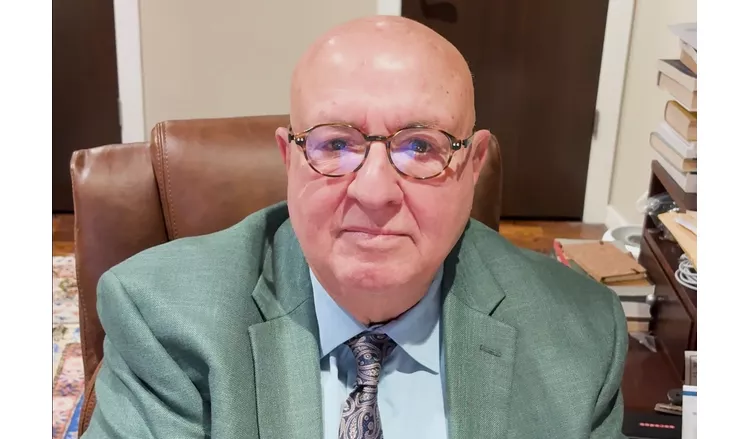
Dr. Stephen Bronner: President of the American Council for Justice and Conflict Resolution and Board of Governors Distinguished Professor Emeritus of Political Science: Rutgers University
Ruslan Bortnik: Ukrainian Institute for Politics
Rationale for “New Directions” The Russian invasion of Ukraine is now in its fifth year. A new framework for peace and empirical compromises is imperative as well as a willingness to revise old assumptions The geo-political landscape has been re-shaped. Ukraine is threatened by disparity between the expected duration of foreign aid and growing domestic costs of the war. American foreign policy has become increasingly unpredictable given its resource drain due to its attack on Iran while Europe will spend nearly $600 billion to reconstruct its military defenses. We believe that discussions over conflicting economic and territorial demands require the kind of framework below that links the implementation of a ceasefire with security guarantees, and outlines for a new treaty,
I Ceasefire Given the relative stalemate on the battlefield, and Russian intransigence, some doubt the character of any ceasefire. We view the matter differently for the following reasons:
-
A ceasefire implicitly assumes symbolic recognition of Ukrainian sovereignty.
-
Any later territorial negotiations will in part depend upon which army already controls what.
-
Monitoring arrangements can then be put into place.
-
Such a ceasefire could enable exchange of prisoners and return of unlawfully transferred citizens, especially children, without waiting for a final treaty.
-
The start of post-war recovery and a general pickup in economic activity.
II Security Guarantees and Necessary Compromises:: A ceasefire raises obvious questions about security. The costs of war have been enormous and both nations have an interest in peace, but both also have national security interests and leaders who need a successful exit strategy. This political reality calls for a readiness to make concessions in accord with security needs and a “no-man’s land” between Russia and Ukraine can serve as the first step:
-
Ukraine
-
Insists on sovereignty and the ability not merely to prevent chaos at home, but to protect the nation.
-
Rejects the abolition of its military in favor of police and militias
-
Asserts that a reduction of Ukraine’s military and its resources depends upon a verified reduction of the Russian threat.
-
Contends that reductions cannot be “equal” since this favors the stronger side. Ukraine must be able to defend itself under a new concept of “armed neutrality.”
-
Russia:
-
Ukraine’s proposal for armed neutrality must involve a reciprocal security treaty that incorporates costs and benefits for Russia:
-
Ukraine will remain outside NATO but can join the EU without joining military guarantees.
-
Russia agrees to non-interference in Ukraine’s domestic politics, verifiable limits on its military capacity in the region bordering Ukraine, and negotiations for new security arrangements with the West.
-
Russia may participate in the final monitoring arrangements, but cannot exercise veto power over Ukraine’s security strategies,
-
Lifting sanctions become sconditional on taking steps toward peace: Verification after 90 days when decisions on renewal are made.
-
The Treaty: Too often, confusion, misinterpretation, and misrepresentation are associated with the peace that follows a war’s conclusion. We recommend a binding international agreement with specifics that:
-
Rests on a prior ceasefire and formation of a “no-man’s land” separating the two nations.
-
Accepts Ukrainian sovereignty based on “armed neutrality”
-
Recognizes that the territorial dispute may outlast the war and that the Ukrainian people cannot serve as hostages to a final resolution of the conflict.
-
Guarantees financial backing and military resources for Ukraine before the treaty is signed; indeed, the promise of future consultations is inadequate for this purpose.
-
Creates an international commission to monitor the ceasefire and the treaty’s provisions
-
Does not call for changes to Ukraine’s Constitution or domestic political arrangements.
IV Recommendations:
-
Seek an immediate ceasefire as a launching pad for future negotiations over territory:
-
Create a “no-man’s land”
-
Implement monitoring arrangements
-
There is a chance that foreign military assistance ends before Ukraine’s economy recovers; we suggest guarantees of support for set number of years following the war’s conclusion.
-
Draw the appropriate implications for the “armed neutrality” of Ukraine.